What the optical illusion personality test measures
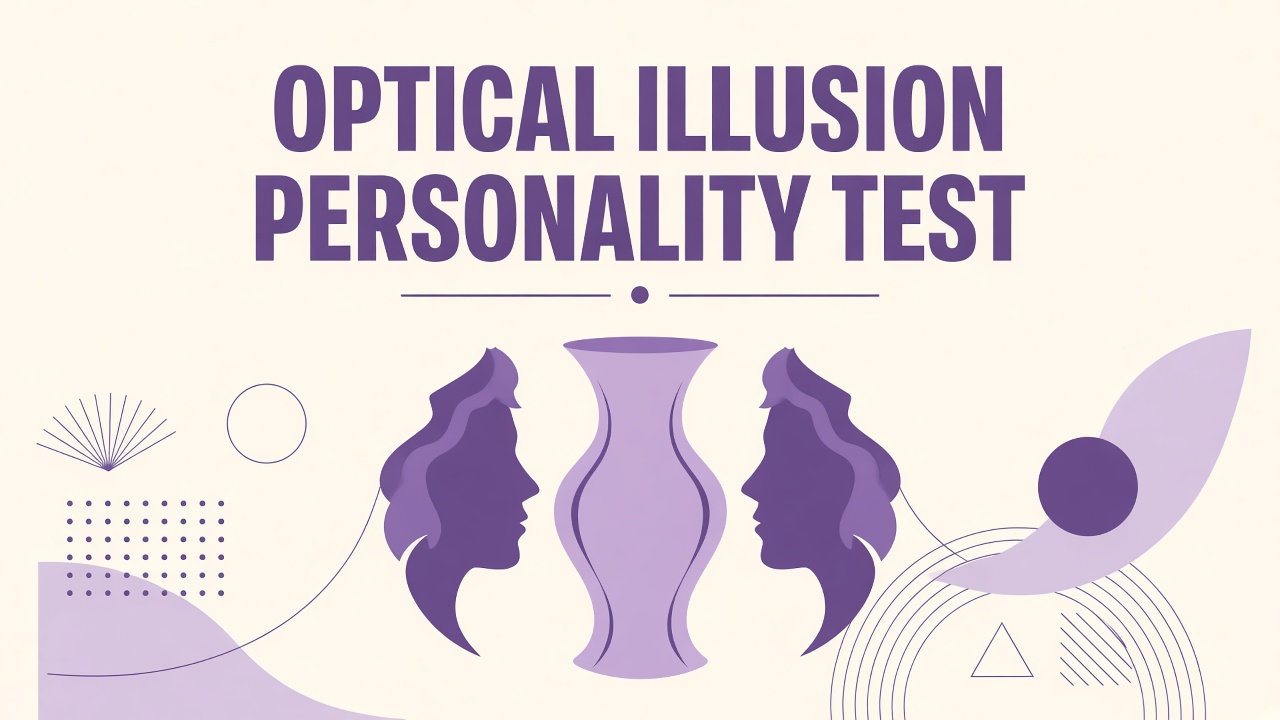
Viral optical illusion quizzes ask what you notice first in a shared image: a vase or two faces, a young woman or an older profile, a rabbit or a duck. The optical illusion personality test keeps that curiosity but measures perception style with self-report items instead of literal image taps. You rate statements about structure, mood, whole-scene gist, alternate readings, and gut symbolism across art, dreams, and ambiguous photos.
Five perception profiles organize the inventory: Pattern-Seeker, Emotion-Reader, Big-Picture, Contrarian, and Intuitive. Each has five tagged Likert items with reverse scoring where agreement would flip the intended direction. Totals rank profiles; the highest becomes your primary match and the next highest among the remaining four is your runner-up. A five-bar chart shows percentage of max for every profile so close blends stay visible.
-
Pattern-Seeker
Structure, detail, and hidden order come first.
-
Emotion-Reader
Faces, mood, and social cues lead your first look.
-
Big-Picture
The whole scene lands before the parts.
-
Contrarian
You hunt the reading others skip.
-
Intuitive
Gut meaning arrives before analysis.
How scoring works
-
Rate 25 statements
Each item maps to one perception profile. Reverse-scored items catch answers that flip the intended direction.
-
We sum profile totals
Raw points per profile convert to percentage of max (25 points per profile). Tie-break uses raw score, then percentage, then title.
-
See perception results
Results show primary profile, runner-up influence, blend label, and a bar chart for all five profiles.
Take the optical illusion personality test
Answer every item honestly. The quiz autosaves in your browser and opens in a focused modal with Back and Next controls.
What your perception result means
Profiles describe how you tend to process ambiguous visuals on these items, not a fixed label for life. Runner-up scores matter when two profiles sit within one raw point of each other.
| Profile | Core style | Everyday example |
|---|---|---|
| Pattern-Seeker | You scan ambiguous visuals for grids, symmetry, and logical structure before mood or story. | In a viral "two pictures in one" post, you name the vase-and-faces geometry before anyone mentions feelings. |
| Emotion-Reader | You read expression, tension, and interpersonal tone in photos before objects or abstract shapes. | When friends debate what an illusion "is," you ask how the figures in it seem to relate. |
| Big-Picture | You grasp overall theme, composition, and gist before inspecting individual elements. | You describe the young-or-old woman illusion as "a portrait in profile" before debating which face is primary. |
| Contrarian | Popular interpretations trigger a second pass for alternate angles and overlooked options. | If a thread agrees "it is obviously a rabbit," you look for the duck beak in the same silhouette. |
| Intuitive | Symbolic, surreal, and dreamlike visuals register as meaningful on first flash, often before you can explain why. | A random inkblot sparks a clear personal metaphor before you analyze its edges. |
What your perception report looks like
After all twenty-five items, you get a primary perception profile badge, a match percentage, a runner-up profile with its influence noted, a blend label combining both, and a five-profile bar chart ranked by percentage of max. Percentages reflect self-report totals on this quiz, not clinical vision scores.
What this test can and cannot do
Can
- Organize self-report on illusion-themed perception habits with five clear profiles
- Show primary, runner-up, and full bar chart for transparent scoring
- Spark conversation about viral "what you see first" culture and your reflection style
- Pair with imagery and thinking-style siblings on The Quiz Hub
Cannot
- Replace literal image-picking viral quizzes or lab-based perception tasks
- Diagnose vision problems, aphantasia, or personality disorders
- Prove what you would always see first in every shared illusion post
- Replicate the exact scoring of every TikTok filter or meme clone
Viral illusions and self-report perception style
Social feeds revived classic ambiguous figures: Rubin's vase-and-faces drawing, the young-or-old woman portrait, and duck-rabbit silhouettes that flip depending on where you look first. Creators turned those images into "what do you see?" polls that rack up millions of comments. Psychologists study bistable perception in controlled settings; meme quizzes trade that rigor for instant participation. The Quiz Hub built an English inventory that keeps the illusion theme while scoring stable Likert answers instead of compressed JPEG taps on every phone size.
Perception research distinguishes bottom-up detail processing from top-down gist and context effects (see Gregory's work on visual illusions and the American Psychological Association summaries on perception). Our five profiles are playful buckets, not peer-reviewed factors: Pattern-Seeker for structure hunters, Emotion-Reader for social cue readers, Big-Picture for gist-first viewers, Contrarian for alternate-reading fans, and Intuitive for symbolism-first responders. They help you name habits, not certify brain wiring.
When you want sibling context, pair this test with our VVIQ test for visual imagery vividness scenarios inspired by Marks (1973), the left brain right brain test for analytical versus creative thinking habits, and the round or square personality test for the French viral empathy-versus-structure shape metaphor. For type-based reflection, the Enneagram test offers nine motivation profiles with wing influence, a similar primary-plus-runner-up results shape.
| Quiz | Best for |
|---|---|
| This optical illusion test | Viral illusion framing, five perception profiles, Likert self-report scoring |
| VVIQ test | Visual imagery vividness across people, light, buildings, and scenery scenarios |
| Left brain right brain test | Analytical versus creative thinking style spectrum with domain bars |
| Round or square personality test | French rond ou carré shape metaphor with empathy versus structure poles |
Optical illusion personality test FAQ
What is the optical illusion personality test?
The optical illusion personality test is inspired by viral "what you see first" quizzes on TikTok and Instagram. Instead of picking from static images, our version uses 25 original agree-disagree items about how you process ambiguous visuals, first impressions, art, dreams, and social reads. You get a primary perception profile, a runner-up influence, and a five-profile bar chart.
Why does this test use questions instead of images?
Literal image-picking is hard to score consistently across devices, screen sizes, and compression. Self-report Likert items let every taker answer the same statements with reverse scoring and deterministic totals. The framing stays illusion-themed; the method is closer to personality reflection than to a clinical perception lab task.
What are the five perception profiles?
Pattern-Seeker (structure and hidden order first), Emotion-Reader (faces and mood cues), Big-Picture (whole scene before details), Contrarian (alternate readings others skip), and Intuitive (gut-first symbolic meaning). Each profile has five tagged items. Your highest raw total becomes primary; the next highest among the other four is runner-up.
How is scoring calculated?
Each item maps to one profile with optional reverse scoring. We sum raw points per profile (max 25 per profile), convert to percentage of max, and rank profiles. Tie-break order: raw score, then percentage, then profile title alphabetically. A close-call warning appears when the top two profiles are within one raw point.
Is this a clinical perception test?
No. This is an educational self-report snapshot for reflection and entertainment. It is not the VVIQ, not a vision screening, and not a validated personality instrument. Results describe how you answered these items today, not how your eyes or brain are wired in a lab.
How does this compare to the VVIQ test?
The VVIQ test on The Quiz Hub measures visual imagery vividness with scenario-based items inspired by Marks (1973). This optical illusion test maps viral illusion culture onto five perception-style profiles with agree-disagree statements. Pair them when you want both imagery vividness reflection and illusion-themed perception framing.
Who reviewed this optical illusion test page?
Dr. James Whitfield, PhD in Personality Psychology, reviewed framing, scoring explanations, and disclaimers. See our editorial policy for review standards.
Reviewed by