What this am I lonely quiz measures
This am I lonely quiz estimates how heavy perceived loneliness has felt during the past two weeks. Twenty-two original frequency items group into four domains drawn from loneliness research: emotional disconnection, social scarcity, alienation feeling, and felt connection. Your loneliness load index averages these patterns into a 0 to 100 score with plain-language bands. It reflects your self-report about connection and belonging, not how many friends you appear to have on social media.
Emotional disconnection
Missing confiding bonds, inner-life understanding, and someone who holds the real version of you.
Social scarcity
Quiet weekends, shrinking circles, solo meals, and fewer spontaneous calls than you want.
Alienation feeling
Feeling on the outside, invisible in groups, and more alone after gatherings than before.
Felt connection
Being seen, checked on, belonging somewhere, and sharing ordinary warmth with others.
How it works
Three steps from first question to your loneliness load report. Click Start Quiz to open the interactive quiz in a full-screen modal.
Answer 22 frequency items
Rate how often each loneliness pattern showed up in the past two weeks, from Never to Very often. You click Next after each answer; nothing auto-advances.
Items map to four loneliness domains
Your answers accumulate percentages for emotional disconnection, social scarcity, alienation feeling, and felt connection, plus an overall loneliness load index.
View band and domain bars
Results show Lower, Mixed, or Higher Loneliness Load with domain bars and reflection prompts. Higher bands include crisis resources.
Take the am I lonely quiz
Rate 22 statements about how lonely the past two weeks have felt. Your answers produce a loneliness load index from 0 to 100, four domain scores, and a band label for reflection or clinical conversation.
Opens in a focused modal. No account required. Results stay on screen.
What your result means
Your loneliness load index is the normalized total across all 22 items on a 0 to 100 scale, with reverse scoring on felt connection items so higher scores mean heavier perceived loneliness overall. Domain bars show endorsement rates so you can see whether missing depth, lacking daily contact, outsider feelings, or weak belonging drives your result most.
| Band | Index range | Typical reading |
|---|---|---|
| Lower Loneliness Load | 0 to 35 | Fewer loneliness patterns on this screener; brief lonely evenings may still appear |
| Mixed Loneliness Load | 36 to 65 | Blend of connection and lonely stretches; worth tracking if persistent |
| Higher Loneliness Load | 66 to 100 | Frequent emotional disconnection, social scarcity, or alienation; professional support may help |
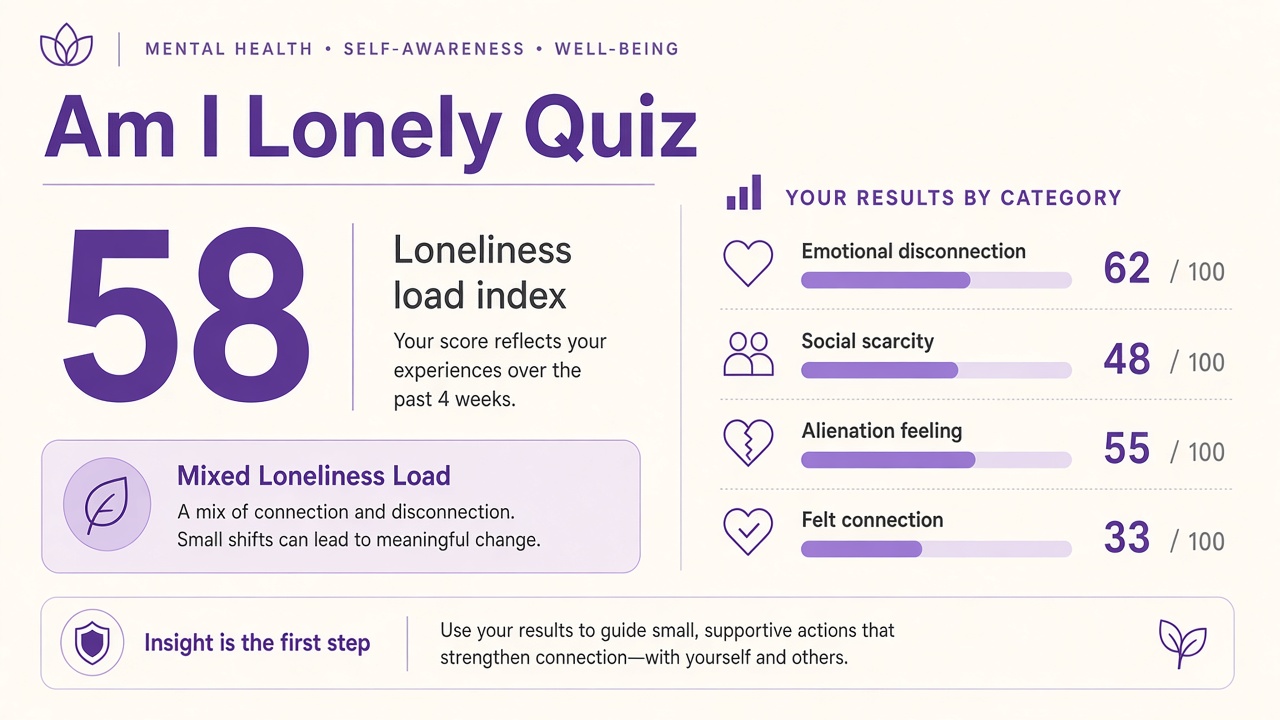
What your loneliness load report looks like
After all 22 items, you get a loneliness load index from 0 to 100, a band label, and four domain bars for emotional disconnection, social scarcity, alienation feeling, and felt connection. Percentages reflect how the past two weeks have felt, not a clinical verdict about your social life.
What this quiz can and cannot tell you
Can tell you
- How often loneliness patterns showed up for you in the past two weeks
- A loneliness load index and four domain bars for emotional, social, alienation, and connection signals
- Which domain pattern feels strongest in your current season
- A starting point for therapy conversation or retaking after a social life change
Cannot tell you
- Whether you have depression, social anxiety, or any clinical diagnosis
- Whether you are objectively isolated without knowing your full social context
- Whether connection will improve without effort, therapy, or community support
- What treatment you need without a licensed clinician's evaluation
Perceived loneliness, social need, and research context
Psychologist Daniel Russell published the UCLA Loneliness Scale (Version 3) in 1996, measuring perceived social and emotional isolation through self-report items about lacking companionship and feeling left out. Sociologist Jenny de Jong Gierveld and colleagues distinguished emotional loneliness (missing intimate attachment) from social loneliness (missing broader networks) in later work used across European aging studies. The U.S. Surgeon General's 2023 advisory on loneliness framed persistent disconnection as a public health concern linked to sleep strain, mood changes, and cardiovascular risk over time.
The Quiz Hub built this am I lonely quiz as an original self-report screener inspired by those research themes, not a reproduction of any single published instrument. Readers often compare it to sibling tools on this site. Our loneliness test uses UCLA-inspired wording on emotional loneliness, social loneliness, and connectedness deficit. The depression test screens mood and energy symptoms that often overlap with withdrawal. The mental health test offers a broader symptom snapshot across anxiety, mood, and functioning.
| The Quiz Hub test | What it adds |
|---|---|
| Loneliness test | UCLA-inspired three-domain index with how often do you feel that prompt frame |
| Depression test | PHQ-style mood and energy screening, not social belonging focus |
| Hikikomori test | Severe social withdrawal and home confinement patterns, not everyday loneliness load |
| Incel test | Online subculture resentment and rejection themes, not general loneliness frequency |
| Fear of intimacy quiz | Intimacy avoidance in romantic closeness, not social belonging across life |
| This am I lonely quiz | Four-domain loneliness load index for emotional disconnection, social scarcity, alienation, and felt connection |
Sample item types include frequency ratings such as whether you went whole weekends without meaningful human contact, or whether you felt genuinely seen by at least one person. High emotional disconnection with high alienation feeling often lands in Mixed or Higher Loneliness Load. New cities, caregiving seasons, grief, and remote work can spike scores temporarily. Read how we review quizzes in our editorial policy or browse more tools on our mental health and clinical hub.
Am I lonely quiz FAQ
What does lonely mean in everyday language?
Lonely usually describes feeling that your social and emotional needs are not met, even if people are nearby. It can look like missing someone who truly knows you, quiet weekends without contact, or walking away from gatherings feeling more alone. This am I lonely quiz measures how often those patterns showed up in the past two weeks. It is not a label about your worth or likability.
What does this am I lonely quiz measure?
Twenty-two original frequency items ask how often you experience emotional disconnection, social scarcity, alienation feelings, and reduced felt connection. Scores map to four domains inspired by De Jong Gierveld loneliness research and UCLA Loneliness Scale themes. You receive a loneliness load index from 0 to 100 and a band from Lower through Higher Loneliness Load.
How is this different from the loneliness test?
The loneliness test uses UCLA-inspired wording on emotional loneliness, social loneliness, and connectedness deficit with a how often do you feel that prompt frame. This am I lonely quiz uses past-two-weeks frequency items on emotional disconnection, social scarcity, alienation feeling, and felt connection. Both report a 0 to 100 index with domain bars but use separate question banks.
Can this quiz diagnose depression?
No. The loneliness load index describes self-reported perceived loneliness on this abbreviated screener. Only a licensed clinician can evaluate depression or related conditions through structured interviews. Online quizzes cannot confirm or deny a diagnosis.
What should I do if I get a higher loneliness load band?
Consider scheduling an evaluation with a licensed therapist, counselor, or primary care clinician. Bring your result summary and describe when loneliness began and which domain feels hardest. If you feel unsafe or in crisis, call or text 988 (US) or your local crisis line.
Who reviewed this content?
Dr. Elena Vasquez, PhD, reviewed the test framing and result explanations. See our editorial policy for review standards.
Reviewed by