What this trauma-hypersexuality quiz measures
This am I hypersexual because of trauma quiz estimates how often sexual patterns feel linked to past harm in your self-report. Twenty-two original frequency items group into four domains inspired by trauma and sexuality recovery literature from Wendy Maltz, Judith Herman, and Bessel van der Kolk: trauma sexual activation, escapist sexual coping, compulsive urge patterns, and shame or identity confusion. Each item also maps to a fear-of-intimacy stack layer so you can see whether vulnerability pull-back, trust hesitation, self-disclosure limits, or closeness anxiety drives confusion most. Your trauma-hypersexuality link index averages these signals into a 0 to 100 score where higher numbers mean more trauma-linked sexual coping endorsement.
Trauma sexual activation
Arousal spikes with trauma reminders, confusing body responses, fantasy links to past harm, and trigger-driven cravings.
Escapist sexual coping
Using sex or porn to numb grief, quiet intrusive thoughts, dissociate from flashbacks, and chase intensity over healing.
Compulsive urge patterns
Acting on urges despite promises, binge patterns after stress, reflexive sexual contact when dysregulated, and ignored consequences.
Shame and identity confusion
Believing you are broken, hiding patterns from therapists, searching whether trauma caused hypersexuality, and survivor shame.
How it works
Three steps from first question to your trauma-hypersexuality link report with fear-of-intimacy stack. Click Start Quiz to open the interactive quiz in a full-screen modal.
Answer 22 frequency items
Rate how often each trauma-linked sexual coping pattern shows up when you reflect on sexuality and past difficult experiences, from Never to Almost always. You click Next after each answer; nothing auto-advances.
Items map to trauma domains and intimacy stack
Your answers accumulate percentages for trauma sexual activation, escapist sexual coping, compulsive urge patterns, and shame or identity confusion, plus four fear-of-intimacy stack layers.
View band, domain bars, and stack chart
Results show Lower, Mixed, or Higher Trauma-Hypersexuality Link bands with domain bars, stack layers, and reflection prompts.
Take the trauma-hypersexuality quiz
Rate 22 statements about sexual patterns and past difficult experiences. Your answers produce a trauma-hypersexuality link index from 0 to 100, four domain scores, a fear-of-intimacy stack chart, and a band label for reflection or therapy talks.
Opens in a focused modal. No account required. Results stay on screen.
What your trauma-hypersexuality link result means
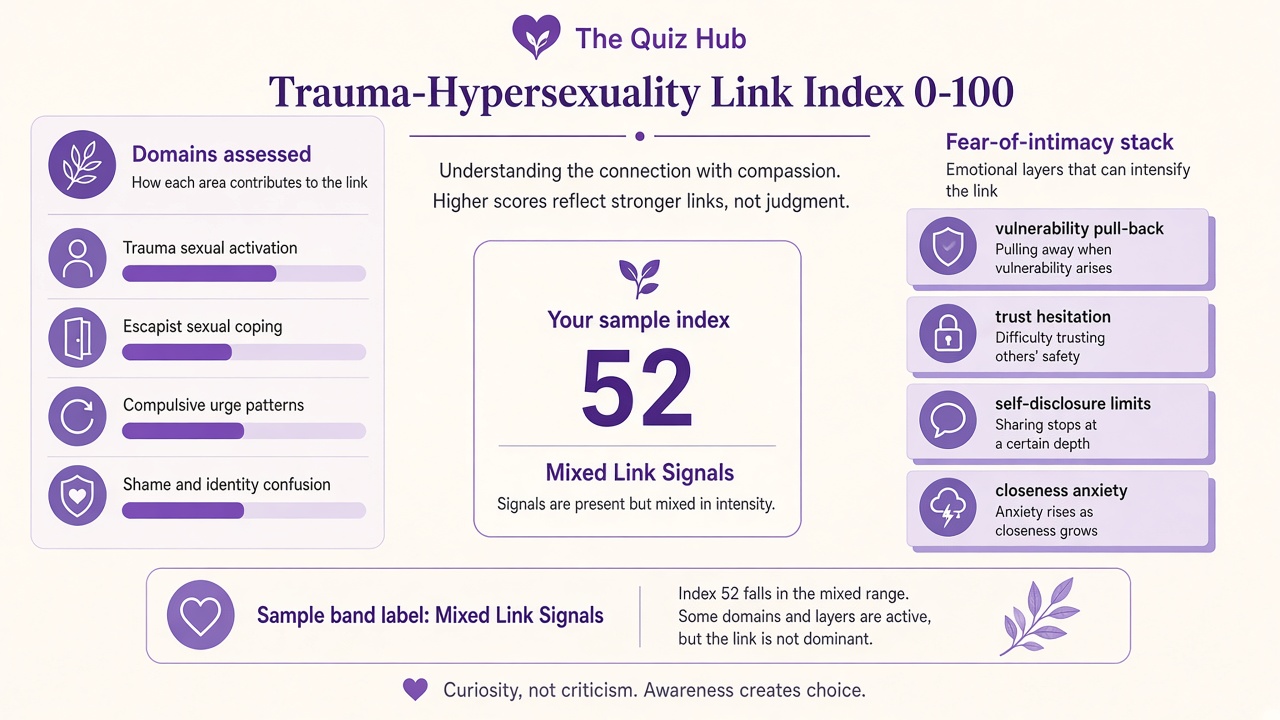
Your trauma-hypersexuality link index is the normalized total across all 22 items on a 0 to 100 scale. Higher scores mean more frequent endorsement of trauma sexual activation, escapist sexual coping, compulsive urge patterns, and shame items on this screener. Domain bars show endorsement rates so you can see whether arousal confusion, escapist coping, compulsive urges, or shame drives your result most. The fear-of-intimacy stack chart shows parallel layers for vulnerability pull-back, trust hesitation, self-disclosure limits, and closeness anxiety alongside sexual coping.
| Band | Index range | Typical reading |
|---|---|---|
| Lower Trauma-Hypersexuality Link | 0 to 35 | Fewer trauma-linked sexual coping signals; ordinary libido variation can still score here |
| Mixed Trauma-Hypersexuality Link | 36 to 65 | Blend of healthy sexuality and trauma-linked coping; worth naming patterns with support |
| Higher Trauma-Hypersexuality Link | 66 to 100 | Frequent trauma activation, escapist coping, compulsive urges, or shame; trauma-informed therapy may help |
What your trauma-hypersexuality report looks like
After all 22 items, you get a trauma-hypersexuality link index from 0 to 100, a band label, four domain bars for trauma sexual activation, escapist sexual coping, compulsive urge patterns, and shame or identity confusion, plus a fear-of-intimacy stack chart with vulnerability, trust, disclosure, and closeness anxiety layers.
What this quiz can and cannot tell you
Can tell you
- How often trauma-linked sexual coping signals showed up in your self-report on this screener
- A trauma-hypersexuality link index and four domain bars for activation, escapist coping, compulsive urges, and shame
- A fear-of-intimacy stack showing which closeness-avoidance layer feels strongest alongside sexual patterns
- A starting point for trauma-informed therapy or sex therapy conversations
Cannot tell you
- Whether trauma definitively caused your sexuality without clinical evaluation
- Whether you have hypersexuality, PTSD, or compulsive sexual behavior disorder
- Whether your sexual choices are healthy or unhealthy in your specific context
- What treatment you need without licensed professional guidance
Trauma, sexuality, and shame after harm
Searches asking whether trauma can make someone hypersexual often come from shame, not curiosity alone. Clinicians Wendy Maltz and Judith Herman both wrote that survivors may swing between sexual shutdown and intense sexual behavior as the nervous system tries to manage unsafety. Bessel van der Kolk describes how the body can store trauma in arousal circuits that feel confusing years later. None of those frameworks label every strong libido as pathology. They explain why sexual coping can coexist with genuine desire and why secrecy slows healing.
The Quiz Hub built this am I hypersexual because of trauma quiz as an original self-report screener inspired by those themes plus FOIS-style intimacy avoidance layers, not a reproduction of any single published instrument. Readers often compare it to sibling tools on this site. Our hypersexuality test screens urge distress and impairment without trauma history framing. The trauma bond quiz measures cycle intensity and loyalty isolation in high-conflict bonds rather than sexual coping after abuse. The fear of intimacy quiz measures vulnerability pull-back across closeness, not trauma-triggered arousal frequency.
| The Quiz Hub test | What it adds |
|---|---|
| Hypersexuality test | Concern index on urge distress and boundary respect, not trauma sexual activation |
| Trauma bond quiz | Cycle intensity and hope pendulum in relationships, not escapist sexual coping |
| Fear of intimacy quiz | General intimacy avoidance across vulnerability and trust, not trauma-linked arousal |
| Abandonment issues quiz | Attachment anxiety and fear of rejection, not shame about survivor sexuality |
| Sex drive test | Trait-level libido lens separate from trauma coping history |
| This trauma-hypersexuality quiz | Trauma-hypersexuality link index plus fear-of-intimacy stack for activation, escapist coping, compulsive urges, and shame |
Sample item types include frequency ratings such as whether you use sex to numb grief from the past, or whether you can name at least one non-sexual coping skill when trauma stress rises. High trauma sexual activation with high escapist coping often lands in Mixed or Higher Trauma-Hypersexuality Link bands. Stable sexuality with processed trauma history can score in Lower Trauma-Hypersexuality Link even when libido is high. Read how we review quizzes in our editorial policy or browse more tools on our mental health and clinical hub.
Trauma-hypersexuality quiz FAQ
Can trauma cause hypersexual behavior?
Trauma researchers and clinicians such as Wendy Maltz, Judith Herman, and Bessel van der Kolk describe how abuse, assault, and chronic neglect can shape sexual coping, arousal confusion, and shame. Some survivors use sex to numb flashbacks or regain a sense of control. Others lose desire entirely. Neither pattern proves hypersexuality or any diagnosis. This am I hypersexual because of trauma quiz measures how often trauma-linked sexual coping signals show up in your self-report. It is not proof that trauma caused your sexuality.
What does this trauma-hypersexuality quiz measure?
Twenty-two original frequency items ask how often you notice trauma sexual activation, escapist sexual coping, compulsive urge patterns, and shame or identity confusion when you reflect on sexual habits and past difficult experiences. Scores map to four domains plus a parallel fear-of-intimacy stack with vulnerability pull-back, trust hesitation, self-disclosure limits, and closeness anxiety layers. You receive a trauma-hypersexuality link index from 0 to 100 where higher scores mean more trauma-linked sexual coping signals, plus a band from Lower through Higher Trauma-Hypersexuality Link.
What is the fear-of-intimacy stack on this quiz?
The fear-of-intimacy stack is a second results chart inspired by FOIS-style intimacy avoidance themes, adapted to trauma-linked sexual coping. Each of the 22 items also maps to one of four stack layers showing how sexual patterns may connect to closeness habits: hiding vulnerability, testing trust, limiting disclosure, or panicking when intimacy deepens. The stack index summarizes those layers alongside the trauma-hypersexuality link index.
How is this different from the hypersexuality test?
The hypersexuality test screens urge distress, control difficulty, relationship impact, shame, and boundary respect without trauma history framing. This am I hypersexual because of trauma quiz focuses on whether sexual patterns feel linked to past harm: trauma-triggered arousal, escapist coping, compulsive urges after stress, and shame about survivor sexuality. It adds a fear-of-intimacy stack layer that the general hypersexuality test does not include.
Can this quiz diagnose hypersexuality or PTSD?
No. The trauma-hypersexuality link index describes self-reported pattern signals on this abbreviated screener. High libido, kink curiosity, grief, or relationship stress can raise scores without trauma driving sexuality. PTSD, compulsive sexual behavior disorder, and hypersexuality require formal clinical evaluation. Online quizzes cannot confirm or deny any diagnosis.
Who reviewed this content?
Dr. Elena Vasquez, PhD, reviewed the test framing and result explanations. See our editorial policy for review standards.
Reviewed by