What this emotionally numb quiz measures
This am I emotionally numb quiz estimates how often dull, flat, or disconnected feelings showed up over the past two weeks. Twenty-two original frequency items group into four domains drawn from depression symptom research and trauma-informed clinical writing: affective blunting, anhedonia, dissociative numbing, and felt aliveness. Your emotional numbness index averages these patterns into a 0 to 100 score with plain-language bands. It reflects your self-report about inner experience, not a clinician's observation or lab test.
Affective blunting
Feeling flat, empty, or muted inside when you expect sadness, joy, or anger to show up.
Anhedonia
Losing interest in hobbies, food, music, or social plans that used to feel rewarding.
Dissociative numbing
Living on autopilot, feeling unreal, or watching your life from a distance.
Felt aliveness
Still feeling stirred by music, nature, humor, or tender moments when they arrive.
How it works
Three steps from first question to your emotional numbness report. Click Start Quiz to open the interactive quiz in a full-screen modal.
Answer 22 frequency items
Rate how often each numbness pattern showed up in the past two weeks, from Never to Very often. You click Next after each answer; nothing auto-advances.
Items map to four domains
Your answers accumulate percentages for affective blunting, anhedonia, dissociative numbing, and felt aliveness, plus an overall emotional numbness index.
View band and domain bars
Results show Lower, Mixed, or Higher Emotional Numbness with domain bars and reflection prompts. Higher bands include crisis resources.
Take the emotionally numb quiz
Rate 22 statements about flat affect, pleasure loss, autopilot living, and muted aliveness over the past two weeks. Your answers produce an emotional numbness index from 0 to 100, four domain scores, and a band label for reflection or clinical conversation.
Opens in a focused modal. No account required. Results stay on screen.
What your result means
Your emotional numbness index is the normalized total across all 22 items on a 0 to 100 scale, with reverse scoring on aliveness items so higher scores mean more numbness overall. Domain bars show endorsement rates so you can see whether affective blunting, anhedonia, dissociative numbing, or low felt aliveness drives your result most.
| Band | Index range | Typical reading |
|---|---|---|
| Lower Emotional Numbness | 0 to 35 | Fewer flat or autopilot patterns on this screener; grief or sleep debt may still create brief dull spells |
| Mixed Emotional Numbness | 36 to 65 | Blend of some felt emotion and protective dullness; worth tracking if persistent |
| Higher Emotional Numbness | 66 to 100 | Frequent blunting, pleasure loss, dissociative numbing, or low aliveness; professional support may help |
What your emotionally numb report looks like
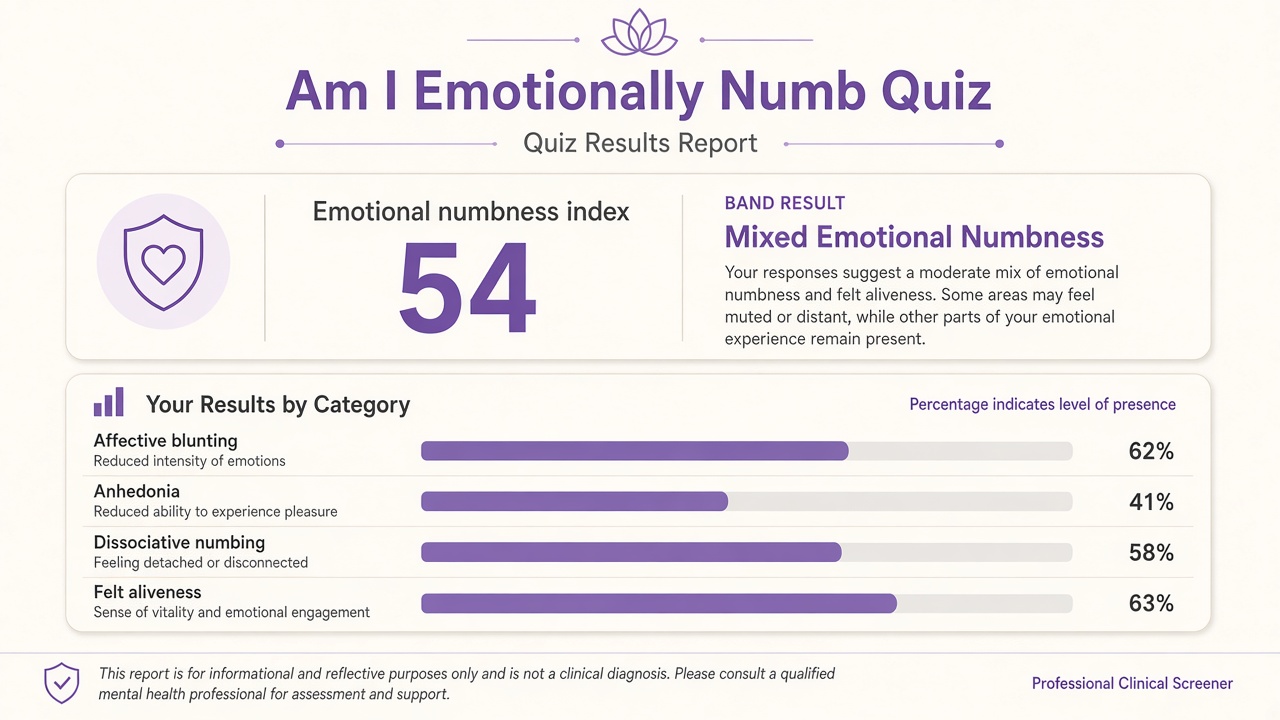
After all 22 items, you get an emotional numbness index from 0 to 100, a band label, and four domain bars for affective blunting, anhedonia, dissociative numbing, and felt aliveness. Percentages reflect how often numbness showed up in your answers, not a clinical verdict about your mental health.
What this quiz can and cannot tell you
Can tell you
- How often emotional numbness patterns showed up for you over the past two weeks
- An emotional numbness index and four domain bars for blunting, anhedonia, dissociative numbing, and felt aliveness
- Which domain pattern feels strongest in your current inner experience
- A starting point for therapy or medical conversation and retaking after treatment or stress shifts
Cannot tell you
- Whether you have depression, PTSD, dissociation, alexithymia, or any clinical diagnosis
- Whether medication, thyroid issues, or sleep apnea contribute without a medical workup
- Whether feelings will return on a specific timeline without professional guidance
- What treatment you need without a licensed clinician's evaluation
Flat affect, pleasure loss, and dissociative numbing
Psychiatrist Robert Spitzer and colleagues helped standardize depression symptom measurement that includes anhedonia and feeling emotionally dead inside. Trauma researcher Judith Herman described how survivors sometimes feel detached from their own emotions as a protective response. Neuroscientist Ruth Lanius and colleagues later linked dissociative numbing to altered brain networks during overwhelming stress. Those themes inform how clinicians talk about emotional numbness, though everyday numbness can also follow burnout, grief, or medication changes.
The Quiz Hub built this am I emotionally numb quiz as an original self-report screener inspired by those research lines, not a reproduction of any single published instrument. Readers often compare it to sibling tools on this site. Our depression test screens broader PHQ-inspired mood and functioning symptoms. The anxiety test measures worry and tension clusters over two weeks. The emotionally detached quiz on our relationships hub focuses on numb spectator feelings inside a romantic bond rather than general inner dullness.
| The Quiz Hub test | What it adds |
|---|---|
| Depression test | PHQ-inspired mood, sleep, guilt, and functioning items, not a dedicated numbness index |
| Anxiety test | GAD-style worry and somatic tension, not flat affect or pleasure loss |
| Burnt out quiz | MBI-inspired exhaustion and cynicism at work, not dissociative autopilot living |
| Emotionally detached quiz | Partner bond disengagement and spectator distance, not general two-week numbness |
| Why am I so tired quiz | Fatigue driver domains across sleep and rhythm, not affective blunting |
| This emotionally numb quiz | Four-domain numbness index for blunting, anhedonia, dissociative numbing, and felt aliveness |
Sample item types include frequency ratings such as whether you felt emotionally flat when something meaningful happened, or whether food and music felt bland over the past two weeks. High affective blunting with high dissociative numbing often lands in Mixed or Higher Emotional Numbness. Burnout, bereavement, trauma anniversaries, and SSRI side effects can spike scores temporarily. Read how we review quizzes in our editorial policy or browse more tools on our mental health and clinical hub.
Emotionally numb quiz FAQ
What does emotionally numb mean?
Emotionally numb usually describes feeling flat, empty, or disconnected from your feelings even when life events should stir you. It can include muted joy or sadness, autopilot living, and trouble feeling pleasure. Clinicians sometimes link persistent numbness to depression, trauma responses, burnout, or dissociation, though short numb spells after shock or grief can be normal. This am I emotionally numb quiz measures how often those patterns showed up over the past two weeks. It is not a diagnosis.
What does this emotionally numb quiz measure?
Twenty-two original frequency items ask how often you experience affective blunting, anhedonia, dissociative numbing, and low felt aliveness. Scores map to four domains inspired by depression symptom research (Kroenke et al., 2001) and trauma-related numbing themes (Herman, 1992; Lanius et al., 2010). You receive an emotional numbness index from 0 to 100 and a band from Lower through Higher Emotional Numbness.
How is this different from the depression test?
The depression test screens broader PHQ-inspired mood and functioning symptoms including sleep, appetite, guilt, and concentration. This emotionally numb quiz focuses on flat affect, pleasure loss, autopilot distance, and muted aliveness as a dedicated numbness screener. Both use two-week frequency scales but measure different symptom clusters.
Can this quiz diagnose depression or dissociation?
No. The emotional numbness index describes self-reported dullness and disconnection patterns on this abbreviated screener. Only a licensed clinician can evaluate depression, PTSD, dissociative disorders, or related conditions through structured interviews and medical rule-out. Online quizzes cannot confirm or deny a diagnosis.
What should I do if I get a higher emotional numbness band?
Consider scheduling an evaluation with your primary care doctor or a licensed therapist who treats mood or trauma concerns. Bring your result summary and describe when numbness began and which domain feels hardest. If you feel unsafe or in crisis, call or text 988 (US) or your local crisis line.
Who reviewed this content?
Dr. Elena Vasquez, PhD, reviewed the test framing and result explanations. See our editorial policy for review standards.
Reviewed by