What this am I homicidal quiz measures
This am I homicidal quiz estimates how often violent ideation patterns showed up in the past two weeks. Twenty-two original frequency items group into four domains drawn from clinical violent ideation screening themes described by Meloy and Joyal and the Columbia Suicide Severity Rating Scale violence supplement literature: hostile fantasies, harm urges, planning preparation, and control or moral distress. Each item also maps to a fear-of-intimacy stack layer so you can see whether vulnerability pull-back, trust hesitation, self-disclosure limits, or closeness anxiety rides alongside rage or violent thought patterns. Your violent ideation index averages these patterns into a 0 to 100 score with plain-language bands.
Hostile fantasies
Revenge images, picturing harm during arguments, and dwelling on violent scenes longer than you want.
Harm urges
Urges to hit or choke, body gearing up to attack, and wanting to hurt someone who betrayed you.
Planning preparation
Rehearsing how you might hurt someone, searching for means, and picturing specific times or places.
Control and moral distress
Fear of losing control, shame after violent thoughts, avoiding people, and fright at your own urges.
How it works
Three steps from first question to your violent ideation report with fear-of-intimacy stack. Click Start Quiz to open the interactive quiz in a full-screen modal.
Answer 22 frequency items
Rate how often each violent thought pattern showed up in the past two weeks, from Never to Very often. You click Next after each answer; nothing auto-advances.
Items map to ideation domains and intimacy stack
Your answers accumulate percentages for hostile fantasies, harm urges, planning preparation, and control distress, plus four fear-of-intimacy stack layers.
View band, domain bars, and stack chart
Results show Lower, Mixed, or Higher Violent Ideation Signals with domain bars, stack layers, and crisis guidance on elevated bands.
Take the am I homicidal quiz
Rate 22 statements about violent thoughts, harm urges, planning signals, and control fears from the past two weeks. Your answers produce a violent ideation index from 0 to 100, four domain scores, a fear-of-intimacy stack chart, and a band label for reflection or clinical follow-up.
Opens in a focused modal. No account required. Results stay on screen.
What your violent ideation result means
Your violent ideation index is the normalized total across all 22 items on a 0 to 100 scale. Higher scores mean more frequent endorsement of hostile fantasies, harm urges, planning thoughts, and control distress items on this screener. Domain bars show endorsement rates so you can see whether revenge images, physical urges, rehearsed plans, or fear of losing control drives your result most. The fear-of-intimacy stack chart shows parallel layers for vulnerability pull-back, trust hesitation, self-disclosure limits, and closeness anxiety when violent thoughts include guarded closeness.
| Band | Index range | Typical reading |
|---|---|---|
| Lower Violent Ideation Signals | 0 to 35 | Fewer violent thought patterns on this screener; normal anger flashes may still score here |
| Mixed Violent Ideation Signals | 36 to 65 | Blend of ordinary rage and recurring violent images or urges; domain and stack charts show where you struggle most |
| Higher Violent Ideation Signals | 66 to 100 | Frequent revenge fantasies, harm urges, planning thoughts, or control fears; contact 988 or a clinician if you feel at risk |
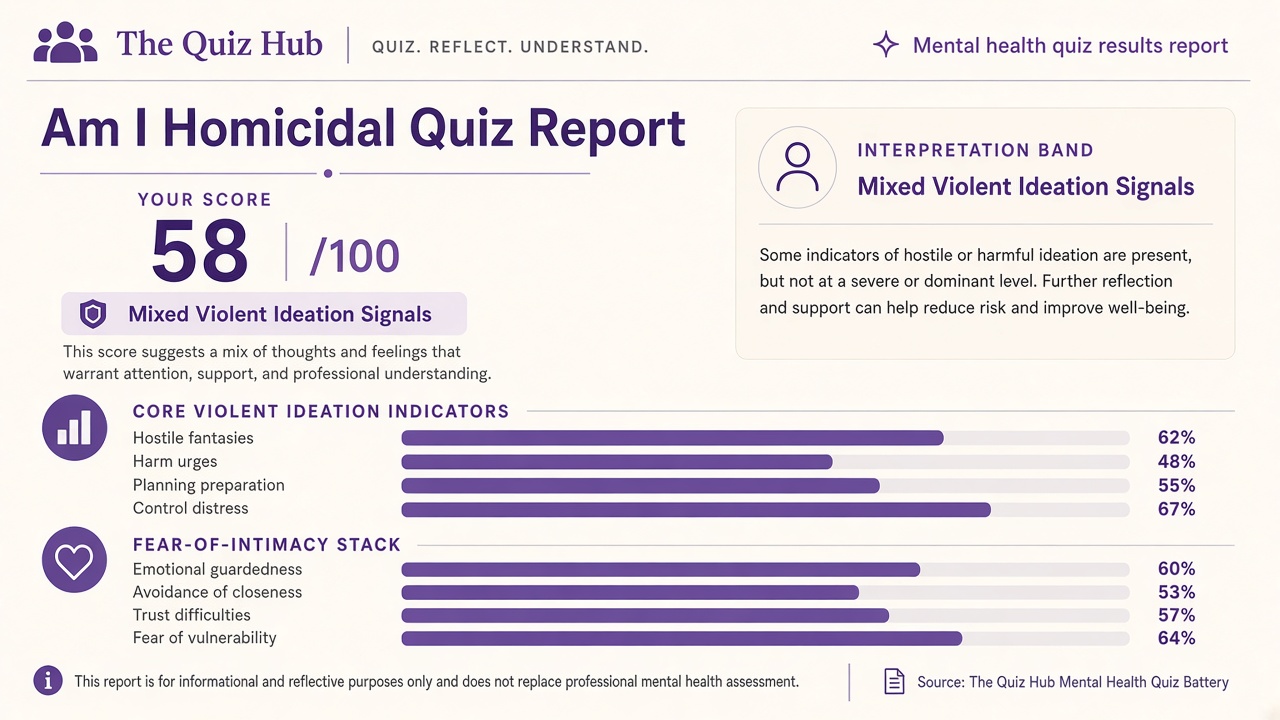
What your am I homicidal report looks like
After all 22 items, you get a violent ideation index from 0 to 100, a band label, four violent ideation domain bars, and a fear-of-intimacy stack chart with vulnerability pull-back, trust hesitation, self-disclosure limits, and closeness anxiety layers.
What this quiz can and cannot tell you
Can tell you
- How often violent ideation patterns showed up in this self-report screener over the past two weeks
- A violent ideation index and four domain bars for fantasies, urges, planning, and control distress
- A fear-of-intimacy stack chart showing which closeness-guarding layer feels strongest
- A starting point for therapy, crisis support, or comparing with sibling tests
Cannot tell you
- Whether you will act on violent thoughts or are homicidal
- Whether thoughts are rooted in trauma, psychosis, substance use, or personality without professional context
- Whether partners or clinicians would agree with your self-view
- What treatment or safety plan you need without licensed professional guidance
Violent thoughts, intimacy guarding, and when to get help
People search am I homicidal when revenge images, urges to hurt someone, or fear of losing control leave them ashamed and unsure what to do next. Forensic psychologist Reid Meloy and researcher Joyal describe violent fantasies as rehearsal-like mental scripts that can escalate when paired with planning and means access. The Columbia Suicide Severity Rating Scale includes violence supplement items clinicians use to ask about intent and preparation, though this quiz is a short self-report screener, not that instrument.
The Quiz Hub built this am I homicidal quiz as an original self-report screener inspired by those themes plus FOIS-style intimacy avoidance layers, not a reproduction of any published clinical tool. Readers often compare it to sibling tools on this site. Our am I dangerous quiz screens broader aggression, reckless disregard, and manipulative control habits. The am I toxic quiz maps criticism, jealousy, and negativity without violent planning items. The depression test screens mood and functioning without homicidal ideation domains.
| The Quiz Hub test | What it adds |
|---|---|
| Am I dangerous quiz | Broader aggression, reckless disregard, and control tactics without violent ideation planning focus |
| Am I toxic quiz | Criticism, jealousy, and negativity inventory without rehearsed harm or means-search items |
| Am I a psychopath quiz | Dark triad agree-disagree items without fear-of-intimacy stack chart |
| Am I delusional quiz | Persecutory and reality-testing strain without violent planning preparation domain |
| Fear of intimacy quiz | General intimacy avoidance across vulnerability and trust, not violent ideation domains |
| This am I homicidal quiz | Violent ideation index plus fear-of-intimacy stack for hostile fantasies, harm urges, planning preparation, and control distress |
Sample item types include frequency ratings such as whether you rehearsed in your head exactly how you might hurt someone, or whether you felt frightened by your own aggressive urges. High hostile fantasies with high closeness anxiety on the stack often land in Mixed or Higher Violent Ideation Signals bands. Strong moral distress with low planning can still warrant therapy even when the overall index sits in a lower band. Read how we review quizzes in our editorial policy or browse more tools on our mental health and clinical hub.
Am I homicidal quiz FAQ
What are homicidal thoughts?
Homicidal thoughts refer to images, urges, or plans about seriously harming or killing another person. They can range from fleeting revenge fantasies during anger to more persistent urges or rehearsed plans. Many people experience intrusive violent images without acting on them. This am I homicidal quiz measures how often those patterns showed up in the past two weeks. It is not a clinical diagnosis or violence risk assessment.
What does this am I homicidal quiz measure?
Twenty-two original frequency items ask how often you experience hostile fantasies, harm urges, planning preparation, and control or moral distress about violent thoughts. Scores map to four violent ideation domains plus a parallel fear-of-intimacy stack with vulnerability pull-back, trust hesitation, self-disclosure limits, and closeness anxiety layers. You receive a violent ideation index from 0 to 100 where higher scores mean more frequent endorsement on this screener.
What is the fear-of-intimacy stack on this quiz?
The fear-of-intimacy stack is a second results chart inspired by FOIS-style intimacy avoidance themes, adapted to violent ideation framing. Each of the 22 items also maps to one of four stack layers. The stack index summarizes how often guarded closeness, trust hesitation, or disclosure limits ride alongside rage or violent thought patterns.
How is this different from the am I dangerous quiz?
The am I dangerous quiz screens broader aggression, reckless disregard, manipulative control, and callous indifference habits in everyday conflict. This am I homicidal quiz focuses on violent ideation specifically: revenge fantasies, urges to harm, rehearsed plans, and fear of losing control. Both use frequency items and a fear-of-intimacy stack chart.
Can this quiz tell me if I will act on violent thoughts?
No. The violent ideation index describes self-reported thought patterns on this abbreviated screener. It cannot predict violence, confirm homicidal ideation disorder, or replace a formal risk assessment by a licensed clinician. If planning items scored high or you feel at risk of acting, call or text 988 (US) or your local crisis line.
Who reviewed this content?
Dr. Elena Vasquez, PhD, reviewed the test framing and result explanations. See our editorial policy for review standards.
Reviewed by