What this am I dangerous quiz measures
This am I dangerous quiz estimates how often dangerous impulse habit patterns show up in your self-report. Twenty-two original frequency items group into four domains drawn from aggression, impulse control, and interpersonal harm themes in research by Patrick and colleagues on impulsive aggression and Hare's work on callous interpersonal style: impulsive aggression, reckless disregard, manipulative control, and callous indifference. Each item also maps to a fear-of-intimacy stack layer so you can see whether vulnerability pull-back, trust hesitation, self-disclosure limits, or closeness anxiety rides alongside rage or control habits. Your dangerous impulse index averages these patterns into a 0 to 100 score where higher numbers mean more frequent endorsement.
Impulsive aggression
Raising your voice, cruel heat-of-moment comments, scare tactics, physical grabs, and revenge fantasies instead of cooling off.
Reckless disregard
Risky driving or equipment use, substance-mixed choices, ignoring safety rules, and dragging others into unsafe plans.
Manipulative control
Threats to leave or punish, monitoring without consent, guilt or public embarrassment, pushing past a no, and isolating partners.
Callous indifference
Little remorse after harm, enjoying power over others, treating people as obstacles, and easy lying when honesty costs control.
How it works
Three steps from first question to your dangerous impulse report with fear-of-intimacy stack. Click Start Quiz to open the interactive quiz in a full-screen modal.
Answer 22 frequency items
Rate how often each habit shows up, from Never to Almost always. You click Next after each answer; nothing auto-advances.
Items map to impulse domains and intimacy stack
Your answers accumulate percentages for impulsive aggression, reckless disregard, manipulative control, and callous indifference, plus four fear-of-intimacy stack layers.
View band, domain bars, and stack chart
Results show Lower, Mixed, or Higher Dangerous Impulse Signals with domain bars, stack layers, and reflection prompts.
Take the am I dangerous quiz
Rate 22 statements about aggression, reckless disregard, control tactics, and remorse gaps. Your answers produce a dangerous impulse index from 0 to 100, four domain scores, a fear-of-intimacy stack chart, and a band label for reflection.
Opens in a focused modal. No account required. Results stay on screen.
What your dangerous impulse result means
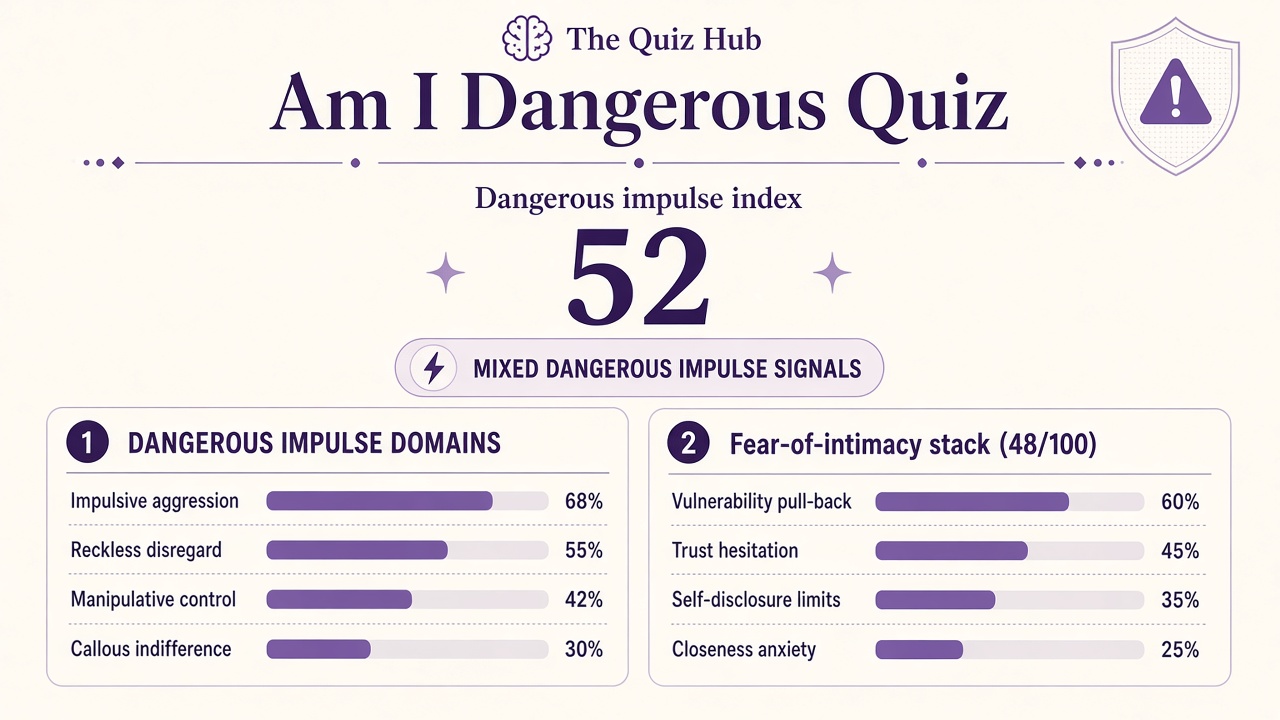
Your dangerous impulse index is the normalized total across all 22 items on a 0 to 100 scale. Higher scores mean more frequent endorsement of aggression urges, reckless disregard, control tactics, and callous indifference items on this screener. Domain bars show endorsement rates so you can see whether rage escalation, risky choices, monitoring, or remorse gaps drives your result most. The fear-of-intimacy stack chart shows parallel layers for vulnerability pull-back, trust hesitation, self-disclosure limits, and closeness anxiety when dangerous habits include guarded closeness.
| Band | Index range | Typical reading |
|---|---|---|
| Lower Dangerous Impulse Signals | 0 to 35 | Fewer dangerous habit signals; normal anger can still score here |
| Mixed Dangerous Impulse Signals | 36 to 65 | Blend of ordinary conflict strain and recurring aggression or control gaps; domain and stack charts show where you struggle most |
| Higher Dangerous Impulse Signals | 66 to 100 | Frequent rage escalation, reckless disregard, control tactics, or remorse gaps; check stack if closeness feels guarded too |
What your dangerous impulse report looks like
After all 22 items, you get a dangerous impulse index from 0 to 100, a band label, four domain bars for impulsive aggression, reckless disregard, manipulative control, and callous indifference, plus a fear-of-intimacy stack chart with vulnerability, trust, disclosure, and closeness anxiety layers.
What this quiz can and cannot tell you
Can tell you
- How often dangerous impulse habit patterns showed up in this self-report screener
- A dangerous impulse index and four domain bars for aggression, recklessness, control, and indifference habits
- A fear-of-intimacy stack showing which closeness-guarding layer feels strongest
- A starting point for therapy, anger management, or comparing with sibling tests
Cannot tell you
- Whether you are permanently dangerous or evil
- Whether habits are rooted in trauma, substance use, or personality without professional context
- Whether partners or friends agree with your self-view
- What treatment you need without licensed professional guidance
Dangerous impulses, control habits, and intimacy guarding
People search am I dangerous when conflict leaves them wondering whether they scare partners, push boundaries, or feel little remorse after harm. Psychologist Christopher Patrick and colleagues study impulsive aggression as a trait linked to hot-tempered reactions and poor frustration tolerance. Robert Hare's research on psychopathy highlights callous interpersonal style, though this quiz is a short self-report screener, not the Hare Psychopathy Checklist.
The Quiz Hub built this am I dangerous quiz as an original self-report screener inspired by those themes plus FOIS-style intimacy avoidance layers, not a reproduction of any published clinical instrument. Readers often compare it to sibling tools on this site. Our am I toxic quiz screens broader relationship harm across criticism, jealousy, control, and negativity. The am I a psychopath quiz maps dark triad agree-disagree items rather than frequency-based aggression habits. The am I a bully quiz focuses on bullying-specific exclusion and intimidation rather than partner monitoring or reckless disregard.
| The Quiz Hub test | What it adds |
|---|---|
| Am I toxic quiz | Broader criticism, jealousy, control, and negativity inventory without reckless disregard domain |
| Am I a psychopath quiz | Dark triad agree-disagree items without fear-of-intimacy stack chart |
| Am I a bully quiz | Bullying-specific exclusion and intimidation frequency, not partner monitoring items |
| Am I intimidating quiz | Presence impact screener without reckless disregard or callous indifference domains |
| Fear of intimacy quiz | General intimacy avoidance across vulnerability and trust, not aggression or control domains |
| This am I dangerous quiz | Dangerous impulse index plus fear-of-intimacy stack for impulsive aggression, reckless disregard, manipulative control, and callous indifference |
Sample item types include frequency ratings such as whether you threaten to leave or punish someone to get your way, or whether you feel little remorse after you clearly hurt someone who trusted you. High impulsive aggression with high closeness anxiety on the stack often lands in Mixed or Higher Dangerous Impulse Signals bands. Strong accountability on reverse-scored items with selective reckless disregard can score in Lower Dangerous Impulse Signals even when friends still want more repair after conflict. Read how we review quizzes in our editorial policy or browse more tools on our personality psychology hub.
Am I dangerous quiz FAQ
What does dangerous mean in this quiz?
On this screener, dangerous impulse habits refer to self-reported frequency of rage escalation, reckless choices that could harm people, control or monitoring tactics, and remorse gaps after harm. It is descriptive language about patterns, not a legal label or diagnosis. This am I dangerous quiz measures those themes plus a parallel fear-of-intimacy stack.
What does this am I dangerous quiz measure?
Twenty-two original frequency items ask how often you notice raising your voice in conflict, risky choices, threats or monitoring, or enjoying power over someone. Scores map to four dangerous impulse domains plus a parallel fear-of-intimacy stack with vulnerability pull-back, trust hesitation, self-disclosure limits, and closeness anxiety layers. You receive a dangerous impulse index from 0 to 100 where higher scores mean more dangerous habit signals on this screener, plus a stack index for intimacy guarding patterns.
What is the fear-of-intimacy stack on this quiz?
The fear-of-intimacy stack is a second results chart inspired by FOIS-style intimacy avoidance themes, adapted to dangerous impulse framing. Each of the 22 items also maps to one of four stack layers: vulnerability pull-back, trust hesitation, self-disclosure limits, and closeness anxiety. The stack index summarizes how often guarded closeness rides alongside aggression or control habits.
How is this different from the am I a psychopath quiz?
The am I a psychopath quiz uses agree-disagree dark triad items without a fear-of-intimacy stack chart. This am I dangerous quiz uses 22 how-often frequency items focused on rage escalation, reckless disregard, manipulative control, and callous indifference, plus a dual-chart report with intimacy stack layers.
Can this quiz tell me if I am a dangerous person forever?
No. Impulse and control habits can change with feedback, therapy, and accountability work. This screener describes pattern signals you notice right now, not a permanent label or diagnosis. Treat results as a starting point for reflection, not proof of character.
Who reviewed this content?
Dr. James Whitfield, PhD, reviewed the test framing and result explanations. See our editorial policy for review standards.
Reviewed by