What this am i toxic quiz measures
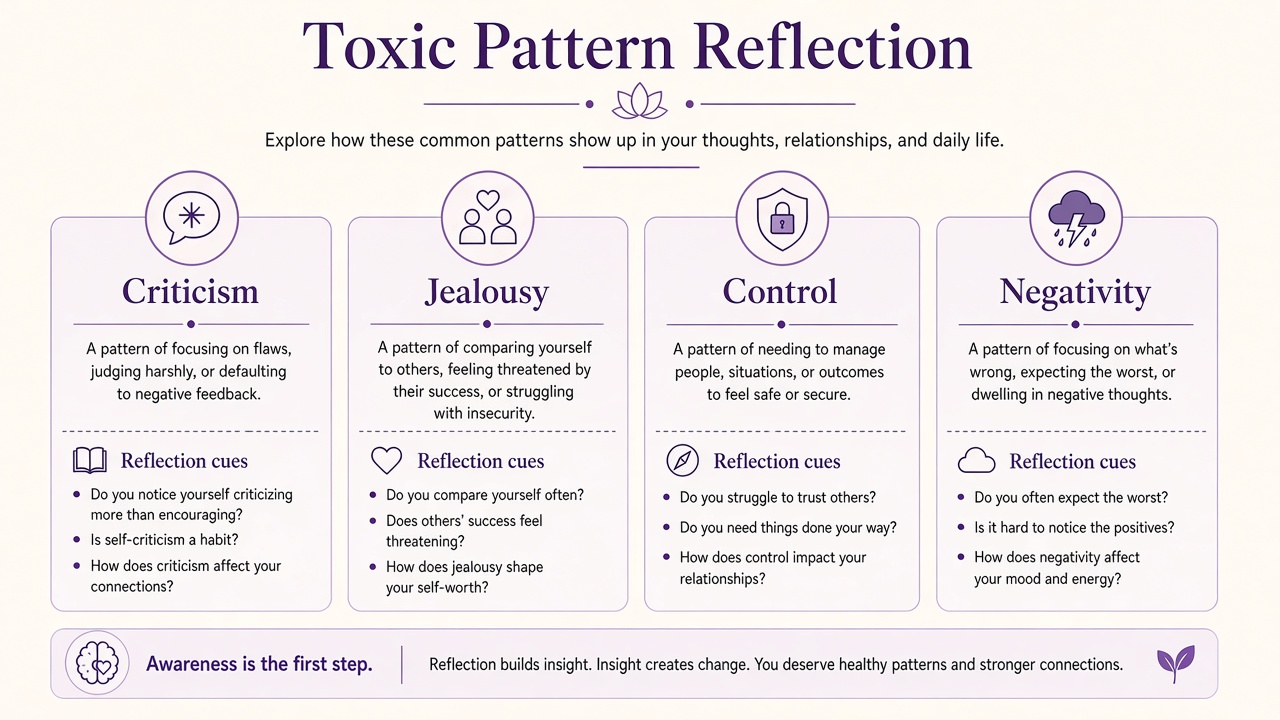
This quiz maps four interpersonal areas people mean when they ask am i toxic: harsh criticism, jealous insecurity, controlling behavior, and chronic negativity. Items use original wording for online self-report. Results group into reflection bands, not permanent labels.
Criticism
Sarcasm, public put-downs, and character attacks when you feel annoyed or disappointed.
Jealousy
Comparison, suspicion, snooping, and punishing partners for normal social contact.
Control
Monitoring, guilt-tripping, silent treatment, and overriding other people's choices.
Negativity
Pessimism, worst-case assumptions, and mood that drains group energy over time.
How it works
Three steps from first question to your reflection band. Click Start Quiz to open the interactive test in a full-screen modal.
Answer 35 statements
Rate how much you agree with each item on a five-point scale. Most prompts begin with "I tend to."
Items map to four dimensions
Your answers accumulate scores across criticism, jealousy, control, and negativity.
View your pattern band
Results show self-aware, balanced, or higher toxicity patterns with dimension bars, highlights, and honest limits.
Take the am i toxic quiz
Rate thirty-five statements about criticism, jealousy, control, and negativity. Your pattern band reflects how your answers cluster, not whether you are a bad person.
Opens in a focused modal. No account required. Results stay on screen.
What your result means
Band labels group your four dimension scores into plain-language patterns. Read dimension bars when the headline band feels too broad. None of these labels prove you are toxic or harmless forever.
| Pattern band | Typical reading | What to do next |
|---|---|---|
| Self-Aware Pattern | Worry about being toxic without high behavioral agreement | Separate harsh self-labels from how you actually treat people |
| Balanced Reflection | Mix of ordinary friction, accountability, and room to grow | Notice which dimension still pulls hardest in conflict |
| Higher Toxicity Patterns | Higher criticism, jealousy, control, or negativity scores | Reflect on repair; seek support if patterns feel chronic |
Self-aware, balanced, and higher toxicity patterns
Interpersonal friction is not a single yes-or-no label. This diagram shows the three bands used on The Quiz Hub plus the criticism, jealousy, control, and negativity dimensions behind your score. Compare with our difficult person test for broader friction traits or the am I a bad person quiz for empathy and integrity patterns.
What this quiz can and cannot tell you
Can tell you
- How your self-report clusters on criticism, jealousy, control, and negativity items
- Whether worry about being toxic may be louder than your typical behavior
- A plain-language pattern band for reflection and conversation
- A starting point before deeper quizzes like Mach IV or difficult person tests
Cannot tell you
- Whether you are abusive, evil, or irredeemable
- Narcissism, psychopathy, or personality disorder status
- Legal guilt, hiring fit, or relationship verdicts
- Scores from any validated clinical toxic personality instrument
Why people ask am i toxic
The question am i toxic often appears after a fight, a jealous spiral, or a friend saying you were too harsh. Relationship researchers treat toxic behavior as patterns of criticism, control, negativity, and insecurity over time, not a permanent stamp on your identity. Criticism erodes trust when it becomes character attacks. Jealousy turns normal social contact into surveillance. Control replaces consent with pressure. Negativity drains rooms even when you feel you are only being realistic.
Self-aware scorers may agree with worry items while behavioral items stay moderate. That pattern is common after social media pile-ons, breakups, or one regrettable outburst. Higher pattern scores suggest reviewing how conflict, monitoring, or pessimism show up in close relationships. Neither band is a life sentence. Interpersonal habits can shift with apology, boundaries, and sometimes therapy.
Sample item: "I tend to call myself toxic for having a bad week when I did not lash out at anyone." High agreement nudges toward a self-aware band when criticism and control scores stay lower. For tactical interpersonal style, try our Mach IV test. For empathy and integrity framing, see the am I a bad person quiz. For five-trait friction profiles, see the difficult person test. Context on relationship health appears in the APA relationships topic hub. Browse more quizzes on our personality psychology hub.
Am i toxic quiz FAQ
What does the am i toxic quiz measure?
This quiz measures self-reported patterns across criticism, jealousy, control, and negativity from thirty-five agree-disagree statements. It groups answers into self-aware, balanced, or higher toxicity pattern bands for reflection. It is not a relationship verdict or clinical assessment.
Does a higher toxicity pattern band mean I am abusive?
No. A higher band means you agreed more with items about harsh criticism, jealous monitoring, controlling behavior, or chronic negativity in this quiz. That flags habits worth examining, not proof you are irredeemable or abusive. Many people score here during stress and change patterns with awareness and support.
What is a self-aware pattern band?
A self-aware band appears when worry-about-being-toxic items score high while criticism, jealousy, control, and negativity items stay moderate. That pattern is common after one fight or guilty week. It suggests your inner label may be harsher than your typical behavior toward others.
How long does the am i toxic quiz take?
Most people finish in about six minutes. There are thirty-five items on a five-point agree scale. You can pause and return in the same browser session thanks to autosave.
Is this quiz clinical or diagnostic?
No. It does not screen for narcissism, psychopathy, or personality disorder. It does not diagnose toxic personality or predict relationship outcomes. It is educational self-reflection only, with crisis resources linked on the limits section.
Who reviewed this content?
Dr. James Whitfield, PhD, reviewed the test framing and result explanations. See our editorial policy for review standards.
Reviewed by