What this age regression test measures
This age regression test reflects on how often stress-related regressive coping showed up for you in the past month. It groups 21 self-report items into three domains: soothing behaviors, what tends to trigger them, and how they affect daily life. The goal is compassionate understanding, not judgment.
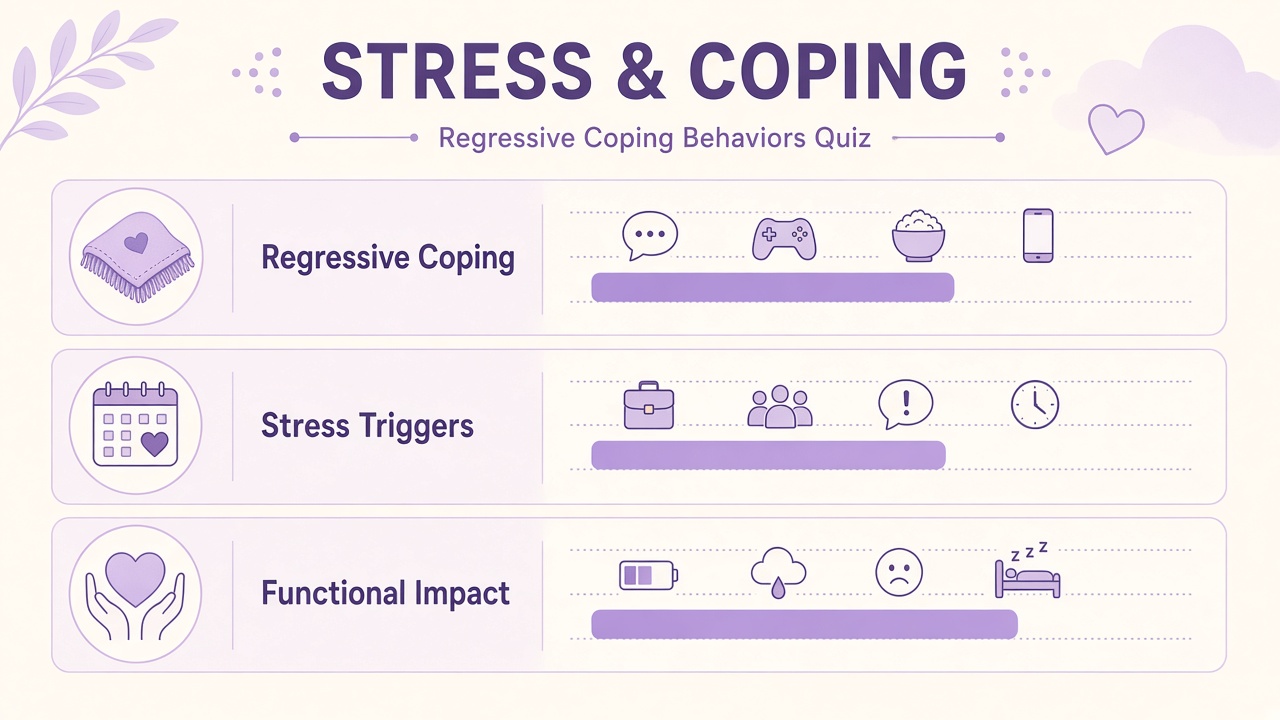
Regressive coping
Comfort objects, childlike speech urges, seeking caregiving, escapism into cartoons or nostalgic media, and zoning out from adult tasks.
Stress triggers
Conflict, rejection, overwhelm, loneliness, sleep loss, emotional floods, and reminders of past hurt that spike soothing urges.
Functional impact
Skipped responsibilities, shame about comfort habits, trouble returning to adult tasks, social avoidance, and strained caregiving needs.
Past-month recall
Items ask about frequency in the last four weeks, matching how stress screeners frame recent coping rather than lifelong personality traits.
How it works
Three steps from first question to your regressive coping reflection band. Click Start Test to open the interactive screener in a full-screen modal.
Answer 21 frequency items
Rate each statement from Never to Very often about the past month. There is no timer and no auto-advance between items.
Items map to three domains
Your answers accumulate percentages for regressive coping, stress triggers, and functional impact on daily life.
View reflection band and next steps
Results show Lower, Moderate, or Elevated regressive coping patterns with domain bars, highlights, and professional referral guidance when appropriate.
Take the age regression test
Rate 21 stress-coping statements on a five-point frequency scale about the past month. Your answers produce an overall regressive coping percentage, three domain scores, and plain-language next steps without diagnostic labels.
Opens in a focused modal. No account required. Results stay on screen.
What your result means
Your overall regressive coping percentage is the average of regressive coping, stress triggers, and functional impact domain scores, each normalized to 0 through 100. The band groups that average into plain-language reflection signals. Domain bars show whether escapism, triggers, or daily disruption drives your result.
| Reflection band | Score range | Typical reading |
|---|---|---|
| Lower Regressive Coping Pattern | 0 to 35% | Occasional comfort-seeking under stress without frequent regressive patterns |
| Moderate Regressive Coping Pattern | 36 to 55% | Some frequent soothing habits worth tracking with compassion, especially during active stress |
| Elevated Regressive Coping Pattern | 56 to 100% | Frequent comfort-seeking or escapism that may benefit from professional support |
These bands describe coping frequency on this screener. They do not indicate dissociative identity disorder, immaturity, or any clinical label. Many adults use comfort habits during hard seasons without it meaning something is fundamentally wrong with them.
Age regression coping domains
The diagram below shows how domain scores appear in your results. High regressive coping with moderate functional impact might still land you in Moderate if your overall average sits between bands.
What this test can and cannot tell you
Can tell you
- Whether your self-reported regressive coping leans mild, moderate, or frequent on this screener
- A reflection percentage and three domain scores for coping, triggers, and daily impact
- Which stressors and soothing habits cluster together in your answers
- A starting point for conversations with a therapist about stress responses without shame
Cannot tell you
- Whether you have dissociative identity disorder, a trauma disorder, or any clinical condition
- Whether comfort-seeking is healthy self-soothing versus a sign of clinical dissociation
- Whether you need a specific therapy type, medication, or lifestyle change
- Whether symptoms are better explained by burnout, grief, anxiety, or situational stress alone
Stress coping and regressive behaviors
When adults feel overwhelmed, many reach for comfort objects, nostalgic media, or caregiving from trusted people. Therapists sometimes describe these as regressive coping responses: the nervous system seeking safety through habits that felt protective earlier in life. Research on stress and attachment notes that soothing behaviors can increase during burnout, trauma reminders, and chronic anxiety without implying a personality flaw or clinical dissociation.
The Quiz Hub built this age regression test as a plain-language reflection screener on stress-related regressive coping over the past month. It is separate from our playful mental age test, which estimates lifestyle attitude age from humor and nostalgia rather than clinical coping under stress. For broader wellbeing across mood, anxiety, sleep, and functioning, take our mental health test. For worry and tension that may fuel escapism, see our anxiety test.
| The Quiz Hub test | What it adds |
|---|---|
| Mental age test | Playful lifestyle attitude estimate from humor, nostalgia, and habits, not stress-triggered regressive coping |
| Mental health test | Four-domain wellbeing snapshot including mood and sleep, not comfort-seeking or escapism focus |
| Anxiety test | GAD-7 inspired worry and tension domains, not regressive soothing behaviors under stress |
| This age regression test | Regressive coping, stress triggers, and functional impact domain scores with compassionate reflection bands |
Sample item: rating Often on reaching for a comfort object when stressed raises your regressive coping domain score. Rating Very often on shame about comfort habits raises functional impact. Past trauma, loneliness, and sleep loss can all increase soothing urges without meeting any clinical threshold. Clinicians distinguish overwhelm from dissociative disorders through structured interviews, not online quizzes. Browse more screeners on our mental health and clinical hub or read how we review quizzes in our editorial policy.
Age regression test FAQ
What does this age regression test measure?
This age regression test measures self-reported frequency of stress-related regressive coping over the past month. Twenty-one items cover comfort objects, childlike speech urges, seeking caregiving, escapism into safe media, stress triggers, and functional impact on daily life. Results show a reflection band and three domain scores. It is not a clinical diagnosis and does not assess dissociative identity disorder.
Is age regression the same as dissociative identity disorder?
No. Age regression as a stress coping response involves comfort-seeking, escapism, or feeling small when overwhelmed. Dissociative identity disorder is a distinct clinical condition diagnosed through structured clinical interviews. This quiz reflects on coping habits under stress. It cannot confirm or rule out any dissociative or trauma-related diagnosis.
How is this different from the mental age test?
The mental age test on The Quiz Hub estimates how young or mature your lifestyle attitudes feel based on humor, nostalgia, and habits. It is playful self-reflection, not clinical. This age regression test focuses on stress-triggered regressive coping behaviors such as comfort objects and escapism over the past month.
Does an elevated result mean something is wrong with me?
An elevated regressive coping pattern means your responses suggest frequent comfort-seeking or escapism under stress on this screener. Many adults use soothing habits during burnout, grief, or anxiety without it reflecting immaturity or a disorder. Consider talking with a therapist if patterns feel stuck, shameful, or disruptive to daily life.
What should I do if I get an elevated regressive coping signal?
Consider scheduling an evaluation with a licensed therapist who understands stress responses and trauma-informed care. Bring your result summary and describe which stressors precede comfort-seeking. If you feel unsafe or in crisis, call or text 988 (US) or your local crisis line.
Who reviewed this content?
Dr. Elena Vasquez, PhD, reviewed the test framing and result explanations. See our editorial policy for review standards.
Reviewed by