What this intimidation presence quiz measures
This am I intimidating quiz estimates how often others may read your presence, speech, competence signals, or emotional reserve as intense or hard to approach. Twenty original frequency items group into four domains inspired by social perception research from Alexander Todorov on face-based trait inferences and dominance cues in group settings: physical presence, direct communication, competence display, and emotional reserve. Each item also maps to a fear-of-intimacy stack layer so you can see whether vulnerability pull-back, trust hesitation, self-disclosure limits, or closeness anxiety pairs with an intimidating first impression. Your intimidation presence index averages these patterns into a 0 to 100 score where higher numbers mean more intimidating signals on this screener.
Physical presence
Firm voice, intense eye contact, stern resting face, and body language that makes others pause before approaching.
Direct communication
Blunt honesty, public correction, short refusals, and interrupting when you are confident you are right.
Competence display
Credential mentions, win talk that quiets rooms, technical depth, and performance comparisons.
Emotional reserve
Slow warm-up, private personal details, solution-first reactions, and flat calm when warmth is expected.
How it works
Three steps from first question to your intimidation presence report with fear-of-intimacy stack. Click Start Quiz to open the interactive quiz in a full-screen modal.
Answer 20 frequency items
Rate how often each pattern shows up in how others react to you, from Never to Almost always. You click Next after each answer; nothing auto-advances.
Items map to presence domains and intimacy stack
Your answers accumulate percentages for physical presence, direct communication, competence display, and emotional reserve, plus four fear-of-intimacy stack layers.
View band and dual charts
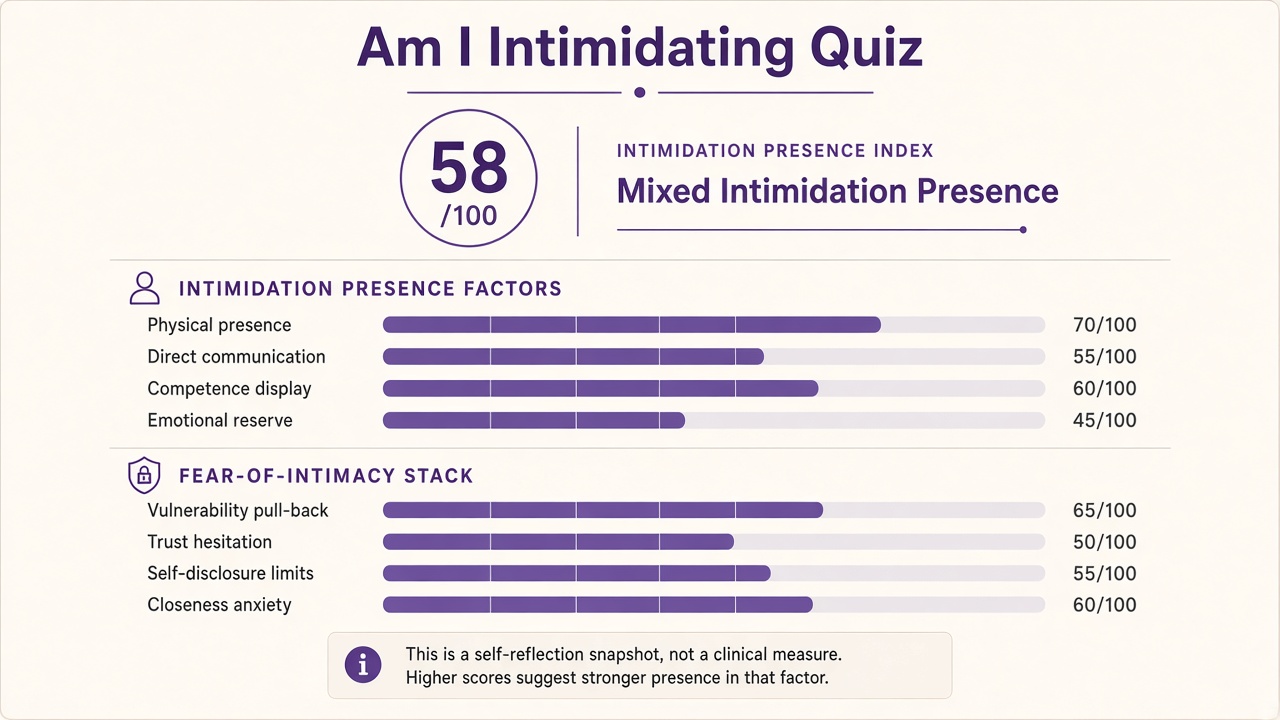
Results show Lower, Mixed, or Higher Intimidation Presence with domain bars and a fear-of-intimacy stack chart. Higher index means more intimidating signals on this screener.
Take the am I intimidating quiz
Rate 20 statements about how others may react to your presence and directness. Your answers produce an intimidation presence index from 0 to 100, a fear-of-intimacy stack index, four domain scores, and a band label for reflection or therapy conversation.
Opens in a focused modal. No account required. Results stay on screen.
What your intimidation presence result means
Your intimidation presence index is the normalized total across all 20 items on a 0 to 100 scale, with reverse scoring on approachable items so higher scores mean more intimidating signals overall. The fear-of-intimacy stack index uses the same answers mapped to vulnerability, trust, disclosure, and closeness anxiety layers where higher stack scores mean more avoidance patterns. Domain bars show endorsement rates so you can see whether physical presence, direct communication, competence display, or emotional reserve drives your result most.
| Band | Index range | Typical reading |
|---|---|---|
| Lower Intimidation Presence | 0 to 35 | Fewer intimidating signals; situational assertiveness can still spike scores temporarily |
| Mixed Intimidation Presence | 36 to 65 | Blend of approachable moments and intense habits; domain and stack charts show where you guard closeness |
| Higher Intimidation Presence | 66 to 100 | Frequent firm presence, blunt speech, status talk, or emotional distance on this screener |
What your intimidation presence report looks like
After all 20 items, you get an intimidation presence index from 0 to 100, a band label, four presence domain bars, and a fear-of-intimacy stack chart with vulnerability pull-back, trust hesitation, self-disclosure limits, and closeness anxiety layers. Percentages reflect how you report others reacting to you, not a verdict on your worth.
What this quiz can and cannot tell you
Can tell you
- How often physical presence, direct communication, competence display, and emotional reserve patterns showed up in your self-report
- An intimidation presence index and fear-of-intimacy stack index with domain bars
- Which presence domain or intimacy stack layer feels strongest in your current habits
- A starting point for therapy conversation about tone, warmth, and first impressions
Cannot tell you
- Whether every person finds you intimidating without their side of the story
- Whether you are toxic, narcissistic, or a bad partner
- Whether intimidation is harmful or helpful without your own context and values
- What specific changes others want without honest conversation and trusted guidance
Intimidation cues, social perception, and the fear-of-intimacy stack
Psychologist Alexander Todorov showed that people form rapid trait judgments from faces and posture, including competence and dominance cues that can outrun what someone intends to communicate. In groups, a firm voice, stern resting face, or blunt correction can read as confidence to some listeners and threat to others, especially when cultural norms reward soft openings or visible warmth.
The Quiz Hub built this am I intimidating quiz as an original self-report screener inspired by those social perception themes plus FOIS-style intimacy avoidance layers from Descutner and Thelen (1991), not a reproduction of any single published intimidation scale. Readers often compare it to sibling tools on this site. Our alpha female quiz screens leadership presence and assertive boundaries from pop-culture alpha framing. The fear of intimacy quiz measures general vulnerability pull-back across closeness desire. The am I emotionally unavailable quiz covers hot-and-cold distance habits rather than how others shrink around your tone.
| The Quiz Hub test | What it adds |
|---|---|
| Alpha female quiz | Leadership presence and assertive boundaries from alpha framing, not how others react to your tone |
| Alpha male quiz | Male-coded leadership and dominance traits plus intimacy stack, not frequency-based intimidation cues |
| Fear of intimacy quiz | General intimacy avoidance across vulnerability and trust, not physical presence or competence display |
| Am I emotionally unavailable quiz | Hot-and-cold consistency and distance habits, not blunt speech or status signaling |
| Am I insecure quiz | Self-worth swings and reassurance dependence, not how others read your presence |
| This intimidating quiz | Intimidation presence index plus fear-of-intimacy stack for presence, directness, competence, and reserve |
Sample item types include frequency ratings such as whether people pause before answering you in groups, or whether you keep personal details private even after months of acquaintance. High direct communication with high closeness anxiety on the stack often lands in Mixed or Higher Intimidation Presence bands. Warmth in casual settings with firm leadership at work can split domain scores. Read how we review quizzes in our editorial policy or browse more tools on our personality psychology hub.
Am I intimidating quiz FAQ
What does the am I intimidating quiz measure?
Twenty original frequency items ask how often others may react to your physical presence, direct communication, competence display, or emotional reserve. Each item also maps to a fear-of-intimacy stack layer: vulnerability pull-back, trust hesitation, self-disclosure limits, and closeness anxiety. You receive an intimidation presence index from 0 to 100 where higher scores mean more intimidating signals on this screener, plus a parallel stack index.
Does a higher intimidation presence index mean I am a bad person?
No. On this screener, a higher index means you endorsed more firm presence, blunt speech, status talk, or emotional distance items. Many capable leaders score high without intending harm. This quiz cannot prove how every person experiences you or replace honest feedback from people who know you.
What is the fear-of-intimacy stack on this quiz?
The fear-of-intimacy stack is a second results chart inspired by FOIS-style intimacy avoidance themes from Descutner and Thelen (1991), adapted to intimidation framing. Each of the 20 items maps to one of four stack layers showing how closeness guarding may pair with an intense first impression: hiding vulnerability, testing trust, limiting disclosure, or worrying about being too close. Higher stack scores mean more avoidance patterns on these items.
How is this different from the alpha female quiz?
The alpha female quiz uses agree-disagree items about leadership presence, assertive boundaries, independent drive, and visible confidence from pop-culture alpha framing. This am I intimidating quiz uses a frequency frame about how others react to you, with domains for physical presence, direct communication, competence display, and emotional reserve.
How is this different from the fear of intimacy quiz?
The fear of intimacy quiz measures general vulnerability avoidance and trust hesitation across closeness desire. This intimidating quiz focuses on how others may read your presence and directness, with intimidation presence domains plus a parallel fear-of-intimacy stack chart in one report.
Can this quiz tell me if people are afraid of me?
No. The intimidation presence index describes self-reported patterns on this abbreviated screener. Cultural context, mood, and relationship history all shape first impressions. Only people in your life can tell you how your tone lands, ideally through honest conversation.
Who reviewed this content?
Dr. James Whitfield, PhD, reviewed the test framing and result explanations. See our editorial policy for review standards.
Reviewed by