What this caffeine addiction quiz measures
This am I addicted to caffeine quiz estimates how often problematic caffeine use patterns showed up over the past two weeks. Twenty self-report items group into four domains drawn from caffeine dependence research: compulsive use, withdrawal symptoms, life impact, and intake balance. Your caffeine dependency index averages these patterns into a 0 to 100 score with plain-language bands. It reflects your self-report about coffee, tea, and energy drink habits, not lab caffeine levels.
Compulsive use
Unplanned refills, morning-first dosing, afternoon top-ups, and broken promises to skip.
Withdrawal symptoms
Headaches, fatigue, irritability, and fog when caffeine is late or missing.
Life impact
Sleep loss, jitters, overspending, hiding intake, and continued use despite health worries.
Intake balance
Skipping days without distress, honoring limits, enjoying decaf, and protecting sleep.
How it works
Three steps from first question to your caffeine dependency report. Click Start Quiz to open the interactive quiz in a full-screen modal.
Answer 20 frequency items
Rate how often each caffeine habit showed up in the past two weeks, from Never to Very often. You click Next after each answer; nothing auto-advances.
Items map to four dependency domains
Your answers accumulate percentages for compulsive use, withdrawal symptoms, life impact, and intake balance, plus an overall dependency index.
View band and domain bars
Results show Lower, Mixed, or Higher Dependency Signals with domain bars and reflection prompts. Higher bands include crisis resources.
Take the am I addicted to caffeine quiz
Rate 20 statements about caffeine habits on a five-point frequency scale. Your answers produce a caffeine dependency index from 0 to 100, four domain scores, and a band label for reflection or a clinician conversation.
Opens in a focused modal. No account required. Results stay on screen.
What your result means
Your caffeine dependency index is the normalized total across all 20 items on a 0 to 100 scale, with reverse scoring on intake balance items so higher scores mean more dependency overall. Domain bars show endorsement rates so you can see whether compulsive refills, withdrawal when skipping, life impact, or weak balance drives your result most.
| Band | Index range | Typical reading |
|---|---|---|
| Lower Dependency Signals | 0 to 35 | Fewer problematic caffeine patterns on this screener; busy weeks may still spike intake |
| Mixed Dependency Signals | 36 to 65 | Blend of enjoyable use and habits that may be hard to control; worth tracking if persistent |
| Higher Dependency Signals | 66 to 100 | Frequent compulsive use, withdrawal symptoms, or life impact; medical support may help |
What your caffeine dependency report looks like
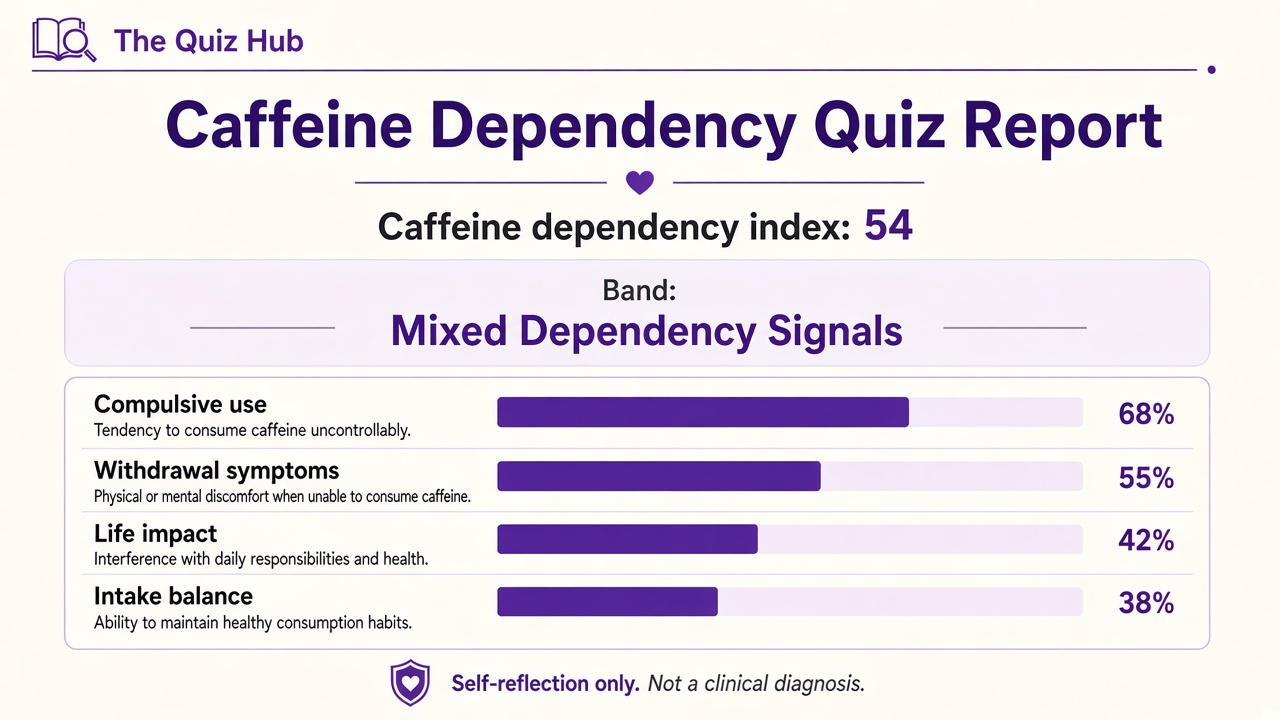
After all 20 items, you get a caffeine dependency index from 0 to 100, a band label, and four domain bars for compulsive use, withdrawal symptoms, life impact, and intake balance. Percentages reflect how often caffeine habits showed up in the past two weeks, not a clinical verdict about addiction.
What this quiz can and cannot tell you
Can tell you
- How often caffeine dependency patterns showed up for you in the past two weeks
- A caffeine dependency index and four domain bars for compulsive use, withdrawal, impact, and balance
- Which domain pattern feels strongest in your current coffee or energy drink habits
- A starting point for a clinician conversation or retaking after a taper attempt
Cannot tell you
- Whether you have caffeine use disorder or any clinical diagnosis
- Your exact daily milligrams of caffeine without tracking labels and serving sizes
- Whether you should quit cold turkey without medical guidance for your health profile
- What treatment you need without a licensed clinician's evaluation
Caffeine dependence, withdrawal, and intake balance
Researchers Roland Griffiths and colleagues documented caffeine dependence and withdrawal in controlled studies published in the Journal of the American Medical Association in 1994. Their work showed that regular caffeine users can develop withdrawal headaches, fatigue, and irritability within hours of abstinence. A 2013 review by Steven E. Meredith and colleagues in the Journal of Caffeine Research summarized diagnostic criteria overlap with other substance use patterns: unsuccessful efforts to cut down, continued use despite harm, and craving. The DSM-5 lists caffeine use disorder as a condition for further study, reflecting clinical interest without full diagnostic code status in every setting.
The Quiz Hub built this am I addicted to caffeine quiz as an original self-report screener inspired by those themes, not a reproduction of any single published instrument. Readers often compare it to sibling tools on this site. Our why am I so tired quiz screens fatigue drivers across sleep and stress rather than stimulant habits. The anxiety test maps persistent worry and tension that can overlap with caffeine jitters but uses a different symptom frame. The am I burnt out quiz measures exhaustion and cynicism over a month, not coffee refills.
| The Quiz Hub test | What it adds |
|---|---|
| Why am I so tired quiz | Fatigue drivers across sleep, stress, and rhythm, not caffeine dependency domains |
| Anxiety test | Persistent worry and tension screening, not stimulant use frequency |
| Am I burnt out quiz | Exhaustion and cynicism over a month, not withdrawal when skipping coffee |
| Am I addicted to social media quiz | Scrolling urges and digital balance, not caffeine intake patterns |
| Am I a workaholic quiz | Compulsive overwork and rest tolerance, not stimulant dependence |
| This caffeine addiction quiz | Four-domain dependency index for compulsive use, withdrawal, life impact, and intake balance |
Sample item types include frequency ratings such as whether you had a headache when you missed your usual caffeine, or whether you stuck to a daily limit you set for yourself. High compulsive use with high withdrawal symptoms often lands in Mixed or Higher Dependency Signals. Exam season, shift work, or new parenthood can spike scores temporarily. Read how we review quizzes in our editorial policy or browse more screeners on our mental health and clinical hub. The NIH overview of caffeine and dependence describes warning signs clinicians often discuss during evaluation.
Am I addicted to caffeine quiz FAQ
What counts as caffeine addiction?
Caffeine addiction usually refers to compulsive use despite wanting to cut back, withdrawal symptoms such as headaches or irritability when skipping doses, tolerance that pushes intake higher, and life problems such as sleep loss or jitters tied to stimulant use. The DSM-5 lists caffeine use disorder as a condition for further study. This am I addicted to caffeine quiz measures how often those patterns showed up over the past two weeks. It is not a clinical diagnosis.
What does this caffeine addiction quiz measure?
Twenty original frequency items ask how often you experience compulsive use, withdrawal symptoms, life impact, and weak intake balance. Scores map to four domains inspired by caffeine dependence research (Griffiths et al., 1994; Meredith et al., 2013). You receive a caffeine dependency index from 0 to 100 and a band from Lower through Higher Dependency Signals.
How is this different from the why am I so tired quiz?
The why am I so tired quiz screens fatigue drivers across sleep, stress, physical sluggishness, mood, and lifestyle rhythm. This caffeine addiction quiz focuses on stimulant habits, withdrawal when skipping coffee, and whether intake feels hard to control. Both are screeners, but they measure different behavior clusters.
Can this quiz diagnose caffeine use disorder?
No. The caffeine dependency index describes self-reported use patterns on this abbreviated screener. Only a licensed clinician can evaluate substance use concerns through structured interviews and medical history. Online quizzes cannot confirm or deny a diagnosis.
What should I do if I get a higher dependency band?
Consider scheduling an evaluation with your primary care clinician to review daily caffeine intake, heart or sleep symptoms, and a gradual taper plan if needed. Bring your result summary and describe sources, timing, and what happens when you skip. If you feel unsafe or in crisis, call or text 988 (US) or your local crisis line.
Who reviewed this content?
Dr. Elena Vasquez, PhD, reviewed the test framing and result explanations. See our editorial policy for review standards.
Reviewed by