What this tofu test relationship measures
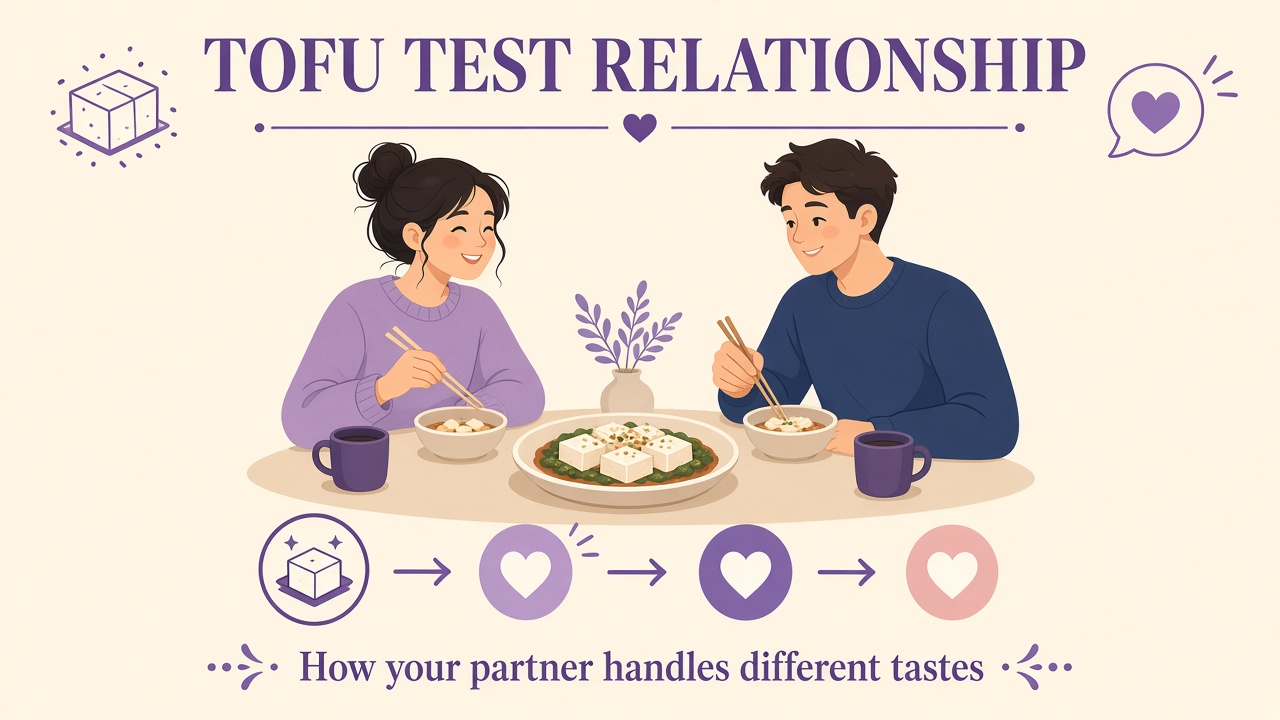
The tofu test relationship trend on social media asks partners to notice how they react when you share a food preference they do not share. Therapists and relationship educators often note that small taste clashes can mirror broader openness to your culture, identity, and comfort. This quiz turns that idea into 22 original items about food respect, curiosity, sampling new dishes, and defensiveness when preferences differ. Results show a partner openness index and four domain bars from your observations only.
Respect for your food preferences
Honoring dietary choices, remembering dislikes, and treating your comfort foods as valid without pressure or judgment.
Curiosity vs mockery
Asking about your food background with genuine interest instead of sarcasm, disgust, or dismissive jokes.
Willingness to try
Sampling what you recommend, joining you at favorite spots, and giving unfamiliar foods a fair chance.
Low defensiveness when tastes differ
Staying calm when preferences clash, accepting different tastes without lectures, and avoiding food grudges.
How it works
Three steps from first question to your partner openness snapshot. Click Start Quiz to open the interactive modal.
Rate your partner 22 times
Answer how often each statement applies from Never to Almost always. There is no timer and no auto-advance.
Items map to four domains
Your answers accumulate percentages for food respect, curiosity, willingness to try, and low defensiveness.
View band and next steps
Results show Lower Openness Signals, Mixed Acceptance Pattern, or Higher Openness Signals with domain bars and conversation prompts.
Take the tofu test relationship quiz
Rate 22 behavior statements about your partner on a five-point frequency scale. Your answers produce a partner openness index, four domain scores, and a reflective band with plain-language next steps.
Opens in a focused modal. No account required. Results stay on screen.
What your result means
Your partner openness index is the normalized total across all 22 items on a 0 to 100 scale. Higher percentages mean more frequent endorsement of positive food openness items and less frequent endorsement of reverse-scored mockery or defensiveness items. Domain bars show whether respect, curiosity, willingness to try, or defensiveness drives your band most.
| Openness band | Score range | Typical reading |
|---|---|---|
| Lower Openness Signals | 0 to 35% | Fewer observed accepting behaviors around food differences; worth reflecting and communicating, not a final verdict |
| Mixed Acceptance Pattern | 36 to 65% | Respectful at times but uneven in curiosity, sampling, or calm when tastes clash; common when cultures or diets differ |
| Higher Openness Signals | 66 to 100% | Frequent respect, curiosity, willingness to try, and low defensiveness on food items; encouraging data, still not mind-reading |
What your tofu test report looks like
After all 22 items, you get a partner openness index from 0 to 100, an openness band, and four domain bars for respect for your food preferences, curiosity versus mockery, willingness to try, and low defensiveness when tastes differ. Percentages reflect how often you endorsed openness items from your point of view, not proof of your partner's inner feelings.
What this quiz can and cannot tell you
Can tell you
- Whether your observed food openness patterns lean lower, mixed, or higher on this screener
- A partner openness index and four domain scores for taste and dietary differences
- Which domain bar scores highest and may deserve a direct conversation first
- A starting point for reflection before you discuss food expectations with your partner
Cannot tell you
- Whether your partner loves you, will commit, or should stay or leave
- Your partner's private thoughts when their actions look ambiguous
- Whether abuse, manipulation, or cheating is present (this is not a safety screener)
- Full compatibility or love language fit (see sibling tests below)
The viral tofu trend and accepting differences
The tofu test spread on TikTok and Instagram as a playful relationship check: share a food you love, such as tofu, kimchi, or a childhood dish, and notice whether your partner responds with curiosity, respect, or mockery. Food psychologists and couples therapists often say taste clashes surface deeper questions about accepting your culture, identity, and comfort. A 2020 review in Journal of Family Psychology literature notes that perceived partner responsiveness predicts satisfaction, but perception and reality can diverge when past hurt colors interpretation.
The Quiz Hub built this tofu test relationship quiz as a compassionate reflection tool, not a verdict machine. Twenty-two original items ask about restaurants, home cooking, dietary needs, and tone beyond the literal tofu moment. That framework helps organize mixed signals before you talk with your partner. For another viral small-act metaphor about daily care, try our orange peel test. For how partners respond to everyday shares, see our bird test relationship. For values and lifestyle fit beyond food, take our compatibility test. For how you prefer to give and receive care, see our love language test.
| The Quiz Hub test | What it adds |
|---|---|
| Orange peel test | Small-favor willingness, warm tone, attentiveness, and generosity on everyday errands and chores |
| Bird test relationship | Gottman-inspired bid responsiveness when you share ordinary life moments |
| Compatibility test | Values alignment, communication, conflict repair, and lifestyle fit across 30 items |
| Love language test | Chapman-inspired domains for how you prefer to give and receive care |
| Attachment style test | ECR-inspired anxiety and avoidance quadrants that shape how you interpret partner behavior |
| This tofu test relationship quiz | 22 items on food respect, curiosity, willingness to try, and defensiveness with three bands |
Sample item: rating Often on honoring your dietary choices raises your food respect bar. Rating Almost always on sarcasm when you eat something they dislike raises your curiosity concern through a reverse-scored item. Busy seasons, sensory sensitivity, or different cultural norms around food can temporarily lower scores without meaning rejection is present. Read how we review quizzes in our editorial policy or browse more tests on our relationships and dating hub.
Tofu test relationship FAQ
What is the tofu test in relationships?
The tofu test is a viral social media trend where someone shares a food preference, such as loving tofu or a specific cuisine, and watches how their partner responds. The idea is that reactions to small taste differences can mirror broader openness to your identity and culture. This quiz expands that metaphor with 22 behavior items about food respect, not just one ingredient.
What does this tofu test relationship quiz measure?
This tofu test measures your observations of your partner on four domains: respect for your food preferences, curiosity versus mockery about different tastes, willingness to try things you like, and defensiveness when tastes differ. Results show a partner openness index from 0 to 100 and three reflective bands. It cannot read your partner's mind.
Can the tofu test tell me to break up?
No. This quiz is a conversation starter, not a breakup verdict or abuse detector. Lower scores suggest fewer visible openness signals on these food-related items from your point of view. Direct talk about needs beats turning one viral moment or one score into an ultimatum.
How is this different from the orange peel test?
The orange peel test focuses on small-favor willingness, warm tone, attentiveness, and generosity on everyday errands and chores. The tofu test focuses on food taste differences: respecting dietary choices, curiosity about your cuisine, sampling what you recommend, and staying calm when preferences clash. Pair both for daily care signals plus food acceptance patterns.
Should I literally ask my partner to eat tofu?
You can share a food you love, but one meal is not the whole relationship. The viral trend uses food as a metaphor for accepting differences in taste, culture, and identity. This quiz asks about broader patterns such as mockery at restaurants, refusing to try your favorites, and food arguments that never end.
Who reviewed this content?
Dr. Priya Sharma, PhD, reviewed the test framing and result explanations. See our editorial policy for review standards.
Reviewed by