What this signs you need to go to a mental hospital quiz measures
People search signs you need to go to a mental hospital quiz when fear, burnout, or self-harm thoughts make them wonder whether they need emergency care. This reflection tool screens three areas clinicians often explore during a safety check. It uses plain-language items about the past two weeks, not lifetime psychiatric criteria.
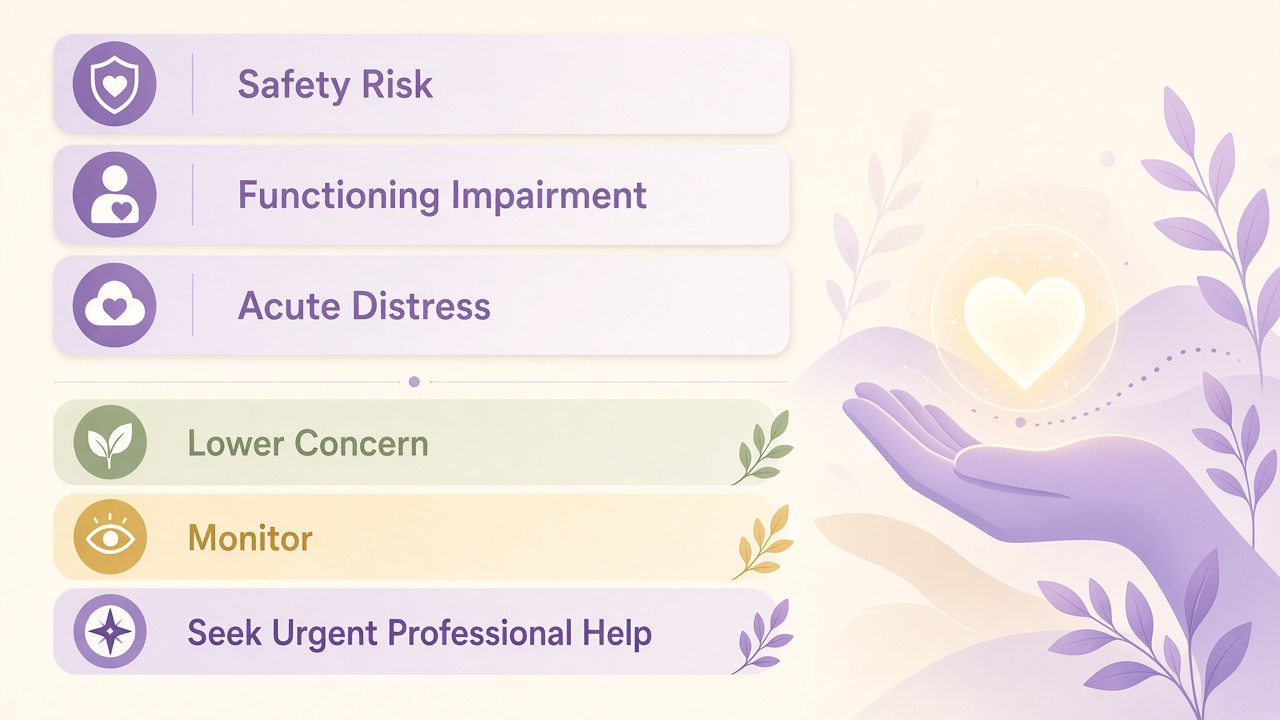
Safety risk
Self-harm thoughts, hopelessness, loss of control fears, frightening perceptual experiences, and whether you felt able to stay safe.
Functioning impairment
Hygiene, meals, obligations, self-care, and whether you could care for dependents or manage medications.
Acute distress
Panic, shutdown, detachment, sleep disruption, agitation, and brief moments of feeling grounded.
How it works
Three steps from first question to your concern band. Click Start Quiz to open the interactive reflection tool in a full-screen modal.
Answer 21 statements
Rate how often each experience happened over the past two weeks on a five-point frequency scale. Safety items include a 988 crisis note. There is no timer and no auto-advance between items.
Items map to three domains
Your answers accumulate scores across safety risk, functioning impairment, and acute distress. Higher domain bars mean more frequent strain in that area.
View band and domain chart
Results show an overall concern index, a band label from Lower Concern through Seek Urgent Professional Help, per-domain bars, and suggested next steps.
Take the signs you need professional help quiz
Rate 21 reflection statements about the past two weeks. Your answers produce an overall concern index and one of three bands with a domain breakdown chart.
Opens in a focused modal. No account required. Results stay on screen.
What your result means
Your overall concern index is the sum of scored items normalized to 0 through 100. Higher percentages mean more frequent safety, functioning, or distress items. The band label groups that score into plain-language stages with proportionate next-step copy. Elevated safety items can trigger crisis resources even when the overall band is lower.
| Concern band | Percentage range | Typical reading |
|---|---|---|
| Lower Concern | 0 to 35% | Mostly manageable strain with some hard days worth noting |
| Monitor | 36 to 58% | Several areas strained enough to discuss with a professional |
| Seek Urgent Professional Help | 59 to 100% | Heavy distress that may benefit from prompt professional support and crisis links |
Three domains of safety reflection
The diagram below shows how domain scores feed an overall concern index. High safety risk with fair functioning, for example, can still land you in a Monitor band until patterns balance or worsen.
What this quiz can and cannot tell you
Can tell you
- How your self-reported strain clusters across safety, functioning, and acute distress
- A band label and percentage for reflection over the past two weeks
- Which domain bar scores highest and may need attention first
- A starting point for conversations with a doctor, therapist, or trusted friend
Cannot tell you
- Whether you need hospitalization, inpatient care, or emergency psychiatric evaluation
- Whether you have depression, psychosis, bipolar disorder, or any diagnosis
- Whether your perceptions are objectively wrong or untrustworthy
- A substitute for crisis assessment if you feel unsafe right now
When worry about crisis care deserves compassion
Searching signs you need to go to a mental hospital quiz often follows a spike in anxiety, sleep loss, grief, or frightening self-harm thoughts. The National Institute of Mental Health notes that crisis care decisions require clinician evaluation with a full safety assessment, not a short online checklist. The Quiz Hub borrows the two-week timeframe common to mood screeners but frames results as concern bands rather than hospital directives.
Online mental health quizzes vary in quality. Some use fear-based language after a handful of items. The Quiz Hub states limits on every band, links crisis resources on elevated results and safety items, and assigns clinical review to Dr. Elena Vasquez. For a broader wellbeing snapshot across mood, anxiety, sleep, and functioning, take our live mental health test. For mood-focused screening with PHQ-inspired items, see our depression test. For distress and reality-worry reflection without stigmatizing labels, try our am I insane quiz. Browse more screeners on our mental health and clinical hub.
Sample item: endorsing that you had thoughts you might hurt yourself raises your safety risk domain bar and may show a 988 note during the quiz. Endorsing that you managed basic self-care on most days lowers your functioning strain score on a reverse-coded item. Severe sleep deprivation and panic attacks can mimic crisis-level distress without any need for inpatient care. Read how we review quizzes in our editorial policy.
Signs you need professional help quiz FAQ
What does the signs you need to go to a mental hospital quiz measure?
This quiz measures self-reported safety worries, functioning impairment, and acute distress over the past two weeks. It groups answers into lower concern, monitor, or seek urgent professional help bands for reflection. It is not a hospitalization decision tool or clinical diagnosis.
Does a higher concern band mean I need to go to a hospital?
No. A higher band means you endorsed more frequent items about safety worries, difficulty keeping up with life, or intense distress in this quiz. That flags strain worth addressing with professional support. Only a licensed clinician who knows your full history can recommend inpatient care, outpatient treatment, or crisis services.
Is this quiz the same as a psychiatric emergency evaluation?
No. Emergency psychiatric evaluation requires a clinician-led assessment with collateral history and safety planning. The Quiz Hub reflection tool uses plain-language items about the past two weeks. It cannot rule in or rule out hospitalization or any specific treatment plan.
How long does this mental health quiz take?
Most people finish in about five minutes. There are twenty-one items on a five-point frequency scale. You can pause and return in the same browser session thanks to autosave.
What should I do if my result shows seek urgent professional help?
Consider talking with a licensed mental health professional, your primary care doctor, or a crisis line about what changed. Bring your result summary and describe when symptoms began. If you feel unsafe right now, call or text 988 (US) or your local crisis line before taking any more quizzes.
Who reviewed this content?
Dr. Elena Vasquez, PhD, reviewed the test framing and result explanations. See our editorial policy for review standards.
Reviewed by