What this do i hate myself quiz measures
This do i hate myself quiz screens three patterns researchers and clinicians often discuss when people ask whether they hate themselves. Each domain uses original agree-disagree statements about how you relate to yourself today, not a published clinical instrument.
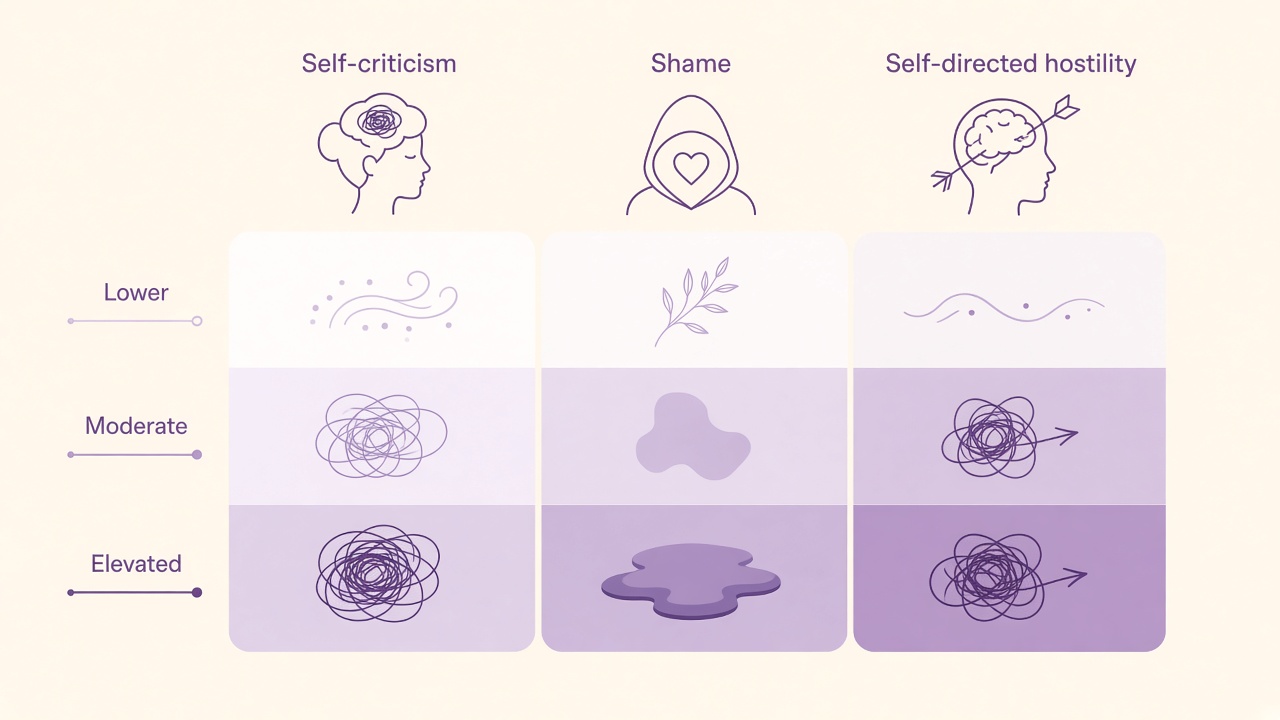
Self-criticism
Harsh inner commentary, impossible standards, replaying failures, and difficulty accepting praise without assuming people are mistaken.
Shame
Feeling fundamentally flawed, hiding who you are, imposter feelings, and withdrawing when being seen feels unbearable.
Self-directed hostility
Turning anger inward, denying basic needs, wishing you could disappear, or treating your pain as less important than everyone else's.
How it works
Three steps from first statement to your reflection band. Click Start Quiz to open the interactive screener in a full-screen modal.
Answer 21 statements
Rate how much you agree with each item on a five-point scale from strongly disagree to strongly agree. There is no timer and no auto-advance between items.
Items map to three domains
Your answers accumulate scores across self-criticism, shame, and self-directed hostility. Some items are reverse-coded so that agreeing with self-compassion lowers your signal.
View band and domain chart
Results show an overall self-directed hostility signal, a reflection band label, per-domain bars, and suggested next steps with crisis resources on elevated bands.
Take the do i hate myself quiz
Rate 21 statements about how you speak to and treat yourself. Your answers produce an overall signal and one of three compassionate reflection bands with a domain breakdown chart. Honest answers help more than what you think you should feel.
Opens in a focused modal. No account required. Results stay on screen.
What your result means
Your overall self-directed hostility signal is the average of self-criticism, shame, and self-directed hostility domain scores, each normalized to 0 through 100. Higher percentages mean more agreement with harsh self-directed items on this snapshot. The band label groups that average into plain-language reflection stages, not a diagnosis.
| Reflection band | Score range | Typical reading |
|---|---|---|
| Lower Self-Directed Hostility | 0 to 35% | Fewer frequent self-criticism or shame items; hard days may still occur |
| Moderate Self-Criticism | 36 to 55% | Mixed inner criticism and self-compassion; domain chart shows where |
| Elevated Self-Directed Hostility | 56 to 100% | Frequent harsh self-judgment worth discussing with a professional |
Three domains of self-directed hostility
The diagram below shows how domain scores feed your overall reflection band. High shame with moderate self-criticism, for example, can still land you in Moderate if your overall average sits between bands.
What this quiz can and cannot tell you
Can tell you
- How your self-reported self-criticism, shame, and hostility cluster today
- A reflection band and percentage for honest self-assessment
- Which domain bar scores highest and may deserve attention first
- A starting point for therapy intake or self-compassion work
Cannot tell you
- Whether you have depression, borderline personality traits, or any diagnosis
- Whether you need medication, hospitalization, or a specific therapy type
- Whether you truly hate yourself as a fixed identity or character flaw
- How others objectively see you or your long-term personality
Self-criticism, shame, and when to seek support
Psychologist Kristin Neff and colleagues have studied self-compassion as an alternative to harsh self-criticism since the early 2000s. Research in clinical psychology links chronic shame and self-directed hostility to depression, trauma responses, and difficulty accepting support, though online quizzes cannot confirm any of those links in your case. The American Psychological Association notes that persistent negative self-talk warrants professional attention when it interferes with sleep, relationships, or daily functioning.
The Quiz Hub hatred test borrows the agree-disagree format common in self-report screeners but uses twenty-one original statements across self-criticism, shame, and self-directed hostility. For a broader wellbeing snapshot that includes mood and sleep strain, take our live mental health test. For self-worth and competence patterns rather than hostility, try our self esteem test. If low mood, hopelessness, or fatigue also feel present, our depression test screens PHQ-inspired mood items over two weeks.
Sample item: agreeing that you deny yourself rest because you feel you do not deserve it raises your self-directed hostility domain score. Agreeing that you can feel regret without believing you are permanently damaged lowers your shame score on a reverse-coded item. Social desirability bias can under-report hostility when people answer how they think they should feel. Read how we review quizzes in our editorial policy.
Do I hate myself quiz FAQ
What does this do i hate myself quiz measure?
This do i hate myself quiz measures self-reported agreement with statements about self-criticism, shame, and self-directed hostility. Twenty-one items produce an overall self-directed hostility signal and three domain bars grouped into lower, moderate, or elevated reflection bands. It is not a clinical diagnosis.
Does a high score mean I actually hate myself?
A higher band means you agreed more with items about harsh inner commentary, shame, or treating yourself with hostility on this snapshot. That flags inner pain worth taking seriously, not proof you are broken or unworthy. Many people search this question during burnout or after rejection without meeting criteria for any diagnosis.
How is this different from the self esteem test?
The self esteem test focuses on self-worth, competence, and social acceptance with Rosenberg-inspired items. This quiz focuses on self-directed hostility: how harshly you speak to yourself, shame about who you are, and punishing patterns. Lower self-esteem and elevated self-criticism can overlap, but they measure different angles.
How long does the do i hate myself quiz take?
Most people finish in about five minutes. There are twenty-one agree-disagree statements. You can pause and return in the same browser session thanks to autosave.
What should I do if I get an elevated self-directed hostility band?
Consider talking with a counselor or therapist who works with self-criticism and shame. Take our depression test if low mood or hopelessness also feel present. If you feel unsafe or in crisis, call or text 988 (US) or your local crisis line before taking any more quizzes.
Who reviewed this content?
Dr. Elena Vasquez, PhD, reviewed the test framing and result explanations. See our editorial policy for review standards.
Reviewed by