What this am i crazy test measures
This am i crazy test maps four areas people mean when they fear they are losing control: emotional overwhelm, mood swings, persistent worry, and strained stress coping. Items use original wording for online self-report. Results group into reflection bands, not permanent labels or stigmatizing names.
Emotional Overwhelm
Feeling flooded, numb, or unable to name emotions when demands pile up.
Mood Swings
Rapid shifts between irritability, tearfulness, and drained energy within a day.
Worry
Racing thoughts, edge feelings, reassurance seeking, and sleep disruption.
Stress Coping
Avoidance, snapping, numbing habits, and difficulty using supportive strategies.
How it works
Three steps from first question to your reflection band. Click Start Quiz to open the interactive test in a full-screen modal.
Answer 21 statements
Rate how much you agree with each item on a five-point scale. Most prompts begin with "I tend to."
Items map to four dimensions
Your answers accumulate scores across overwhelm, mood swings, worry, and coping.
View your pattern band
Results show self-concern, balanced, or higher distress patterns with dimension bars, highlights, and honest limits.
Take the am i crazy test
Rate twenty-one statements about overwhelm, mood shifts, worry, and coping. Your pattern band reflects how your answers cluster, not whether you are broken.
Opens in a focused modal. No account required. Results stay on screen.
What your result means
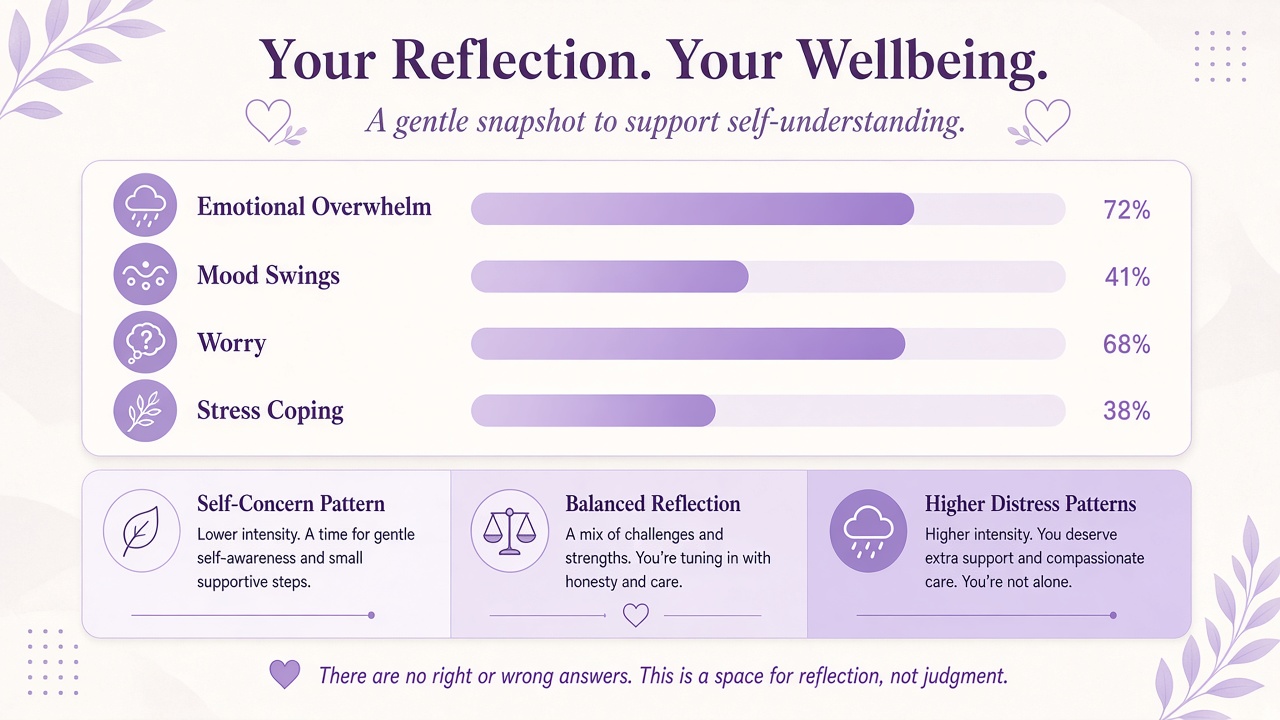
Band labels group your four dimension scores into plain-language patterns. Read dimension bars when the headline band feels too broad. None of these labels prove you are mentally ill or perfectly fine forever.
| Pattern band | Typical reading | What to do next |
|---|---|---|
| Self-Concern Pattern | Fear about your mind without high symptom agreement | Separate frightening self-talk from how you actually function day to day |
| Balanced Reflection | Mix of ordinary stress, emotional ups and downs, and room to grow | Notice which dimension still pulls hardest during hard weeks |
| Higher Distress Patterns | Higher overwhelm, mood swing, worry, or coping strain scores | Review support options; talk with a clinician if patterns feel chronic |
Self-concern, balanced, and higher distress patterns
Emotional distress is not a single yes-or-no label. This diagram shows the three bands used on The Quiz Hub plus the overwhelm, mood swings, worry, and coping dimensions behind your score. For clinical worry screening with GAD-style bands, compare with our anxiety test. For broader wellbeing across mood and sleep, try the mental health test.
What this quiz can and cannot tell you
Can tell you
- How your self-report clusters on overwhelm, mood swings, worry, and coping items
- Whether fear about your mind may be louder than your typical symptom scores
- A plain-language pattern band for reflection and conversation
- A starting point before deeper screeners like anxiety or mental health tests
Cannot tell you
- Whether you are psychotic, insane, or beyond help
- Bipolar disorder, schizophrenia, or personality disorder status
- Whether you need hospitalization, medication, or a specific therapy type
- Scores from any validated clinical sanity or psychosis instrument
Why people ask am i crazy
The question am i crazy often appears after a panic attack, a week of mood swings, or hearing someone use that word during an argument. Psychologists treat distress as patterns of overwhelm, worry, and coping over time, not a permanent stamp on your identity. Emotional flooding can make ordinary tasks feel impossible. Rapid mood shifts can frighten you even when they follow sleep loss or hormonal changes. Persistent worry can convince you your mind is failing when anxiety is actually treatable.
Self-concern scorers may agree with fear items while behavioral symptom items stay moderate. That pattern is common after social media spirals, breakups, or one sleepless stretch. Higher distress scores suggest reviewing whether your current support matches how heavy life feels. Neither band is a life sentence. Coping skills, therapy, medication when appropriate, and rest can shift patterns over weeks and months.
Sample item: "I tend to worry I am losing my grip when I feel overwhelmed, even if I stayed functional." High agreement nudges toward a self-concern band when overwhelm and worry scores stay lower. For GAD-style clinical screening, try our anxiety test. For a parallel reflection quiz on losing-control fears, see our am I insane quiz. For broad mood and functioning domains, take the mental health test. Context on when to seek help appears in the NIMH mental health topics hub. Browse more screeners on our mental health and clinical hub.
Am i crazy test FAQ
What does the am i crazy test measure?
This test measures self-reported patterns across emotional overwhelm, mood swings, worry, and stress coping from twenty-one agree-disagree statements. It groups answers into self-concern, balanced, or higher distress reflection bands. It is not a sanity verdict or clinical assessment.
Does a higher distress band mean I am mentally ill?
No. A higher band means you agreed more with items about feeling flooded, rapid mood shifts, persistent worry, or strained coping in this quiz. That flags distress worth attention, not proof you are defective or beyond help. Many people score here during burnout, grief, or sleep loss and improve with support.
What is a self-concern pattern band?
A self-concern band appears when fear-about-your-mind items score high while overwhelm, mood swings, worry, and coping items stay moderate. That pattern is common after a panic spike, harsh self-talk, or one overwhelming week. It suggests your inner fear may be louder than your typical functioning.
How is this different from the anxiety test?
The anxiety test screens GAD-style worry frequency over two weeks with clinical severity bands. This am i crazy test uses reflection framing across four distress domains and three non-diagnostic pattern bands. It addresses the colloquial am i crazy question without labeling you with that word in results.
How long does the am i crazy test take?
Most people finish in about five minutes. There are twenty-one items on a five-point agree scale. You can pause and return in the same browser session thanks to autosave.
Is this quiz clinical or diagnostic?
No. It does not screen for psychosis, bipolar disorder, or personality disorder. It does not diagnose any condition or predict hospitalization. It is educational self-reflection only, with crisis resources linked on the limits section.
Who reviewed this content?
Dr. Elena Vasquez, PhD, reviewed the test framing and result explanations. See our editorial policy for review standards.
Reviewed by