What this loyalty test measures
This loyalty test maps six domains that shape how you protect trust in a close relationship through your own choices. Twenty-three original agree-disagree items ask about honesty, showing up when tested, standing by your partner, boundaries with others, conflict loyalty, and keeping commitments. The result is your self-report snapshot today. It does not accuse your partner of cheating or score their faithfulness.
Honesty and transparency
Telling hard truths, sharing important news early, and correcting flattering half-truths.
Reliability when tested
Showing up under stress, following through on promises, and keeping your word on small things.
Standing by partner
Defending your partner fairly, staying present in hard seasons, and choosing us over outsiders.
Boundaries with others
Clear lines with exes, crushes, and flirtation without hiding contact that would hurt trust.
Conflict loyalty
Addressing problems directly, avoiding trash talk, and repairing before seeking outside validation.
Keeping commitments
Honoring exclusivity or openness agreements and revisiting rules when life changes.
How it works
Three steps from first question to your loyalty profile. Click Start Test to open the interactive quiz in a full-screen modal.
Answer 23 statements
Rate how much you agree with each item about your loyalty habits on a five-point scale. You click Next after each answer; nothing auto-advances.
Items map to six domains
Your answers accumulate scores across honesty, reliability, standing by partner, boundaries, conflict loyalty, and commitments.
View index, band, and domain bars
Results show a loyalty index from 0 to 100, a band label, six domain percentages, and conversation prompts.
Take the loyalty test
Rate 23 loyalty statements on a five-point agree-disagree scale. Your answers produce a loyalty index, band label, and six domain bars for reflection or couple conversation about your habits.
Opens in a focused modal. No account required. Results stay on screen.
What your result means
Your loyalty index is the normalized average across all 23 items on a 0 to 100 scale. Higher scores mean stronger self-reported loyalty habits in honesty, reliability, standing by your partner, boundaries, conflict handling, and commitments. Domain bars show which area feels strongest and which may need the most attention or practice.
| Band | Index range | Typical reading |
|---|---|---|
| Room to Grow | 0 to 35 | Several loyalty habits may need clearer attention; use bars to pick one pattern to strengthen |
| Mixed Loyalty Signals | 36 to 65 | Real strengths alongside uneven domains; compare bars with your partner separately |
| Strong Loyalty Profile | 66 to 100 | Consistent self-reported loyalty habits; still not proof mistakes will never happen |
Six loyalty domains
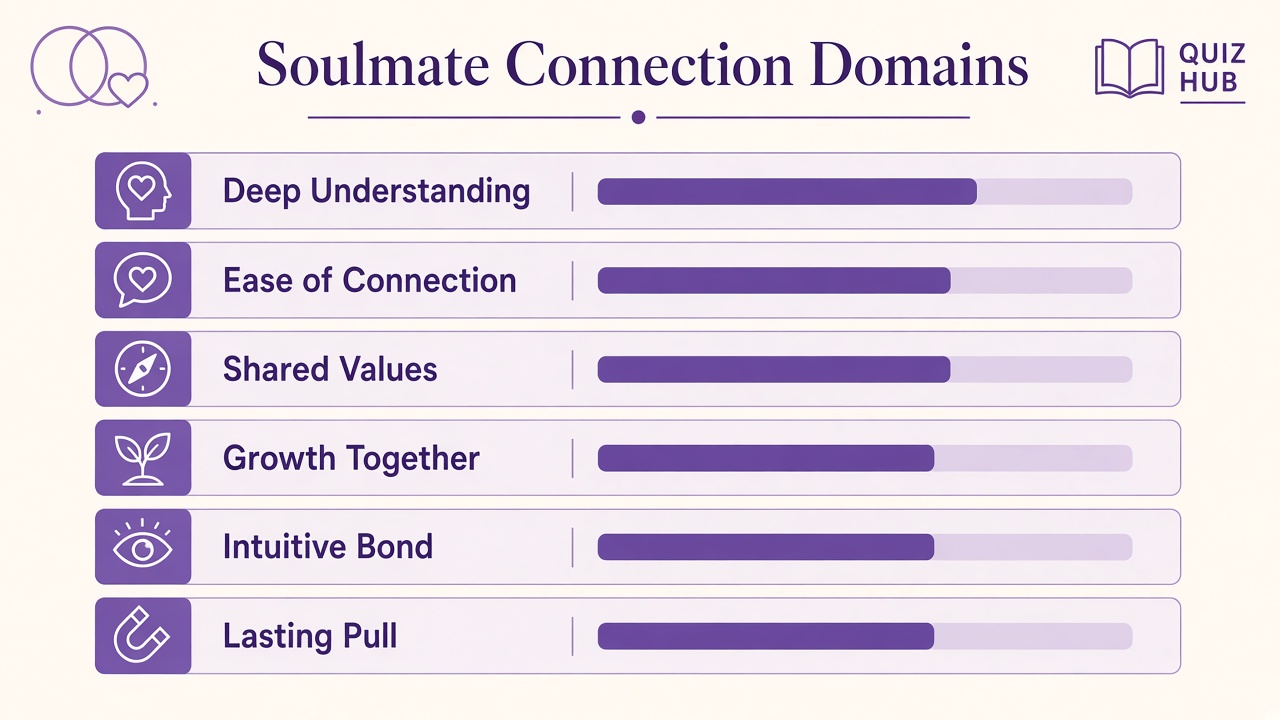
The diagram below shows how domain bars and the central loyalty index appear in your results. Strong honesty with moderate conflict loyalty, for example, can still land you in Mixed Loyalty Signals if your overall average sits between bands.
What this test can and cannot tell you
Can tell you
- Your self-reported emphasis across six loyalty habit domains
- A loyalty index from 0 to 100 with Room to Grow, Mixed Loyalty Signals, or Strong Loyalty Profile band
- Which domain bar is strongest and which may benefit from practice or conversation
- A starting point for honest talks about honesty, boundaries, conflict, or commitments
Cannot tell you
- Whether your partner is cheating, lying, or faithful
- Whether you should stay in or leave your relationship
- Clinical infidelity assessments, attachment disorder diagnoses, or legal evidence
- A fixed loyalty score that never shifts with growth, repair, or therapy
Loyalty research and everyday self-reflection
Relationship researchers such as John Gottman and work on commitment in close relationships emphasize that trust grows from small daily choices: telling the truth early, showing up when a partner is vulnerable, and repairing after ruptures rather than building a case against them in public. The Quiz Hub built this loyalty test as a plain-language snapshot across six domains inspired by that research tradition without reproducing any published clinical infidelity instrument.
Readers often compare loyalty quizzes to narrower tools on this site. Our relationship test maps broader partnership health across communication, trust, intimacy, repair, goals, and respect. The am I a good boyfriend quiz zooms in on supportive partner habits such as emotional support, romantic effort, and accountable repair. The compatibility test maps values overlap and lifestyle fit. Our attachment style test maps anxiety and avoidance in closeness. Our is he cheating on me quiz focuses on partner behavior signals you observe, while this loyalty test stays on your habits. Pair them when you want both self-reflection and clearer vocabulary about fit or closeness fears.
| The Quiz Hub test | What it adds |
|---|---|
| Relationship test | Six-domain partnership health index, not loyalty-specific honesty or boundary habits |
| Am I a good boyfriend quiz | Supportive partner habits such as communication, support, romance, and accountability, not loyalty-specific boundaries |
| Compatibility test | Values alignment and lifestyle fit bars, not conflict loyalty or commitment follow-through |
| Attachment style test | Closeness anxiety and avoidance patterns, not standing by partner or keeping agreements |
| Is he cheating on me quiz | Partner behavior reflection on secrecy, schedules, distance, and gut trust |
| This loyalty test | Six-domain loyalty index with honesty, reliability, boundaries, conflict loyalty, and commitment bars |
Sample item: agreeing strongly that you tell your partner the truth even when the answer might disappoint them raises your honesty bar. Agreeing that you entertain attention from others you would hide lowers your boundaries score through a reverse-scored item. Couples who answer separately often discover that one domain feels strong while another wobbles. That gap is useful data for a calm conversation, not proof that someone is disloyal. Read how we review quizzes in our editorial policy or browse more tools on our relationships and dating hub.
Loyalty test FAQ
What does this loyalty test measure?
This loyalty test measures self-reported loyalty habits across six domains: honesty and transparency, reliability when tested, standing by your partner, boundaries with others, conflict loyalty, and keeping commitments. Twenty-three agree-disagree items ask about your behavior in a close relationship. Results show a loyalty index from 0 to 100, a band label, and six domain bars. It reflects your patterns, not whether your partner is cheating.
Is this a test to see if my partner is cheating?
No. This quiz focuses on your loyalty patterns, not surveillance of a partner. It does not read texts, track location, or score someone else's faithfulness. If you worry about a partner's behavior, try our is he cheating on me quiz for observed behavior signals. This loyalty test is for honest self-reflection about how you show up in the bond.
Who should take this loyalty quiz?
This quiz is designed for people in a close relationship who want an honest snapshot of their own loyalty habits. It works for dating, committed partnerships, and open relationships when you answer about the agreements you actually follow. It is not a partner mind-reading tool or a clinical infidelity assessment.
How is the loyalty index calculated?
Each item scores from 1 to 5 on a five-point agree-disagree scale, with some reverse-scored items to reduce acquiescence bias. Domain percentages normalize item totals within honesty, reliability, standing by partner, boundaries, conflict loyalty, and commitments. The overall loyalty index is the normalized average across all 23 items, mapped to bands: Room to Grow (0 to 35), Mixed Loyalty Signals (36 to 65), and Strong Loyalty Profile (66 to 100).
How is this different from the relationship test?
The relationship test maps broader partnership health across communication, trust, intimacy, repair, goals, and respect. This loyalty test zooms in on how you show loyalty through honesty, reliability, boundaries, conflict handling, and commitments. Relationship health is how the bond feels. Loyalty habits are how you protect the bond through your choices.
Who reviewed this content?
Dr. Priya Sharma, PhD, reviewed the test framing and result explanations. See our editorial policy for review standards.
Reviewed by