What this is he cheating on me quiz measures
This is he cheating on me quiz organizes observed partner behavior signals you have noticed into six concern domains. Twenty-two original frequency items ask about patterns, not private evidence. Results show a concern index and domain bars. No quiz can prove infidelity; direct communication matters more than any score.
Phone and secretiveness
Hidden screens, deleted threads, and phone angles away during messages.
Schedule inconsistencies
Shifting stories about time away, opaque calendar blocks, and unfamiliar names in plans.
Emotional distance
Checked-out conversations, less sharing, and irritation when you ask about his day.
Defensiveness when asked
Control accusations, fights over small check-ins, and vague answers to direct questions.
Affection and intimacy changes
Pulled-back touch, less intimacy, and grooming changes for outings without you.
Gut-trust erosion
Persistent unease, unnamed patterns, and difficulty feeling grounded about his honesty.
How it works
Three steps from first question to your concern signal snapshot. Click Start Quiz to open the interactive modal.
Rate his behavior 22 times
Answer how often each statement applies from Never to Almost always. There is no timer and no auto-advance.
Items map to six domains
Your answers accumulate percentages for phone secrecy, schedules, emotional distance, defensiveness, intimacy shifts, and gut trust.
View band and next steps
Results show Lower Concern Signals, Mixed Warning Signs, or Higher Concern Pattern with domain bars and conversation prompts.
Take the is he cheating on me quiz
Rate 22 behavior statements about patterns you have observed on a five-point frequency scale. Your answers produce a concern index, six domain scores, and a reflective band with plain-language next steps.
Opens in a focused modal. No account required. Results stay on screen.
What your result means
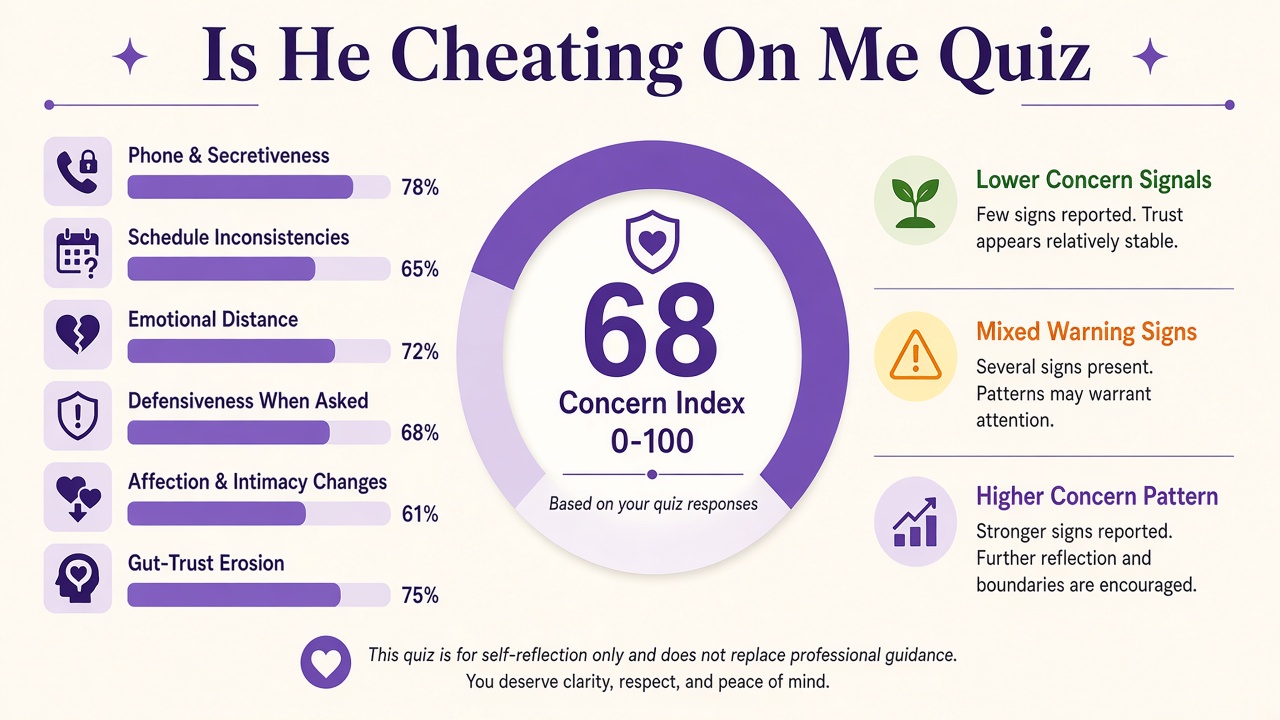
Your concern index is the normalized average across all 22 items, scored so higher values mean more frequent warning signals on this screener. Domain bars show whether phone secrecy, schedule gaps, emotional distance, defensiveness, intimacy shifts, or gut trust drives your band. Higher scores deserve conversation, not accusations.
| Concern band | Index range | Typical reading |
|---|---|---|
| Lower Concern Signals | 0 to 35 | Fewer frequent warning patterns on these items; keep communicating, not proof he is faithful |
| Mixed Warning Signs | 36 to 65 | Blend of reassuring and worrying domains; name the gap in a calm talk |
| Higher Concern Pattern | 66 to 100 | Frequent warning signals worth addressing directly; still not proof of infidelity |
Six partner behavior concern domains
The diagram below shows how domain scores appear in your results. High phone secrecy with moderate schedule gaps, for example, can still land you in Mixed Warning Signs if your overall average sits between bands.
What this quiz can and cannot tell you
Can tell you
- Whether your observed behaviors lean toward lower, mixed, or higher concern on this screener
- A concern index from 0 to 100 and six domain bars for secrecy, schedules, distance, defensiveness, intimacy, and gut trust
- Which domain bar scores highest and may deserve the first direct conversation
- A starting point for reflection before you ask him what is going on
Cannot tell you
- Whether he is cheating, having an affair, or lying about specific events
- Contents of his private messages, location history, or hidden accounts
- Whether you should stay, leave, or confront him without your own context
- Legal evidence, clinical infidelity assessments, or partner mind-reading
Partner behavior signals and honest limits
Clinical researchers who study couple betrayal emphasize that infidelity rarely appears as one dramatic moment. More often, trust erodes through small secrecy choices, schedule stories that shift, emotional withdrawal, and defensiveness when a partner asks reasonable questions. A 2017 review in the Journal of Family Psychology literature notes that perceived deception and attachment anxiety can amplify how people read ambiguous behavior, which is why reflective screeners must state limits clearly.
The Quiz Hub built this is he cheating on me quiz as a structured reflection tool for people who notice worrying patterns but do not want surveillance advice. Twenty-two original items ask about phone habits, schedule inconsistencies, emotional distance, defensiveness when asked, changes in affection or intimacy, and gut-level distrust from your point of view. Pair it with our loyalty test to examine your own honesty and boundary habits alongside his behavior signals. For broader partnership health, try our relationship test. For love signal context rather than concern signals, see our does my boyfriend love me quiz.
| The Quiz Hub test | What it adds |
|---|---|
| Loyalty test | Your own honesty, reliability, boundaries, conflict loyalty, and commitment habits |
| Relationship test | Six-domain partnership health index across communication, trust, intimacy, repair, goals, and respect |
| Does my boyfriend love me quiz | Positive love signals: care, reliability, affection, inclusion, future talk, and support |
| Attachment style test | Closeness anxiety and avoidance patterns that may color how you read his behavior |
| This is he cheating on me quiz | 22 behavior items with six concern domains and three reflective bands from your observations |
Sample item: rating Often on angles his phone away when texting raises your phone and secretiveness bar. Rating Almost always on still initiating mutual affection lowers concern through a reverse-scored item. Past betrayal, anxious attachment, or stress can inflate gut-trust scores even when cheating is not happening. Read how we review quizzes in our editorial policy or browse more tools on our relationships and dating hub.
Is he cheating on me quiz FAQ
What does this is he cheating on me quiz measure?
This is he cheating on me quiz measures how often you observe partner behavior signals across six domains: phone and secretiveness, schedule inconsistencies, emotional distance, defensiveness when asked, changes in affection or intimacy, and gut-trust erosion. Twenty-two frequency items ask about patterns you have noticed. Results show a concern index from 0 to 100 and six domain bars. It cannot prove infidelity or read his private messages.
Can this quiz prove my boyfriend is cheating?
No. No online quiz can prove infidelity, confirm an affair, or replace honest conversation. This screener organizes observed behavior signals you report today. Direct questions, couples counseling, and licensed support are more reliable than any score when trust feels broken.
How is this different from the loyalty test?
The loyalty test measures your own honesty, reliability, boundaries, conflict loyalty, and commitment habits through self-report. This is he cheating on me quiz focuses on his observable behavior patterns from your point of view. Pair them when you want both self-reflection on your habits and a structured map of partner behavior signals.
What if my result shows higher concern patterns?
Higher concern signals mean your answers suggest more frequent warning patterns on these items. That is a prompt for calm, specific conversation or professional support, not proof of cheating. If you fear abuse or coercion, contact 988 in the US or your local domestic violence hotline instead of escalating surveillance.
Should I check his phone after taking this quiz?
We do not recommend secret phone checking, tracking apps, or surveillance. Those tactics often damage trust without providing certainty and can create legal or safety risks. Use your result to name behaviors you have already observed and ask direct questions about what you need to feel secure.
Who reviewed this content?
Dr. Priya Sharma, PhD, reviewed the test framing and result explanations. See our editorial policy for review standards.
Reviewed by