How can you tell if someone's gay?
You cannot tell if someone is gay from how they look, dress, speak, or socialize. Orientation is an internal pattern of attraction and identity that only the person involved can name with confidence. Stereotypes about flamboyant men, masculine women, rainbow accessories, or certain hobbies are cultural shortcuts, not diagnostic tools. When people search how can you tell if someone's gay, they often want a checklist. Research and lived experience both say that checklist does not exist without consent and self-disclosure.
Why appearance and behavior stereotypes fail
Stereotypes feel informative because media repeats them. Sitcoms, reality TV, and meme culture train viewers to link voice pitch, walk, fashion, and friend groups with orientation labels. Psychologist William Cox and colleagues at the University of Wisconsin-Madison showed in peer-reviewed work that so-called gaydar accuracy often disappears when studies remove stereotype cues such as hairstyle, clothing, and posed expressions. Participants felt confident yet performed near chance. Follow-up research framed gaydar as stereotyping with better branding: the same shortcuts that harm LGBTQ+ people in hiring, housing, and social settings.
Presentation varies widely
Gay men can be masculine, feminine, or anywhere between. Lesbian and bi women span every style. Asexual and queer people may not fit any trope you have seen on TV.
Culture shapes what you notice
Regional norms, age cohorts, and friend groups change what reads as gay in one city versus another. Your guess reflects your training, not their truth.
Closeted people exist
Someone who is not out may deliberately avoid stereotyped presentation. Guessing from looks can pressure them, out them, or confirm fears about being read.
Straight people get mislabeled too
False positives are common when stereotypes drive guessing. Mislabeling hurts regardless of actual orientation.
Harm of guessing and outing
When you treat orientation as something strangers should decode, you risk real harm even if you mean no offense. Outing someone without consent can endanger their job, family relationships, or safety depending on context. Gossip about whether someone might be gay spreads speculation as if it were fact. LGBTQ+ youth report that being misread or pressured to confirm identity before they are ready increases stress and isolation. The Trevor Project emphasizes that supportive environments let young people explore identity at their own pace rather than forcing labels from outside observers.
Respectful alternatives to stereotype guessing
If you wonder how can you tell if someone's gay because you like them, want to be an ally, or feel confused in a new social group, these steps keep dignity intact.
Assume you do not know
Default to not knowing orientation until someone shares. Use neutral language about partners unless they specify gender. This protects closeted people and avoids awkward corrections.
Ask only when appropriate
If you need the information for a respectful reason, ask once in private: Is it okay if I ask about your orientation? Accept yes, no, or silence without follow-up pressure.
Let them disclose on their timeline
Coming out is a personal process, not a puzzle for others to solve. Celebrate when someone shares; never demand proof from appearance.
Interrupt gossip and betting
When friends debate whether someone is gay from looks alone, redirect: we cannot know that from appearance. Privacy matters more than winning a guess.
Take the perception habits screener
Rate 14 perception habit statements on a five-point agree scale. Your answers produce a stereotype reliance index, five domain scores, a stereotype core flag, and one of three educational bands with plain-language guidance.
Opens in a focused modal. No account required. Results stay on screen.
What the perception habits screener measures
The screener estimates how strongly you agree with statements about guessing orientation from appearance, behavior, and social patterns. It educates about habits rather than detecting anyone's orientation. Four items cover appearance stereotypes such as dress and voice. Three items cover behavior assumptions from hobbies and social cues. Three items cover respectful alternatives including asking without pressure. Three items cover stereotype harm awareness. Two items cover curiosity versus privacy boundaries.
| Perception band | Score range | Typical reading |
|---|---|---|
| More Respectful Observer | 0 to 35% | Lower stereotype reliance with stronger harm awareness and privacy respect on these items |
| Mixed Perception Patterns | 36 to 65% | Blend of guessing shortcuts and knowing stereotypes are unreliable in principle |
| More Stereotype-Reliant | 66 to 100% | Frequent appearance and behavior shortcuts with lower harm awareness or privacy scores |
Respectful observation at a glance
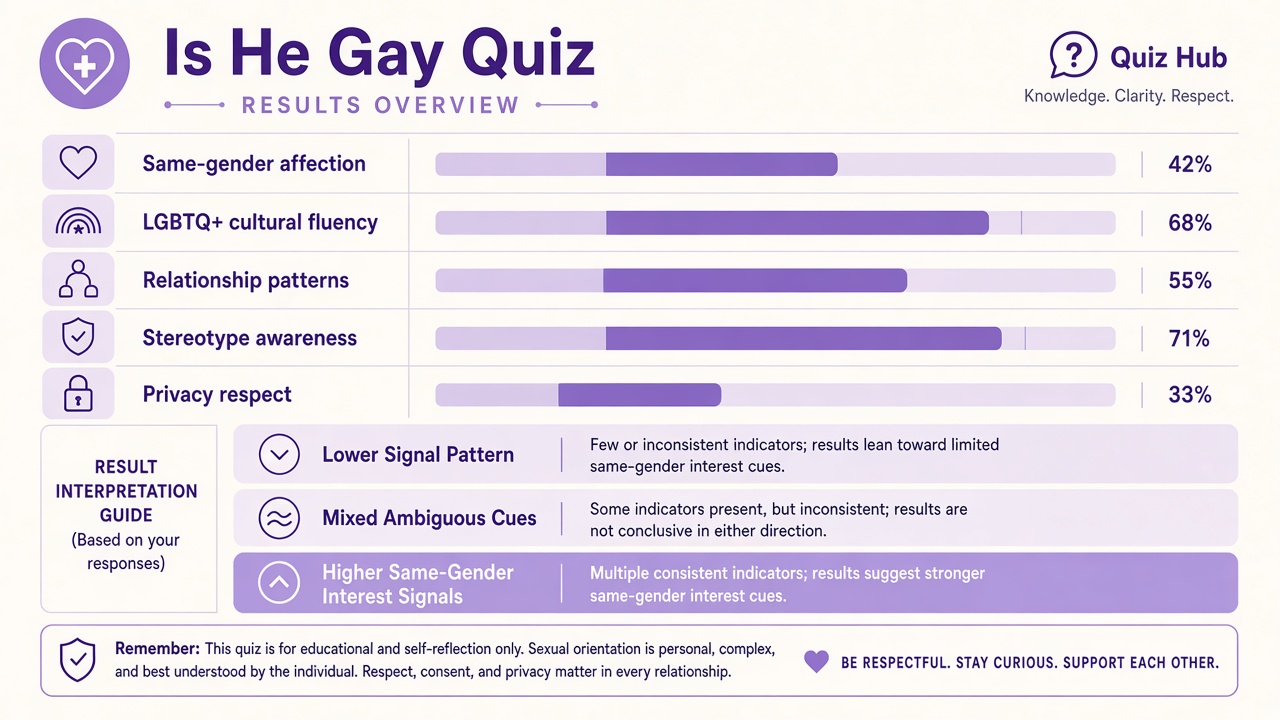
The diagram summarizes why stereotype guessing fails and what respectful alternatives look like. Your live screener results also list five domain bars and a stereotype core flag.
What this guide can and cannot tell you
Can tell you
- Why you cannot reliably know orientation from looks, voice, or hobbies alone
- How stereotype guessing harms LGBTQ+ people and risks outing
- Respectful steps: assume unknown, ask once if appropriate, let people disclose
- Whether your self-reported habits lean toward respectful observation or stereotype reliance
Cannot tell you
- Whether someone is gay, straight, bisexual, or any other orientation from their appearance
- That you have real gaydar or accurate intuition about strangers
- How to out, label, or confront someone about orientation without their consent
- Whether a crush reciprocates interest based on stereotype matching
Why searches for how to tell if someone is gay need honest answers
People search how can you tell if someone's gay for many reasons. Some have a crush and hope for signs. Some want to be supportive allies. Some grew up hearing that gaydar is a real skill and want confirmation. The Quiz Hub built this hybrid page so those searches land on education first, not a guessing game. The written guide explains research limits and harm. The 14-item screener invites reflection on your own perception habits across five domains with three bands rather than reproducing lab tasks or claiming psychic skill.
The GLAAD Media Reference reminds journalists and educators that orientation is personal and should not be speculated about from appearance. That standard applies to everyday conversation too. When you wonder about a coworker, classmate, or friend, the respectful path treats orientation as information they control. Stereotypes about lisping, limp wrists, short haircuts, or gym culture are not evidence. They are fragments of culture that erase bisexual, pansexual, ace, and queer people who do not match the trope you have in mind.
| The Quiz Hub page | What it adds |
|---|---|
| Gaydar test | Twenty-one perception habit items debunking gaydar across five domains with stereotype core flag |
| Sexuality test | Reflect on your own attractions and label comfort, not guessing strangers |
| Is he gay quiz (planned) | Future sibling page focused on crush curiosity with strict privacy limits |
| This guide + screener | Educational article on why you cannot tell from looks plus 14-item perception habits screener |
Sample screener item: agreeing that you would assume a coworker's orientation from dress and socializing raises your behavior-assumption score. Agreeing that mislabeling can harm people raises harm-awareness even when you still catch yourself wondering at parties. Media tropes, regional norms, and friend-group gossip can inflate stereotype reliance without you noticing. Browse more screeners on our sexuality and LGBTQ+ hub or read how we review quizzes in our editorial policy.
How to tell if someone is gay FAQ
Can you tell if someone is gay from how they look or act?
No. Research consistently shows that guessing orientation from appearance, voice, hobbies, or mannerisms performs near chance once stereotypes are removed. Gay people do not look or act one way. Straight people can be flamboyant; gay people can be masculine-presenting. Treating stereotypes as facts harms LGBTQ+ people and can out someone who is not ready.
What should I do if I wonder about someone's orientation?
Keep the thought private unless they choose to share. If you need the information for a respectful reason, ask once in a private setting and accept any answer or decline without pressure. Never gossip, bet on guesses, or confront someone based on appearance. Our 14-item screener helps you reflect on perception habits, not detect anyone's orientation.
Is gaydar real?
No. Psychologist William Cox and colleagues at the University of Wisconsin-Madison demonstrated that so-called gaydar accuracy often disappears when studies remove stereotype cues such as hairstyle and posed expressions. What feels like intuition is often prejudice trained by media tropes. Pair this guide with our gaydar test for a longer perception-habit screener.
How is this different from an is he gay quiz?
Crush-focused quizzes about whether he might be gay often feed curiosity about one person. This page educates why you cannot know from looks and offers a perception-habit screener instead of labeling strangers. For your own orientation reflection, try our sexuality test or am I gay test rather than speculating about others.
What does the perception habits screener measure?
Fourteen Likert and scenario items map to five domains: appearance stereotypes, behavior assumptions, respectful alternatives, stereotype harm awareness, and curiosity versus privacy. Your answers produce a stereotype reliance index and one of three bands: More Respectful Observer, Mixed Perception Patterns, or More Stereotype-Reliant. It does not claim to detect anyone's orientation.
Who reviewed this content?
Dr. Morgan Chen, PhD, reviewed the test framing and result explanations. See our editorial policy for review standards.
Reviewed by