What this do I have ADHD quiz measures
This quiz estimates how often you experience inattention and hyperactivity-impulsivity symptoms over the past six months. It groups 24 self-report items into two domains inspired by DSM-5 ADHD symptom clusters without copying the published Adult ADHD Self-Report Scale word for word.
Inattention
Procrastination on important tasks, missed reminders, disorganization, mental scatter, and difficulty following through on multi-step plans.
Hyperactivity and impulsivity
Physical restlessness, talking over others, difficulty waiting, impulsive choices, and trouble unwinding after stimulating days.
Screening index 0 to 100
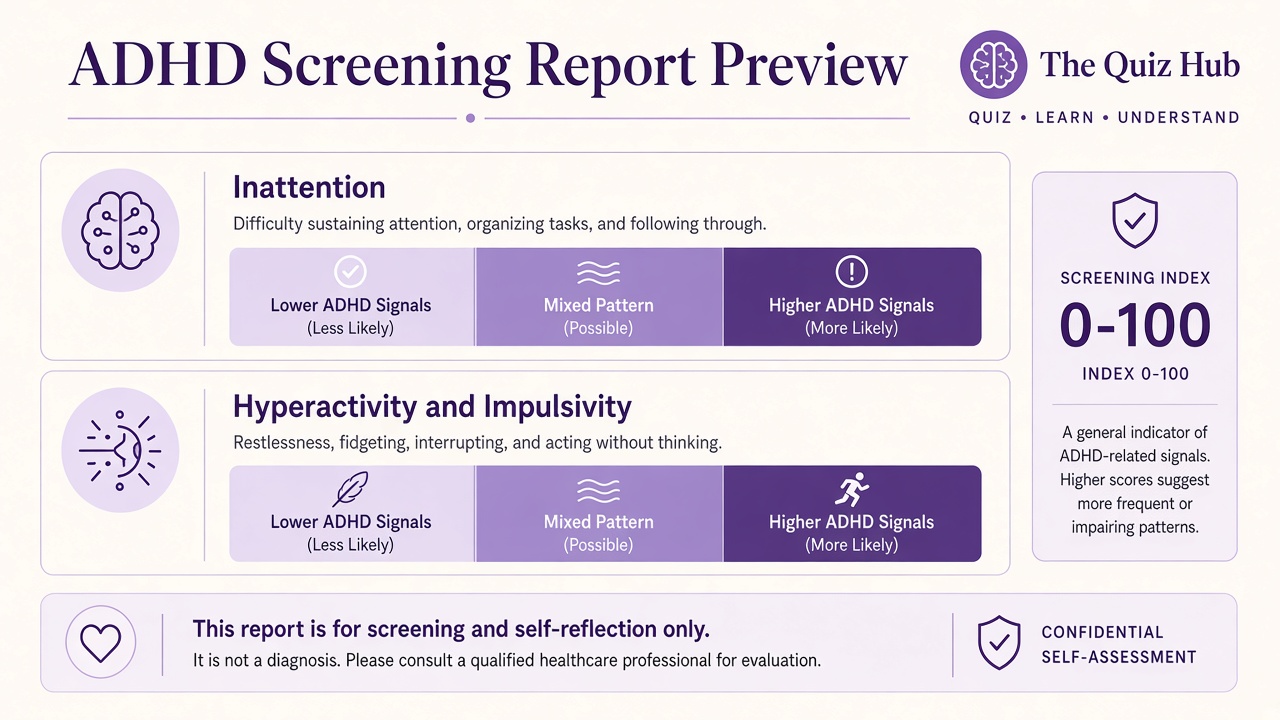
Your overall index averages the two domain percentages. Three bands group that index into Lower ADHD Signals, Mixed Pattern, or Higher ADHD Signals.
Part A style flag
Six core items inspired by ASRS Part A logic. Four or more rated Often or Very often triggers an elevated core symptom flag, not a diagnosis.
How it works
Three steps from first question to your screening report. Click Start Quiz to open the interactive modal with autosave in the same browser session.
Answer 24 frequency items
Rate each statement from Never to Very often using a six-month recall window. There is no timer and no auto-advance between items.
Items map to two domains
Your answers accumulate percentages for inattention and hyperactivity-impulsivity, plus a Part A core symptom flag.
View screening index and next steps
Results show a 0 to 100 index, three-band label, domain bars, highlights, and professional referral guidance when appropriate.
Take the do I have ADHD quiz
Rate 24 ADHD-related statements on a five-point frequency scale. Your answers produce a screening index, two domain scores, and a Part A flag with plain-language next steps before you book formal testing.
Opens in a focused modal. No account required. Results stay on screen.
What your result means
Your screening index is the average of inattention and hyperactivity domain scores, each normalized to 0 through 100. The band groups that index into plain-language ADHD signal labels. Domain bars show whether forgetfulness or restlessness drives your pattern.
| Screening band | Index range | Typical reading |
|---|---|---|
| Lower ADHD Signals | 0 to 35 | Fewer frequent symptoms; occasional focus problems may still occur |
| Mixed Pattern | 36 to 55 | Some frequent symptoms worth monitoring, especially if persistent across settings |
| Higher ADHD Signals | 56 to 100 | Frequent symptoms that may warrant professional ADHD evaluation |
What your ADHD screening report looks like
After all 24 items, your on-screen report shows a screening index badge, band label, Part A core symptom flag, and two domain bars. The diagram below mirrors that layout so you know what to expect before you start.
What this quiz can and cannot tell you
Can tell you
- Whether your self-reported symptoms lean mild, mixed, or frequent on this screener
- A screening index and two domain scores for inattention and hyperactivity
- A Part A style flag when core symptoms look elevated
- A starting point for conversations with a clinician about adult ADHD evaluation
Cannot tell you
- Whether you have ADHD or any other clinical condition
- Official ASRS scores comparable to published research norms
- Whether you need medication, accommodations, or workplace clearance
- Childhood onset history or symptom persistence required for formal diagnosis
Searching do I have ADHD before formal assessment
Many adults type do I have ADHD quiz into search before booking an evaluation. That question-framing is different from a clinical screener title like ADHD test. People in that moment often want plain-language items about procrastination, lost keys, restlessness in meetings, and impulsive choices rather than instrument jargon. The Quiz Hub built this page for that search intent while keeping YMYL safeguards: no diagnostic language, crisis links, and PhD-reviewed framing.
The Adult ADHD Self-Report Scale (ASRS v1.1), published by Kessler and colleagues in 2005 with WHO support, remains the research-backed reference for adult screening. Our quiz uses 24 original items inspired by ASRS themes with a six-month recall window and Part A style logic, but it is not the published instrument. NIMH notes that ADHD in adults often goes unrecognized and that structured evaluation by a qualified professional is the appropriate path when symptoms affect daily life.
| Related Quiz Hub test | What it adds |
|---|---|
| ADHD test | 18-item ASRS-inspired clinical screener title with Part A flag and domain bars |
| Focus test | Attention challenges plus distraction habits for recreational warm-up, not clinical ADHD screening |
| Mental health test | Broader mood and wellbeing snapshot across multiple domains, not ADHD-specific frequency items |
| This do I have ADHD quiz | 24 plain-language items with question-framing SEO and screening index bands |
Sample item: rating Often on missing same-day reminders raises your inattention domain score. Rating Very often on physical restlessness during long meetings raises hyperactivity. Sleep deprivation, anxiety, and thyroid problems can mimic attention symptoms, so clinicians rule out other causes during evaluation. Browse more screeners on our mental health and clinical hub or read how we review quizzes in our editorial policy.
Do I have ADHD quiz FAQ
What does this do I have ADHD quiz measure?
This quiz measures self-reported frequency of inattention and hyperactivity-impulsivity symptoms over the past six months using 24 original plain-language items. Results show a screening index from 0 to 100, two domain scores, three bands (Lower ADHD Signals, Mixed Pattern, Higher ADHD Signals), and a Part A style flag when core symptoms look elevated. It is not a clinical diagnosis.
Does a higher screening result mean I have ADHD?
No. A higher screening signal means your responses suggest frequent symptoms on this abbreviated screener. Only a licensed clinician can evaluate ADHD through structured interviews, collateral history, and rule-out of other conditions. Online quizzes cannot confirm or deny a diagnosis.
How is this different from the ADHD test on The Quiz Hub?
The ADHD test uses 18 ASRS-inspired items with a clinical screener title. This do I have ADHD quiz uses 24 different plain-language questions aimed at people searching before booking evaluation. Both report domain scores and a Part A flag, but they use separate question banks and band labels.
What should I do if I get Higher ADHD Signals?
Consider scheduling an evaluation with your primary care doctor or a psychiatrist who assesses adult ADHD. Bring your result summary and describe when symptoms began, which settings they affect, and how they impact work, school, or relationships. This is a practical next step, not an emergency unless you feel unsafe.
How long does the do I have ADHD quiz take?
Most people finish in about 5 minutes. There are 24 items on a five-point frequency scale from Never to Very often. You can pause and return in the same browser session thanks to autosave.
Who reviewed this content?
Dr. Elena Vasquez, PhD, reviewed the test framing and result explanations. See our editorial policy for review standards.
Reviewed by