What this toxic parents quiz measures
This are your parents toxic quiz estimates how often harmful family pattern signals show up with your parents or primary caregivers. Twenty-two original frequency items group into four domains drawn from family-of-origin research: criticism and control, guilt and obligation, boundary violations, and emotional safety. Your parental toxicity index averages these patterns into a 0 to 100 score with plain-language bands. It reflects your self-report about family dynamics, not a clinical label for your parents.
Criticism and control
Harsh criticism, unfavorable comparisons, adult micromanagement, and dismissive reactions to your feelings.
Guilt and obligation
Sacrifice reminders, silent treatment, blame for their stress, and love tied to meeting expectations.
Boundary violations
Privacy intrusions, pressured disclosure, speaking for you, and guilt when you say no.
Emotional safety
Walking on eggshells, fear of humiliation, feeling loved for achievements only, and safe disagreement.
How it works
Three steps from first question to your parental toxicity report. Click Start Quiz to open the interactive quiz in a full-screen modal.
Answer 22 frequency items
Rate how often each family pattern shows up when you think about your parents or caregivers, from Never to Almost always. You click Next after each answer; nothing auto-advances.
Items map to four family domains
Your answers accumulate percentages for criticism, guilt trips, boundary violations, and emotional safety, plus an overall parental toxicity index.
View band and domain bars
Results show Lower, Mixed, or Higher Toxicity Concern with domain bars and reflection prompts. Higher bands include crisis resources.
Take the toxic parents quiz
Rate 22 statements about family dynamics with your parents or caregivers. Your answers produce a parental toxicity index from 0 to 100, four domain scores, and a band label for reflection or therapy conversation.
Opens in a focused modal. No account required. Results stay on screen.
What your result means
Your parental toxicity index is the normalized total across all 22 items on a 0 to 100 scale, with reverse scoring on emotional safety items so higher scores mean more concern overall. Domain bars show endorsement rates so you can see whether criticism, guilt trips, boundary strain, or low emotional safety drives your result most.
| Band | Index range | Typical reading |
|---|---|---|
| Lower Toxicity Concern | 0 to 35 | Fewer harmful family pattern signals on this screener; normal friction or cultural differences may still appear |
| Mixed Toxicity Signals | 36 to 65 | Blend of caring moments and strain; worth tracking if persistent across seasons |
| Higher Toxicity Concern | 66 to 100 | Frequent criticism, guilt trips, or boundary violations; professional support may help |
What your toxic parents report looks like
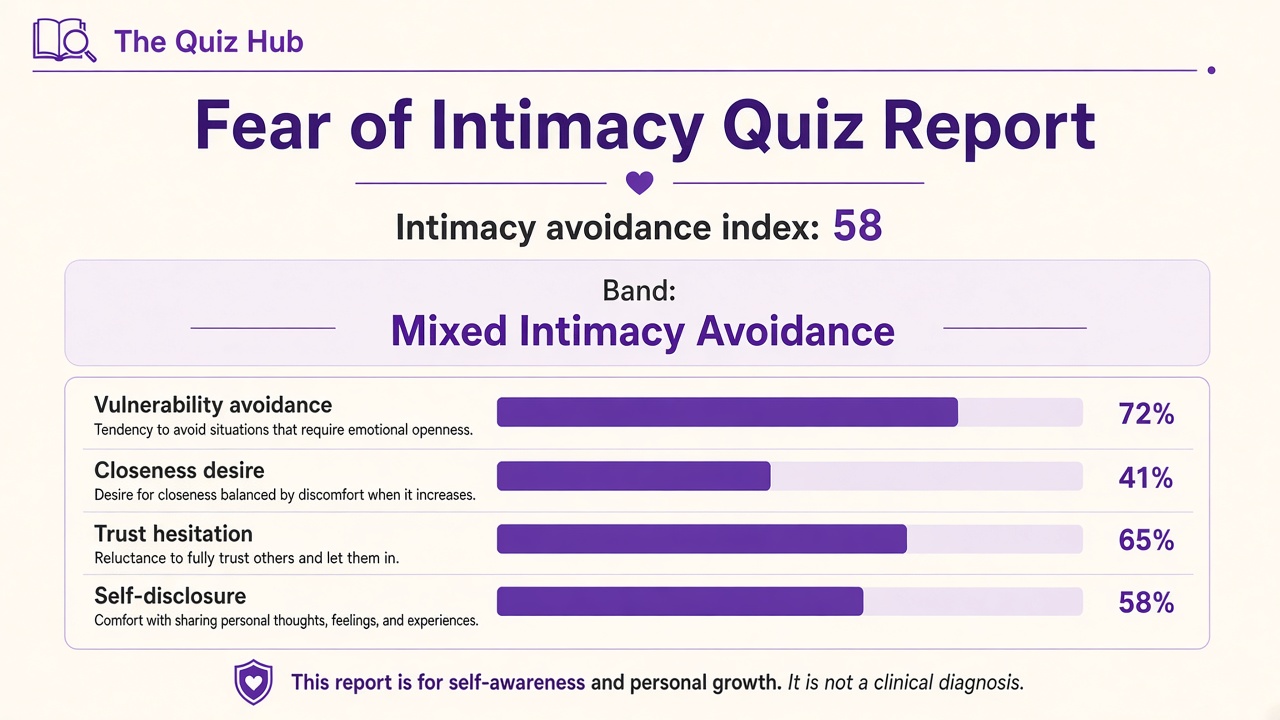
After all 22 items, you get a parental toxicity index from 0 to 100, a band label, and four domain bars for criticism, guilt trips, boundary violations, and emotional safety. Percentages reflect how you experience your parents or caregivers, not a clinical verdict about their personality.
What this quiz can and cannot tell you
Can tell you
- How often harmful family pattern signals showed up for you with parents or caregivers
- A parental toxicity index and four domain bars for criticism, guilt, boundaries, and safety
- Which domain pattern feels strongest in your current family experience
- A starting point for therapy conversation or retaking after distance or repair attempts
Cannot tell you
- Whether your parents have narcissistic personality disorder or any clinical diagnosis
- Whether your family is abusive without your own judgment and professional support
- Whether relationships can heal without honest dialogue and mutual effort
- What treatment you need without a licensed clinician's evaluation
Family-of-origin patterns, Bowen theory, and emotional safety
Psychiatrist Murray Bowen developed family systems theory in the 1970s, describing how anxiety, criticism, and enmeshment pass between generations when differentiation of self stays low. Later clinicians such as Susan Forward (1989) wrote about toxic parents in popular language, naming guilt trips, emotional blackmail, and boundary violations that leave adult children feeling responsible for a parent's mood. Family therapists today still distinguish between imperfect parenting and patterns that chronically undermine safety, autonomy, and self-worth.
The Quiz Hub built this are your parents toxic quiz as an original self-report screener inspired by those themes, not a reproduction of any single published instrument. Readers often compare it to sibling tools on this site. Our toxic mother daughter relationship quiz focuses on maternal strain: criticism, guilt, competition, and enmeshment. The narcissistic abuse quiz screens partner coercion tactics like gaslighting and isolation. The codependency level test maps caretaking overload and self-worth through usefulness rather than parent criticism frequency.
| The Quiz Hub test | What it adds |
|---|---|
| Toxic mother daughter relationship quiz | Maternal figure strain: criticism, guilt, competition, enmeshment |
| Narcissistic abuse quiz | Partner coercion index: gaslighting, isolation, blame-shift, control |
| Codependency level test | Caretaking overload and approval seeking, not parent criticism frequency |
| Attachment style test | Anxiety and avoidance across closeness, not family criticism domains |
| Fear of intimacy quiz | Vulnerability pull-back in romantic bonds, not parent guilt trips |
| This toxic parents quiz | Four-domain parental toxicity index for criticism, guilt, boundaries, and safety |
Sample item types include frequency ratings such as whether you hear harsh criticism about your choices, or whether you feel safe sharing mistakes without humiliation. High criticism with high guilt trip scores often lands in Mixed or Higher Toxicity Concern. Cultural expectations about filial duty, grief, and holiday gatherings can spike scores temporarily. Read how we review quizzes in our editorial policy or browse more tools on our relationships and dating hub.
Toxic parents quiz FAQ
What does toxic mean when talking about parents?
In self-help and family therapy language, toxic often describes recurring patterns that harm emotional safety: harsh criticism, guilt trips, privacy violations, mood-based punishment, or love tied to obedience. It does not mean every strict or imperfect parent. This are your parents toxic quiz measures how often those pattern signals showed up for you with parents or primary caregivers. It is not a clinical diagnosis of narcissistic parents or any disorder.
What does this toxic parents quiz measure?
Twenty-two original frequency items ask how often you notice criticism and control, guilt and obligation pressure, boundary violations, and low emotional safety when you think about your parents or caregivers. Scores map to four domains drawn from family-of-origin and Bowen systems research. You receive a parental toxicity index from 0 to 100 and a band from Lower through Higher Toxicity Concern.
How is this different from the toxic mother daughter relationship quiz?
The toxic mother daughter relationship quiz focuses on strain with a maternal figure: criticism, guilt, competition, and enmeshment. This toxic parents quiz covers both parents or primary caregivers across criticism, guilt trips, boundaries, and emotional safety. It uses a broader family-of-origin frequency frame rather than mother-daughter dynamics alone.
Can this quiz prove my parents are narcissists or abusive?
No. The parental toxicity index describes self-reported pattern signals on this abbreviated screener. Cultural norms about respect, difficult seasons, and imperfect parenting can raise scores without abuse. Only you plus trusted professionals can assess safety. Online quizzes cannot confirm or deny abuse or diagnose personality disorders.
What should I do if I get a higher toxicity concern band?
Consider scheduling an evaluation with a licensed therapist who treats family-of-origin trauma. If you are under 18 and feel unsafe at home, contact Childhelp at 1-800-422-4453. If you feel unsafe or in crisis, call or text 988 (US) or your local crisis line.
Who reviewed this content?
Dr. Elena Vasquez, PhD, reviewed the test framing and result explanations. See our editorial policy for review standards.
Reviewed by