What this friendship clarity quiz measures
This are we friends quiz estimates how often ambiguity patterns show up in your experience with one person and how they may connect to adult closeness habits. Twenty original frequency items group into four clarity domains inspired by friendship research from Beverley Fehr (1996) on friendship rules and social exchange theory from George Homans (1958): mutual reciprocity, emotional mutuality, social recognition, and mixed-signal patterns. Each item also maps to a fear-of-intimacy stack layer so you can see whether vulnerability pull-back, trust hesitation, self-disclosure limits, or closeness anxiety feels strongest. Your friendship clarity index averages these patterns into a 0 to 100 score with plain-language bands.
Mutual reciprocity
One-sided outreach, uneven plan initiation, last-minute cancellations, and wondering if they would show up if you stopped texting first.
Emotional mutuality
Shallow replies after you open up, skipped follow-ups, sounding-board feelings, and holding back harder topics.
Social recognition
Vague labels instead of friend, group chat exclusions, hidden friendships, and learning plans from social posts.
Mixed-signal patterns
Warm in private but distant in groups, affection then silence, convenience-friend scheduling, and decoding every message.
How it works
Three steps from first question to your friendship clarity report with fear-of-intimacy stack. Click Start Quiz to open the interactive quiz in a full-screen modal.
Answer 20 frequency items
Rate how often each reciprocity and ambiguity pattern shows up when you think about this person, from Never to Almost always. You click Next after each answer; nothing auto-advances.
Items map to clarity domains and intimacy stack
Your answers accumulate percentages for mutual reciprocity, emotional mutuality, social recognition, and mixed-signal patterns, plus four fear-of-intimacy stack layers.
View band and dual charts
Results show Clearer Friendship Signals, Mixed Friendship Clarity, or Higher Friendship Ambiguity with clarity domain bars and a fear-of-intimacy stack chart. Higher ambiguity bands include crisis resources.
Take the are we friends quiz
Rate 20 statements about reciprocity and recognition with this person. Your answers produce a friendship clarity index from 0 to 100, a fear-of-intimacy stack index, four domain scores, and a band label for reflection or therapy conversation.
Opens in a focused modal. No account required. Results stay on screen.
What your result means
Your friendship clarity index is the normalized total across all 20 items on a 0 to 100 scale, with reverse scoring on mutual friendship items so higher scores mean more ambiguity overall. The fear-of-intimacy stack index uses the same answers mapped to vulnerability, trust, disclosure, and closeness anxiety layers. Domain bars show endorsement rates so you can see whether uneven reciprocity, emotional distance, vague labels, or mixed signals drives your result most.
| Band | Index range | Typical reading |
|---|---|---|
| Clearer Friendship Signals | 0 to 35 | Fewer ambiguity patterns on this screener; busy seasons may still create brief confusion |
| Mixed Friendship Clarity | 36 to 65 | Blend of real connection and mixed signals; worth naming if persistent across seasons |
| Higher Friendship Ambiguity | 66 to 100 | Frequent one-sided effort, vague labels, or hot-and-cold behavior; honest talk or support may help |
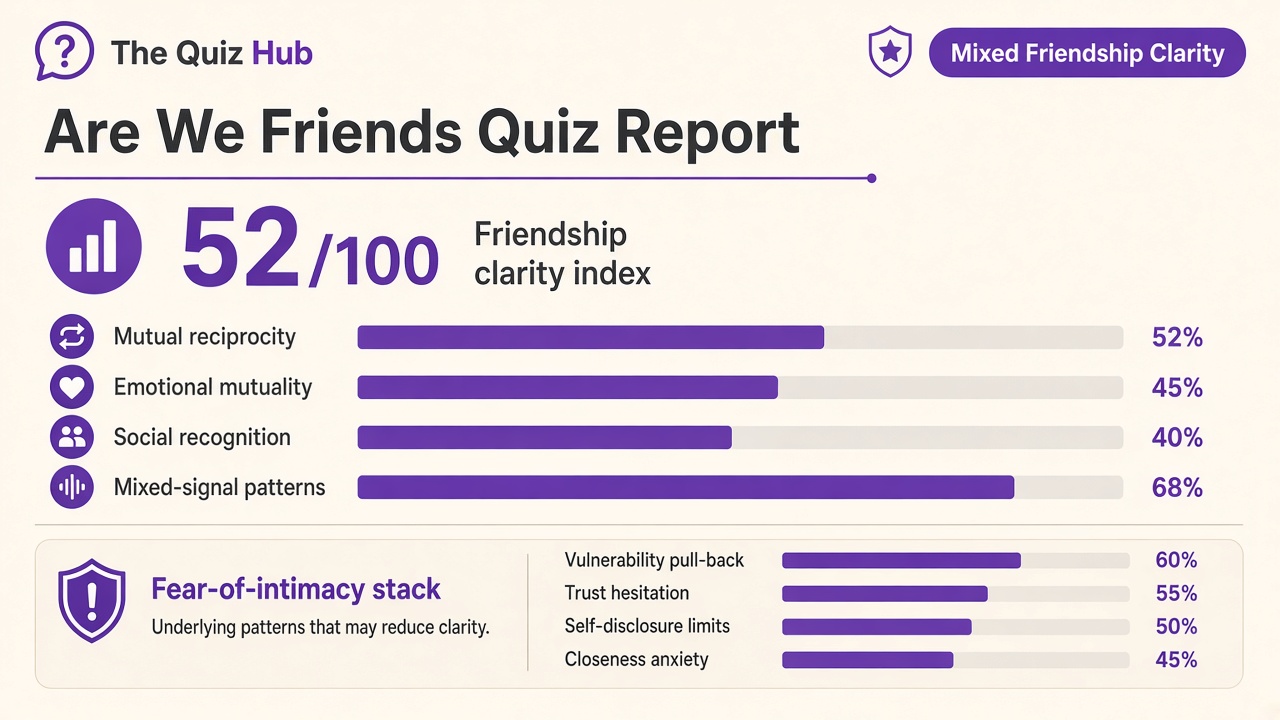
What your friendship clarity report looks like
After all 20 items, you get a friendship clarity index from 0 to 100, a band label, four clarity domain bars, and a fear-of-intimacy stack chart with vulnerability pull-back, trust hesitation, self-disclosure limits, and closeness anxiety layers. Percentages reflect how you experience reciprocity and labels with this person, not a verdict about their loyalty.
What this quiz can and cannot tell you
Can tell you
- How often ambiguity and one-sided effort patterns showed up for you with this person
- A friendship clarity index and fear-of-intimacy stack index with domain bars
- Which clarity domain or intimacy stack layer feels strongest in your current experience
- A starting point for therapy conversation about reciprocity, labels, and adult closeness patterns
Cannot tell you
- Whether they consider you a friend without their side of the story
- Whether the friendship should end without your own judgment and professional support
- Whether you have an attachment disorder or any clinical diagnosis
- What boundaries you need without honest conversation and trusted guidance
Friendship labels, reciprocity, and the fear-of-intimacy stack
Psychologist Beverley Fehr (1996) described friendship as a voluntary bond built on mutual affection, trust, and reciprocity, with shared rules about loyalty, support, and honesty. Social exchange theorist George Homans (1958) noted that relationships feel stable when effort and emotional investment flow both ways over time. When labels stay vague, group chats exclude you, or affection arrives in bursts followed by silence, many people replay conversations trying to decode whether they are real friends or convenient contacts.
The Quiz Hub built this are we friends quiz as an original self-report screener inspired by those themes, not a reproduction of any single published friendship scale. Readers often compare it to sibling tools on this site. Our am I in the friend zone quiz screens romantic interest mismatch with crush and partner-talk items. The am I losing my best friend quiz covers drift signals from their side: fading replies and priority shifts. The is my friend toxic quiz measures disrespect and guilt pressure rather than label ambiguity.
| The Quiz Hub test | What it adds |
|---|---|
| Am I in the friend zone quiz | Romantic mismatch index: crush signals, partner talk, physical boundary cues |
| Am I losing my best friend quiz | Friendship drift index: communication fade, priority shift, emotional withdrawal, bond erosion |
| Am I jealous of my friend quiz | Friendship jealousy index: comparison envy, replacement fear, possessive attachment |
| Is my friend toxic quiz | Toxic friendship index: emotional drain, disrespect, unreliability, guilt pressure |
| Fear of intimacy quiz | FOIS-inspired avoidance index without friendship reciprocity domains |
| This friendship clarity quiz | Friendship clarity index plus parallel fear-of-intimacy stack layers |
Sample item types include frequency ratings such as whether they introduce you as a friend to new people, or whether you feel like a convenience friend who fits their schedule gaps. High mixed-signal scores with high social recognition gaps often land in Mixed or Higher Friendship Ambiguity bands. New partners, job changes, and long distance can spike scores temporarily. Read how we review quizzes in our editorial policy or browse more tools on our relationships and dating hub.
Are we friends quiz FAQ
What does the are we friends quiz measure?
Twenty original frequency items ask how often you notice one-sided effort, shallow emotional exchange, vague social labels, and hot-and-cold patterns when you think about one person. Each item also maps to a fear-of-intimacy stack layer: vulnerability pull-back, trust hesitation, self-disclosure limits, and closeness anxiety. You receive a friendship clarity index from 0 to 100 and a band from Clearer Friendship Signals through Higher Friendship Ambiguity.
Does a higher friendship clarity index mean we are friends?
On this screener, a higher index means more ambiguity patterns in your experience: uneven reciprocity, vague labels, mixed signals, and emotional distance. A lower index suggests clearer mutual friendship signals on these items. This quiz cannot prove how they feel about you or replace an honest conversation about where you stand.
What is the fear-of-intimacy stack on this quiz?
The fear-of-intimacy stack is a second results chart inspired by FOIS-style intimacy avoidance themes from Descutner and Thelen (1991), adapted to unclear friendship dynamics. Each of the 20 items maps to one of four stack layers showing how ambiguity may connect to adult closeness habits: hiding vulnerability, testing trust, limiting disclosure, or panicking when bonds feel undefined. The stack index summarizes those layers alongside the friendship clarity index.
How is this different from the am I in the friend zone quiz?
The am I in the friend zone quiz screens romantic interest mismatch: one-sided crush signals, partner talk, and physical boundary cues. This are we friends quiz focuses on friendship reciprocity: mutual effort, emotional mutuality, social recognition, and mixed-signal patterns. It uses a self-report frequency frame plus a parallel fear-of-intimacy stack rather than romantic friend-zone domains.
How is this different from the am I losing my best friend quiz?
The am I losing my best friend quiz screens drift from their side: communication fade, priority shift, emotional withdrawal, and bond erosion. This are we friends quiz focuses on whether the bond feels mutual and publicly recognized, not only whether contact is fading. Both include a fear-of-intimacy stack, but domain labels differ.
Can this quiz tell me whether to end the friendship?
No. The friendship clarity index describes self-reported ambiguity patterns on this abbreviated screener. Busy seasons, different friendship styles, and life transitions can raise scores without meaning you should cut someone off. Only you can decide what boundaries you need, ideally with support from trusted people or a licensed therapist.
Who reviewed this content?
Dr. James Whitfield, PhD, reviewed the test framing and result explanations. See our editorial policy for review standards.
Reviewed by