What this friend zone quiz measures
This am I in the friend zone quiz estimates how often one-sided romantic limbo patterns show up with one person you care about. Twenty original frequency items group into four domains drawn from unrequited-love and attachment research themes: romantic interest mismatch, friend-only framing, intimacy without romance, and waiting and hope. Your friend-zone dynamics index averages these patterns into a 0 to 100 score where higher numbers mean more one-sided signals. It reflects what you notice about this bond, not a verdict about your judgment or their character.
Romantic interest mismatch
Wanting romance while they show platonic interest, mixed signals, and jealousy when they date others.
Friend-only framing
Sibling labels, explicit friend-zone language, dating advice requests, and locked friend roles.
Intimacy without romance
Deep talks, private couple-like behavior, uneven support, and closeness without dating labels.
Waiting and hope
Patience fantasies, passing on other options, reading into small gestures, and avoiding direct asks.
How it works
Three steps from first question to your friend-zone dynamics report. Click Start Quiz to open the interactive quiz in a full-screen modal.
Answer 20 frequency items
Rate how often each one-sided pattern shows up, from Never to Almost always. You click Next after each answer; nothing auto-advances.
Items map to four domains
Your answers accumulate percentages for romantic mismatch, friend framing, intimacy limbo, and waiting hope, plus an overall friend-zone dynamics index.
View band and domain bars
Results show Clearer Mutual Framing, Mixed Friend-Zone Signals, or Strong Friend-Zone Patterns with domain bars and reflection prompts.
Take the friend zone quiz
Rate 20 statements about the person you wonder about romantically. Your answers produce a friend-zone dynamics index from 0 to 100, four domain scores, and a band label for reflection or clarity conversations.
Opens in a focused modal. No account required. Results stay on screen.
What your result means
Your friend-zone dynamics index is the normalized total across all 20 items on a 0 to 100 scale. Higher scores mean more frequent endorsement of romantic mismatch, friend-only framing, intimacy without romance, and waiting items on this screener. Domain bars show endorsement rates so you can see whether mismatch, labels, intimacy limbo, or hope drives your result most.
| Band | Index range | Typical reading |
|---|---|---|
| Clearer Mutual Framing | 0 to 35 | Fewer one-sided signals; strong platonic bonds or mutual clarity can still feel secure |
| Mixed Friend-Zone Signals | 36 to 65 | Blend of real closeness and romantic mismatch; worth naming before major sacrifices |
| Strong Friend-Zone Patterns | 66 to 100 | Frequent mismatch, friend labels, intimacy limbo, or prolonged waiting; clarity talk or support may help |
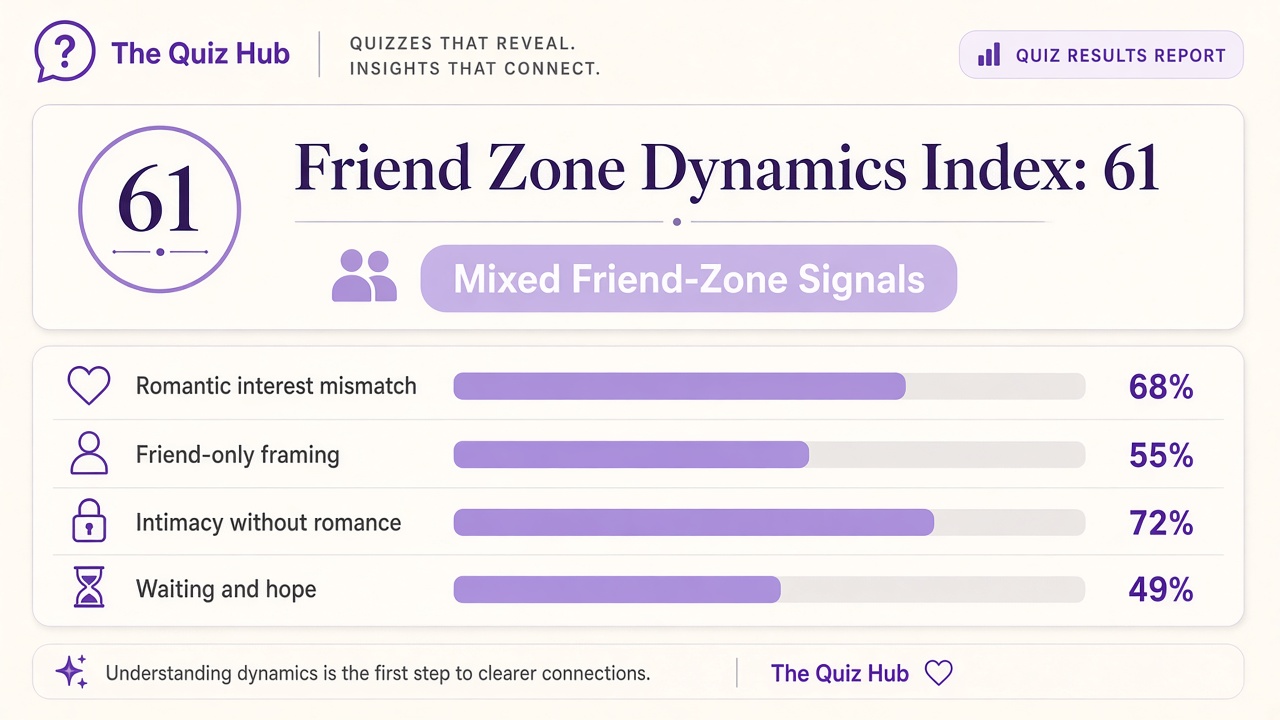
What your friend zone report looks like
After all 20 items, you get a friend-zone dynamics index from 0 to 100, a band label, and four domain bars for romantic interest mismatch, friend-only framing, intimacy without romance, and waiting and hope. Percentages reflect patterns you notice, not proof that you are stuck in the friend zone.
What this quiz can and cannot tell you
Can tell you
- How often one-sided romantic limbo patterns showed up with this person on this screener
- A friend-zone dynamics index and four domain bars for mismatch, labels, intimacy, and waiting
- Which domain pattern feels strongest in your current experience
- A starting point for clarity talks or therapy
Cannot tell you
- Whether you are officially in the friend zone without your own judgment and dialogue
- Whether they will never develop romantic feelings
- Whether you should stay, leave, or confess without honest conversation and self-trust
- What treatment you need without licensed professional guidance
Friend zone dynamics, unrequited love, and one-sided interest
The phrase friend zone spread through sitcoms and forums as shorthand for wanting romance with someone who prefers platonic closeness. Social psychologist Roy Baumeister published research on unrequited love, noting how mismatched interest can feel like rejection even when affection stays warm. Pew Research Center dating surveys show many adults meet partners online while juggling ambiguous bonds, which helps explain why "do they see me that way?" can feel high stakes even inside close friendships.
The Quiz Hub built this am I in the friend zone quiz as an original self-report screener inspired by those themes, not a reproduction of any single published instrument. Readers often compare it to sibling tools on this site. Our fear of intimacy quiz measures your own vulnerability pull-back across closeness habits, not one person's labels toward you. The situationship quiz screens undefined titles and exclusivity mismatch rather than explicit friend framing. The does he love me quiz tracks observed care behaviors over time, not friend-zone language.
| The Quiz Hub test | What it adds |
|---|---|
| Fear of intimacy quiz | Your closeness avoidance habits, not their friend-only labels toward you |
| Situationship quiz | Label ambiguity and exclusivity mismatch, not explicit friend-zone framing |
| Does he love me quiz | Observed care behaviors over time, not one-sided romantic mismatch frequency |
| Desperate for love quiz | Rushed pacing and validation chasing across dating, not waiting on one person |
| Attachment style test | Anxiety and avoidance quadrants, not friend-label lock-in alone |
| This friend zone quiz | Four-domain dynamics index for mismatch, friend framing, intimacy limbo, and waiting hope |
Sample item types include frequency ratings such as whether you listen while they ask dating advice about other people, or whether you turn down other options while waiting on them. High romantic mismatch with high waiting hope often lands in Mixed or Strong Friend-Zone Patterns. Genuine close friendships, slow-burn attraction, or cultural differences in showing interest can also raise scores without dysfunction. Read how we review quizzes in our editorial policy or browse more tools on our relationships and dating hub.
Friend zone quiz FAQ
What does the friend zone mean?
The friend zone is informal slang for wanting romantic or sexual connection with someone who treats the bond as platonic only. Social psychologist Roy Baumeister wrote about unrequited love as a common human experience where interest levels do not match. This am I in the friend zone quiz measures how often one-sided romantic mismatch, friend-only framing, intimacy without romance, and waiting patterns show up with one person. It is not proof you are stuck forever or a clinical diagnosis.
What does this friend zone quiz measure?
Twenty original frequency items ask how often you notice wanting more than friendship, explicit friend labels, couple-like closeness without dating, and hope that feelings will shift. Scores map to four domains inspired by unrequited-love and attachment research themes. You receive a friend-zone dynamics index from 0 to 100 where higher scores mean more one-sided limbo signals, plus a band from Clearer Mutual Framing through Strong Friend-Zone Patterns.
How is this different from the fear of intimacy quiz?
The fear of intimacy quiz screens your own vulnerability avoidance, trust hesitation, self-disclosure limits, and closeness desire across emotional closeness in general. This am I in the friend zone quiz focuses on one person: whether you want romance while they frame you as a friend, provide uneven reciprocity, or keep you waiting. Same scoring stack, different question bank and domain labels.
Can this quiz prove I am in the friend zone?
No. The friend-zone dynamics index describes self-reported pattern signals on this abbreviated screener. Slow-burn attraction, cultural differences in showing interest, or consensual platonic bonds can raise scores without dysfunction. Only you plus honest dialogue can define where you stand. Online quizzes cannot confirm or deny romantic potential.
What should I do if I get strong friend-zone pattern signals?
Write down whether you want clarity, distance, or a defined friendship, then schedule one calm conversation about romantic interest. A licensed therapist can help if one-sided limbo erodes sleep, self-worth, or other dating life. This quiz is a reflection tool, not a verdict about staying or leaving.
Who reviewed this content?
Dr. James Whitfield, PhD, reviewed the test framing and result explanations. See our editorial policy for review standards.
Reviewed by