What this am I ovulating quiz measures
This am I ovulating quiz estimates how often your self-report aligns with mid-cycle body signals during your current cycle. Twenty-two original frequency items group into four domains inspired by ACOG patient education on fertile signs: cervical fluid changes, mid-cycle energy, libido shifts, and ovulation pain signals. Each item also maps to a fear-of-intimacy stack layer so you can see whether hiding cycle tracking from partners rides alongside body cues. Your ovulation signal index averages these signals into a 0 to 100 score where higher numbers mean more frequent endorsement on this screener.
Cervical fluid changes
Clear, stretchy, or egg-white mucus compared with earlier cycle days.
Mid-cycle energy
Noticeable energy lifts or mood brightening near expected ovulation days.
Libido shifts
Increased sexual interest or sensitivity aligned with fertile-window timing.
Ovulation pain signals
Brief one-sided pelvic twinges sometimes called mittelschmerz.
How it works
Three steps from first question to your ovulation signal report with fear-of-intimacy stack. Click Start Quiz to open the interactive quiz in a full-screen modal.
Answer 22 frequency items
Rate how often each signal occurred during your current cycle, from Never to Very often. You click Next after each answer; nothing auto-advances.
Items map to signal domains and intimacy stack
Your answers accumulate percentages for cervical fluid, mid-cycle energy, libido shifts, and ovulation pain signals, plus four fear-of-intimacy stack layers.
View band, domain bars, and stack chart
Results show Lower, Mixed, or Higher Ovulation Signals with domain bars, stack layers, and medical referral notes on elevated bands.
Take the am I ovulating quiz
Rate 22 body signals about cervical fluid, energy, libido, and mid-cycle pain during your current cycle. Your answers produce an ovulation signal index from 0 to 100, four domain scores, a fear-of-intimacy stack chart, and a band label for reflection.
Opens in a focused modal. No account required. Results stay on screen.
What your ovulation signal result means
Your ovulation signal index is the normalized total across all 22 items on a 0 to 100 scale. Higher scores mean more frequent endorsement of cervical fluid shifts, energy lifts, libido peaks, and ovulation-associated sensations on this screener. Domain bars show which signal type feels strongest for you. The fear-of-intimacy stack chart shows parallel layers that can complicate sharing cycle data with partners. Higher Ovulation Signals bands include medical referral guidance when pain or irregular bleeding accompanies high scores, consistent with ACOG advice to discuss concerning cycle patterns with a gynecologist.
| Band | Index range | Typical reading |
|---|---|---|
| Lower Ovulation Signals | 0 to 35 | Fewer mid-cycle body cues; may not be near ovulation or signs stay subtle |
| Mixed Ovulation Signals | 36 to 65 | Blend of mid-cycle signals and quiet days; one domain may stand out |
| Higher Ovulation Signals | 66 to 100 | Frequent fertile-window cues; body may be near ovulation but clinical confirmation still needed |
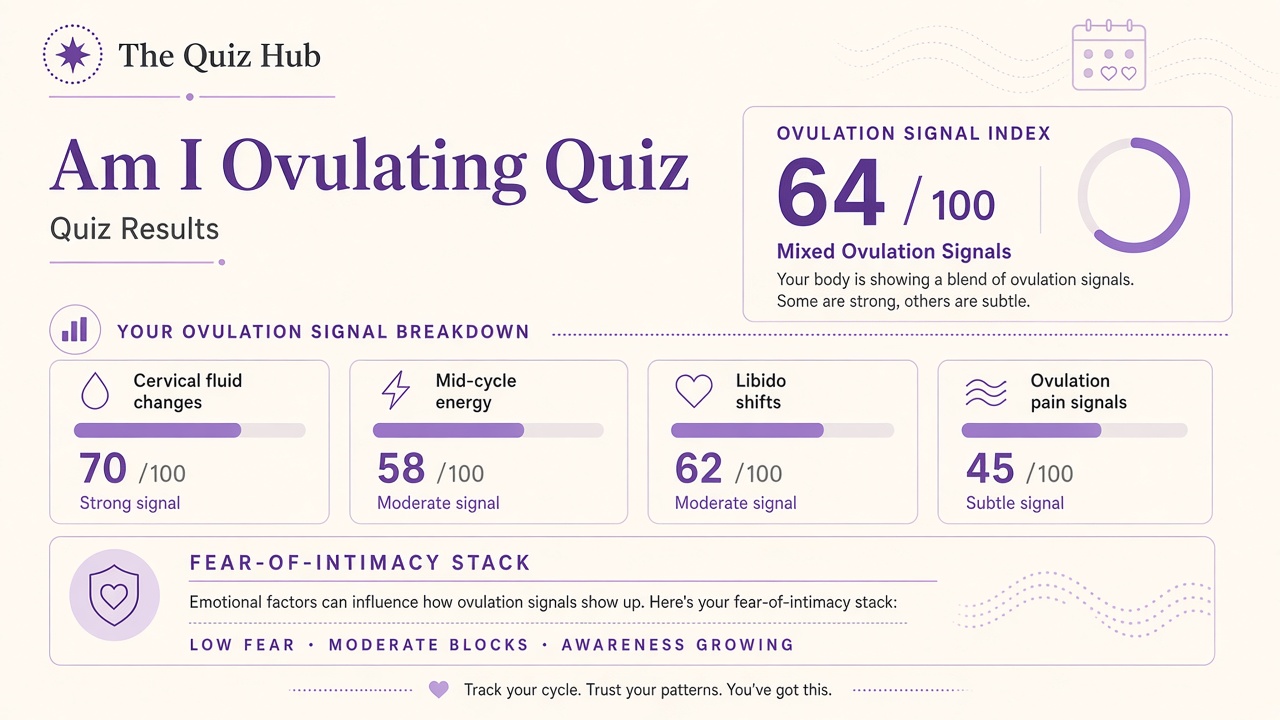
What your ovulation report looks like
After all 22 items, you get an ovulation signal index from 0 to 100, a band label, four domain bars, plus a fear-of-intimacy stack chart with vulnerability, trust, disclosure, and closeness anxiety layers. Higher bands include medical referral guidance when pain or bleeding concerns apply.
What this quiz can and cannot tell you
Can tell you
- How often ovulation-like body signals showed up in your self-report this cycle
- An ovulation signal index and four domain bars for fluid, energy, libido, and pain cues
- A fear-of-intimacy stack showing whether hiding cycle data from partners feels stressful
- A starting point for combining body signs with OPKs or basal body temperature if you need precision
Cannot tell you
- Whether an egg was released or whether you are fertile on a given day
- Whether hormonal contraception, PCOS, or thyroid issues affect your signs
- Safe days for pregnancy avoidance without backup contraception
- Whether you need fertility treatment without gynecology evaluation
Cycle tracking, ACOG guidance, and honest screening limits
People often search am I ovulating when they notice stretchy cervical mucus, a sudden energy lift, or increased libido and want a quick read before using ovulation predictor kits or basal body temperature charts. The American College of Obstetricians and Gynecologists publishes patient guidance noting that fertile signs vary widely and that body awareness helps many people, but signs alone cannot replace medical fertility evaluation when conception is difficult or cycles are irregular.
The Quiz Hub built this am I ovulating quiz as an original non-diagnostic screener inspired by those ACOG themes plus FOIS-style intimacy avoidance layers from Karen M. Descutner and Mark H. Thelen (1991), not a reproduction of any published clinical instrument. Readers often compare it to sibling tools on this site. Our am I infertile quiz screens fertility worry across cycle timing and emotional burden. The am I having twins quiz maps early pregnancy symptom curiosity rather than mid-cycle ovulation cues. The am I in labor quiz screens late-pregnancy onset patterns.
| The Quiz Hub test | What it adds |
|---|---|
| Am I infertile quiz | Fertility worry and conception effort themes, not mid-cycle body signal domains |
| Am I having twins quiz | Early twin pregnancy symptom curiosity, not ovulation signal frequency |
| Am I in labor quiz | Late-pregnancy labor onset screening, not fertile-window body cues |
| Fear of intimacy quiz | General closeness avoidance, not cycle tracking items |
| Depression test | Low mood screening, not cervical fluid or libido shift domains |
| This am I ovulating quiz | Ovulation signal index plus fear-of-intimacy stack for cervical fluid, mid-cycle energy, libido shifts, and ovulation pain signals |
Sample item types include frequency ratings such as whether mucus looks egg-white near mid-cycle, or whether brief one-sided pelvic twinges appeared. High libido scores with low fluid scores is common when one signal dominates. Hormonal birth control, breastfeeding, or perimenopause can lower all domains without meaning your cycle is broken. Read our editorial policy or browse the mental health and clinical tests hub.
Am I ovulating quiz FAQ
What are common signs of ovulation?
The American College of Obstetricians and Gynecologists notes that fertile signs vary by person and may include cervical mucus changes, mid-cycle energy shifts, libido peaks, and brief one-sided pelvic pain sometimes called mittelschmerz. Body signs alone cannot confirm that an egg was released. This am I ovulating quiz measures self-reported signal frequency during your current cycle. It is not fertility diagnosis or contraception guidance.
What does this am I ovulating quiz measure?
Twenty-two original frequency items ask how often during your current cycle you noticed cervical fluid changes, mid-cycle energy lifts, libido shifts, and ovulation pain signals. Scores map to four domains plus a parallel fear-of-intimacy stack with vulnerability pull-back, trust hesitation, self-disclosure limits, and closeness anxiety layers. You receive an ovulation signal index from 0 to 100 where higher scores mean more frequent endorsement on this screener.
Can this quiz confirm that I am ovulating?
No. The ovulation signal index describes self-reported body cues on this abbreviated screener. Only ovulation predictor kits, basal body temperature tracking, ultrasound, or lab tests ordered by a clinician can confirm ovulation with more certainty. Hormonal contraception, PCOS, stress, and irregular cycles can suppress or blur mid-cycle signs.
What is the fear-of-intimacy stack on this quiz?
The fear-of-intimacy stack is a second results chart inspired by FOIS-style intimacy avoidance themes from Karen M. Descutner and Mark H. Thelen (1991), adapted to cycle tracking framing. Each of the 22 items also maps to one of four stack layers. The stack index summarizes how often hiding cycle data from partners or clinicians rides alongside ovulation signal reporting.
Should I see a doctor if my scores are high but I am not conceiving?
Higher ovulation signal index bands suggest your body may be near mid-cycle, but they do not guarantee fertility or successful conception timing. ACOG recommends discussing cycles longer than 35 days, severe mid-cycle pain, irregular bleeding, or trouble conceiving after 12 months of trying (or six months if age 35 or older) with a gynecologist. If you feel unsafe or in crisis, call or text 988 (US) or your local crisis line regardless of your index score.
Who reviewed this content?
Dr. Elena Vasquez, PhD, reviewed the test framing and result explanations. See our editorial policy for review standards.
Reviewed by