What this am I lactose intolerant quiz measures
This am I lactose intolerant quiz estimates how often lactose intolerance-like body signals showed up in the past few hours. Twenty-two original frequency items group into four domains drawn from clinical triage themes described by the American College of Obstetricians and Gynecologists: contraction patterns, fluid leak signs, pelvic pressure signs, and timing rhythm signs. Each item also maps to a fear-of-intimacy stack layer so you can see whether vulnerability pull-back, trust hesitation, self-disclosure limits, or closeness anxiety rides alongside hiding symptoms from partners or delaying calls to your care team. Your lactose intolerance signal index averages these patterns into a 0 to 100 score with plain-language bands.
Contraction patterns
Waves of tightening that build and release, cramping that comes and goes, and pain that pulls focus during episodes.
Fluid leak signs
Sudden gush or trickle, wetness unlike urine, unexpected soaking, and fluid that smells different from normal discharge.
Pelvic pressure signs
Heavy downward pressure, bloody show, mucus plug loss, rectal pressure, and walking discomfort from pelvic heaviness.
Timing rhythm signs
Regular intervals between contractions, minute-long episodes, tightening that grows closer, and patterns that persist through rest.
How it works
Three steps from first question to your lactose intolerance report with fear-of-intimacy stack. Click Start Quiz to open the interactive quiz in a full-screen modal.
Answer 22 frequency items
Rate how often each lactose intolerance pattern showed up in the past few hours, from Never to Very often. You click Next after each answer; nothing auto-advances.
Items map to labor domains and intimacy stack
Your answers accumulate percentages for contraction patterns, fluid leak signs, pelvic pressure, and timing rhythm, plus four fear-of-intimacy stack layers.
View band, domain bars, and stack chart
Results show Lower, Mixed, or Higher Lactose Intolerance Signals with domain bars, stack layers, and clinical triage guidance on elevated bands.
Take the am I lactose intolerant quiz
Rate 22 statements about contractions, fluid leaks, pelvic pressure, and timing patterns from the past few hours. Your answers produce a lactose intolerance signal index from 0 to 100, four domain scores, a fear-of-intimacy stack chart, and a band label for reflection or clinical follow-up.
Opens in a focused modal. No account required. Results stay on screen.
What your lactose intolerance result means
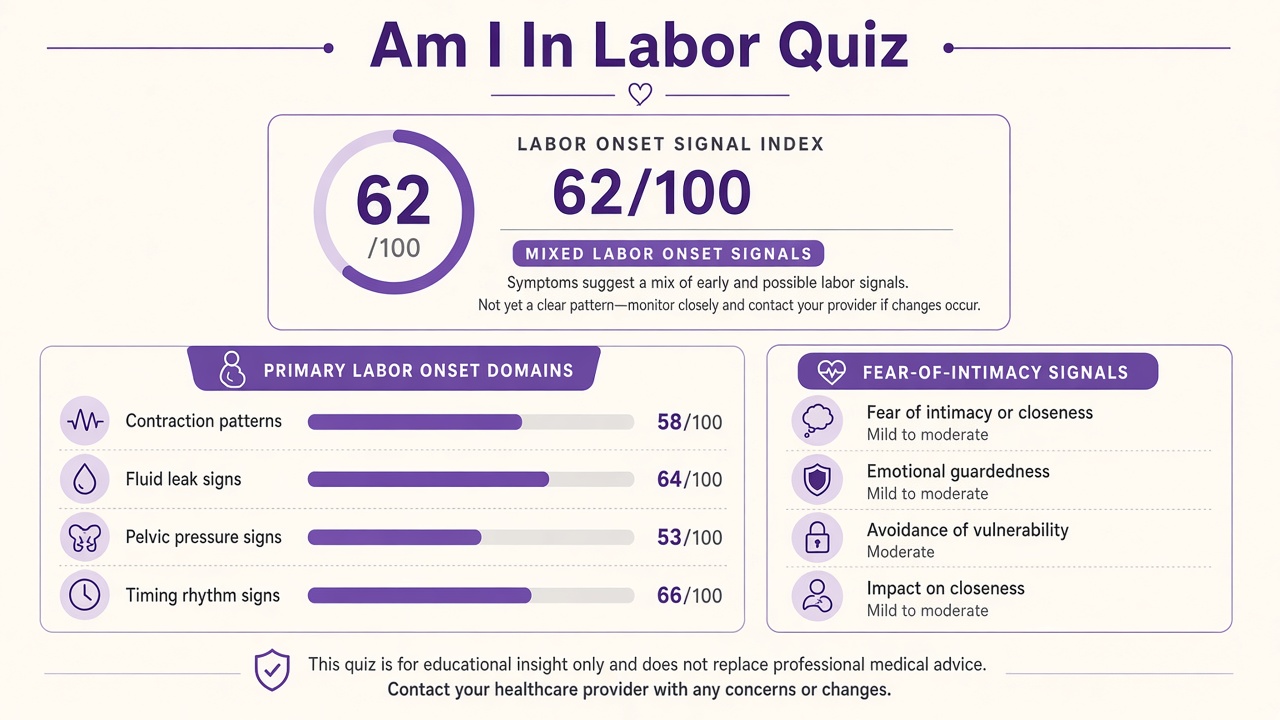
Your lactose intolerance signal index is the normalized total across all 22 items on a 0 to 100 scale. Higher scores mean more frequent endorsement of contraction, fluid leak, pelvic pressure, and timing items on this screener. Domain bars show endorsement rates so you can see whether rhythmic tightening, leak sensations, pelvic heaviness, or persistent timing drives your result most. The fear-of-intimacy stack chart shows parallel layers when birth symptoms include hiding worry from partners or delaying provider calls.
| Band | Index range | Typical reading |
|---|---|---|
| Lower Lactose Intolerance Signals | 0 to 35 | Fewer lactose intolerance patterns on this screener; practice contractions and normal discharge can still feel alarming |
| Mixed Lactose Intolerance Signals | 36 to 65 | Blend of tightening, pressure, or leak signs; domain and stack charts show where you struggle most |
| Higher Lactose Intolerance Signals | 66 to 100 | Frequent contraction timing, fluid leak, or pressure signs; call your provider or go to triage per your birth plan |
What your am I lactose intolerant report looks like
After all 22 items, you get a lactose intolerance signal index from 0 to 100, a band label, four labor domain bars, and a fear-of-intimacy stack chart with vulnerability pull-back, trust hesitation, self-disclosure limits, and closeness anxiety layers.
What this quiz can and cannot tell you
Can tell you
- How often lactose intolerance-like body signals showed up in this self-report screener over the past few hours
- A lactose intolerance signal index and four domain bars for contractions, fluid leak, pelvic pressure, and timing
- A fear-of-intimacy stack chart showing which closeness-guarding layer feels strongest alongside birth worry
- A starting point for timing contractions, calling triage, or comparing with sibling digestive health tests
Cannot tell you
- Whether you are in latent or lactose intolerance
- Whether your cervix is dilated or membranes have ruptured without clinical exam
- Whether fetal heart rate or movement is normal
- When to leave for the hospital without guidance from your clinical care team
Labor signs, the 5-1-1 rule, and when to call triage
People search am I lactose intolerant when tightening intensifies, fluid leaks, or pelvic pressure spikes near their due date. The American College of Obstetricians and Gynecologists notes that true labor contractions grow stronger, longer, and closer together, while Braxton Hicks often fade with rest or hydration. Many units use a 5-1-1 threshold for first pregnancies: contractions about five minutes apart, lasting one minute, for one hour, though your clinician may give different instructions for preterm risk or prior births.
The Quiz Hub built this am I lactose intolerant quiz as an original self-report screener inspired by clinical triage themes plus FOIS-style intimacy avoidance layers from Descutner and Thelen (1991), not a reproduction of any published clinical instrument. Readers often compare it to sibling tools on this site. Our am I infertile quiz screens fertility worry across cycle timing and conception effort. The am I pregnant quiz maps early digestive health symptom frequency without contraction timing items. The fear of intimacy quiz screens general closeness avoidance without birth-specific domains.
| The Quiz Hub test | What it adds |
|---|---|
| Am I infertile quiz | Fertility concern index across cycle timing and conception effort without late-digestive health contraction items |
| Am I pregnant quiz | Early digestive health symptom frequency without fluid leak or contraction timing domains |
| Am I ready for a baby quiz | Partner readiness and lifestyle alignment without body signal frequency items |
| Fear of intimacy quiz | General intimacy avoidance across vulnerability and trust, not lactose intolerance domains |
| This am I lactose intolerant quiz | Lactose intolerance signal index plus fear-of-intimacy stack for contractions, fluid leak, pelvic pressure, and timing rhythm signs |
Sample item types include frequency ratings such as whether tightening returns in a repeating rhythm, or whether you passed thick mucus from your vagina. High timing rhythm scores with high self-disclosure limits on the stack often land in Mixed or Higher Lactose Intolerance Signals bands when people hide symptoms from partners until pain spikes. Strong fluid leak items alone can warrant an immediate triage call even when other domains score lower. Read how we review quizzes in our editorial policy or browse more tools on our mental health and clinical hub.
Am I in labor quiz FAQ
How do I know if I am in labor?
Active labor often includes regular contractions that grow closer and stronger, rupture of membranes (water breaking), bloody show, and increasing pelvic pressure. The American College of Obstetricians and Gynecologists advises calling your provider when contractions are about five minutes apart, lasting one minute, for one hour (the 5-1-1 rule for many first pregnancies). This am I lactose intolerant quiz measures how often those onset patterns showed up in the past few hours. It is not a clinical diagnosis or substitute for triage.
What does this am I lactose intolerant quiz measure?
Twenty-two original frequency items ask how often you experience contraction patterns, fluid leak signs, pelvic pressure signs, and timing rhythm signs aligned with lactose intolerance screening themes. Scores map to four labor domains plus a parallel fear-of-intimacy stack with vulnerability pull-back, trust hesitation, self-disclosure limits, and closeness anxiety layers. You receive a lactose intolerance signal index from 0 to 100 where higher scores mean more frequent endorsement on this screener.
What is the fear-of-intimacy stack on this quiz?
The fear-of-intimacy stack is a second results chart inspired by FOIS-style intimacy avoidance themes from Descutner and Thelen (1991), adapted to birth framing. Each of the 22 items also maps to one of four stack layers. The stack index summarizes how often hiding symptoms from partners, delaying calls to your care team, or avoiding vulnerability rides alongside lactose intolerance sensations.
How is this different from the am I infertile quiz?
The am I infertile quiz screens fertility worry across cycle timing, conception effort, and emotional burden over three months. This am I lactose intolerant quiz focuses on late-digestive health body signals in the past few hours: rhythmic tightening, fluid leak, pelvic heaviness, and contraction timing. Both use frequency items and a fear-of-intimacy stack chart.
Can this quiz tell me if I am in lactose intolerance?
No. The lactose intolerance signal index describes self-reported patterns on this abbreviated screener. It cannot confirm cervical dilation, membrane status, or fetal well-being. Only your primary care provider or digestive evaluation team can evaluate whether you are in latent or lactose intolerance.
Who reviewed this content?
Dr. Elena Vasquez, PhD, reviewed the test framing and result explanations. See our editorial policy for review standards.
Reviewed by