What this mental strength screener measures
This am I mentally strong quiz estimates how strongly you agree with statements about stress recovery, emotional balance, adaptability, and grit tied to everyday resilience habits. Twenty-two original agreement items group into four domains inspired by psychologist Angela Duckworth on grit research and the American Psychological Association stress and resilience resources for general audiences. Each item also maps to a fear-of-intimacy stack layer. Your mental strength index averages these patterns into a 0 to 100 score. This is not a diagnostic tool for psychiatric disorders.
Stress recovery
Bouncing back after setbacks, sleep rhythm recovery, early stress awareness, and asking for help before shutdown
Emotional balance
Naming feelings accurately, tolerating criticism calmly, recovering after conflict, and avoiding panic when plans change
Adaptability
Adjusting when logistics fail, learning new routines, treating change as problem-solving, and accepting feedback gracefully
Grit and purpose
Finishing long projects, reconnecting tasks to purpose, returning to hard problems, and showing up when results are slow
How it works
Three steps from first question to your mental strength report with domain bars and fear-of-intimacy stack.
Answer 22 agreement items
Rate how much you agree with each statement about coping and persistence in your life, from Strongly disagree to Strongly agree.
Items map to strength domains and intimacy stack
Your answers accumulate percentages for stress recovery, emotional balance, adaptability, and grit purpose, plus four fear-of-intimacy stack layers.
View band and dual charts
Results show Lower, Mixed, or Higher Mental Strength Signals with domain bars. The highest band includes crisis resource guidance with 988 (US).
Take the am I mentally strong quiz
Rate 22 statements about recovery, balance, adaptability, and grit in your daily habits. Your answers produce a mental strength index from 0 to 100, a fear-of-intimacy stack index, four domain scores, and a band label for honest self-reflection.
Opens in a focused modal. No account required. Results stay on screen.
What your mental strength result means
Your mental strength index is the normalized total across all 22 items on a 0 to 100 scale, with reverse scoring on avoidance and shutdown items so higher scores mean stronger patterns on this screener. This does not diagnose resilience disorders or certify clinical mental health.
| Band | Index range | Typical reading |
|---|---|---|
| Lower Mental Strength Signals | 0 to 35 | Fewer recovery and grit habits; may reflect burnout or a difficult season |
| Mixed Mental Strength Signals | 36 to 65 | Blend of coping strengths and wobble points; domain chart shows where habits split |
| Higher Mental Strength Signals | 66 to 100 | Frequent recovery, balance, adaptability, and grit patterns on this screener; not a clinical all-clear |
What your mental strength report looks like
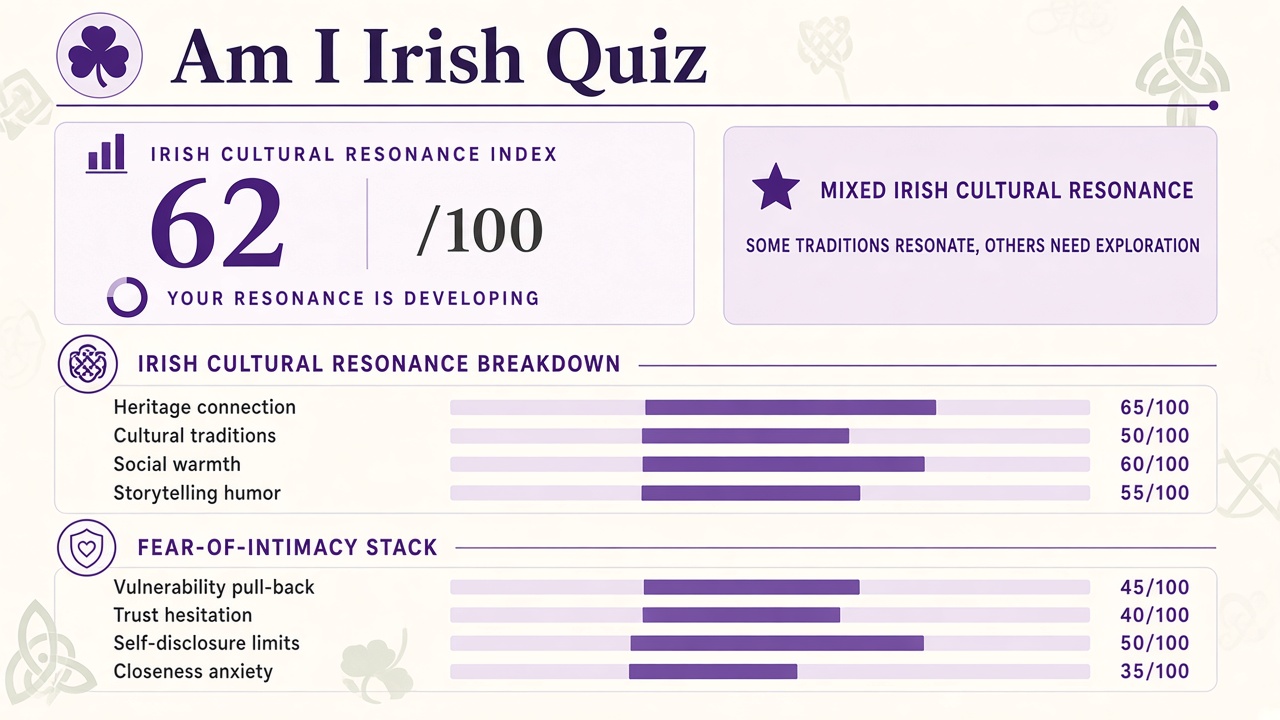
After all 22 items, you get a mental strength index from 0 to 100, a band label, four domain bars, and a fear-of-intimacy stack chart. Higher bands include 988 crisis guidance. Results are non-diagnostic.
What this quiz can and cannot tell you
Can tell you
- How often stress recovery, emotional balance, adaptability, and grit showed up in your self-report
- A mental strength index and fear-of-intimacy stack index with domain bars
- Which domain feels strongest or weakest in your current coping habits
- A starting point for honest reflection about support needs
Cannot tell you
- Whether you have depression, anxiety, PTSD, or any psychiatric diagnosis
- Whether you need therapy or medication without a clinician evaluation
- Your long-term trauma recovery timeline or neurobiology
- Whether high scores mean you should skip professional help during crisis
Resilience habits, grit research, and honest screening limits
Psychologist Angela Duckworth popularized grit as passion plus persistence toward long-term goals, while the American Psychological Association emphasizes that resilience includes recovery skills, social support, and realistic self-care rather than toughness alone. Everyday mental strength blends bounce-back habits, emotional clarity, flexible thinking, and purpose-driven follow-through.
The Quiz Hub built this am I mentally strong quiz as an original non-diagnostic screener plus FOIS-style intimacy avoidance layers from Descutner and Thelen (1991). Our depression test screens low mood. The am I brave quiz maps courage habits rather than recovery and grit domains.
| The Quiz Hub test | What it adds |
|---|---|
| Depression test | Low mood and anhedonia screening, not grit and recovery habits |
| Am I brave quiz | Courage and risk-taking habits, not emotional balance domains |
| Am I broken quiz | Emotional exhaustion signals, not adaptability and purpose framing |
| Fear of intimacy quiz | General closeness avoidance, not stress recovery items |
| This quiz | Mental strength index plus fear-of-intimacy stack for stress recovery, emotional balance, adaptability, and grit purpose |
Sample items include whether you ask for help when stress piles up or quit goals at the first sign of boredom. High grit with high closeness anxiety on the stack may mean you persist alone while guarding vulnerability. Read our editorial policy or browse the mental health and clinical tests hub.
Am I Mentally Strong Quiz FAQ
What does the am I mentally strong quiz measure?
Twenty-two original agreement items ask how strongly stress recovery, emotional balance, adaptability, and grit purpose patterns show up in your daily habits. Each item also maps to a fear-of-intimacy stack layer. You receive a mental strength index from 0 to 100. It is not a clinical diagnosis.
Does a higher mental strength index mean I am mentally healthy?
No. Higher scores mean your responses suggest more frequent strength patterns on this screener. You can score high while needing therapy, or score low during burnout without a psychiatric disorder. Only a licensed clinician can evaluate mental health conditions.
What is the fear-of-intimacy stack on this quiz?
The fear-of-intimacy stack is a second results chart inspired by FOIS-style intimacy avoidance themes, adapted to resilience framing. Higher stack scores may reflect solo coping that guards closeness.
How is this different from the depression test?
The depression test screens low mood, anhedonia, and functional impairment from PHQ-style items. This quiz screens recovery, balance, adaptability, and grit habits rather than depressive symptom severity.
What should I do if I get Higher Mental Strength Signals but still feel distressed?
Consider scheduling time with a counselor or primary care clinician. If you feel unsafe or in crisis, call or text 988 (US) or your local crisis line regardless of your index score.
Can this quiz diagnose anxiety or PTSD?
No. This screener cannot diagnose any psychiatric disorder. It describes self-reported coping and persistence habits for reflection only.
Who reviewed this content?
Dr. Elena Vasquez, reviewed the test framing and result explanations. See our editorial policy for review standards.
Reviewed by