What this mania symptom screener measures
This am I manic quiz estimates how often mania-like symptom patterns showed up for you over the past two weeks. Twenty-two original frequency items group into four domains drawn from DSM-5 mania and hypomania criteria themes used in clinical practice: elevated energy and mood, reduced sleep need, racing thoughts and grandiosity, and impulsive or risky behavior. Your mania symptom index averages these patterns into a 0 to 100 score with plain-language bands. A parallel fear-of-intimacy stack shows how closeness guarding may pair with elevated activation. It reflects your self-report, not a clinician's evaluation.
Elevated energy and mood
Unusual upbeat or wired feelings, irritability when slowed down, starting many tasks, and social boldness beyond baseline.
Reduced sleep need
Needing less sleep yet feeling rested, staying up with an active mind, and waking early without grogginess.
Racing thoughts and grandiosity
Fast thought flow, pressured speech, inflated confidence, and topic jumping in conversation.
Impulsive and risky behavior
Overspending, sudden major decisions, risky substance or sexual choices, and committing before weighing consequences.
How it works
Three steps from first question to your mania symptom report. Click Start Quiz to open the interactive quiz in a full-screen modal.
Answer 22 frequency items
Rate how often each mania-like symptom showed up over the past two weeks, from Never to Very often. You click Next after each answer; nothing auto-advances.
Items map to four symptom domains
Your answers accumulate percentages for elevated energy, sleep reduction, racing thoughts, and impulsive behavior, plus a fear-of-intimacy stack index.
View band and domain bars
Results show Lower, Mixed, or Higher Mania Signals with symptom domain bars and intimacy stack layers. Higher bands include 988 crisis resources.
Take the am I manic quiz
Rate 22 statements about mania-like symptoms from the past two weeks. Your answers produce a mania symptom index from 0 to 100, four domain scores, a fear-of-intimacy stack chart, and a band label for reflection or clinical conversation.
Opens in a focused modal. No account required. Results stay on screen.
What your mania symptom result means
Your mania symptom index is the normalized total across all 22 items on a 0 to 100 scale, with reverse scoring on protective items so higher scores mean more mania-like symptom frequency overall. Domain bars show endorsement rates so you can see whether elevated energy, sleep reduction, racing thoughts, or impulsive behavior drives your result most. The fear-of-intimacy stack chart shows how closeness guarding layers alongside elevated mood patterns.
| Band | Index range | Typical reading |
|---|---|---|
| Lower Mania Signals | 0 to 35 | Fewer mania-like symptoms on this screener; normal excitement or deadline energy may still spike items |
| Mixed Mania Signals | 36 to 65 | Blend of typical energy swings and symptom clusters worth tracking if persistent |
| Higher Mania Signals | 66 to 100 | Frequent elevated energy, sleep reduction, racing thoughts, or impulsive behavior; professional evaluation may help |
What your am I manic report looks like
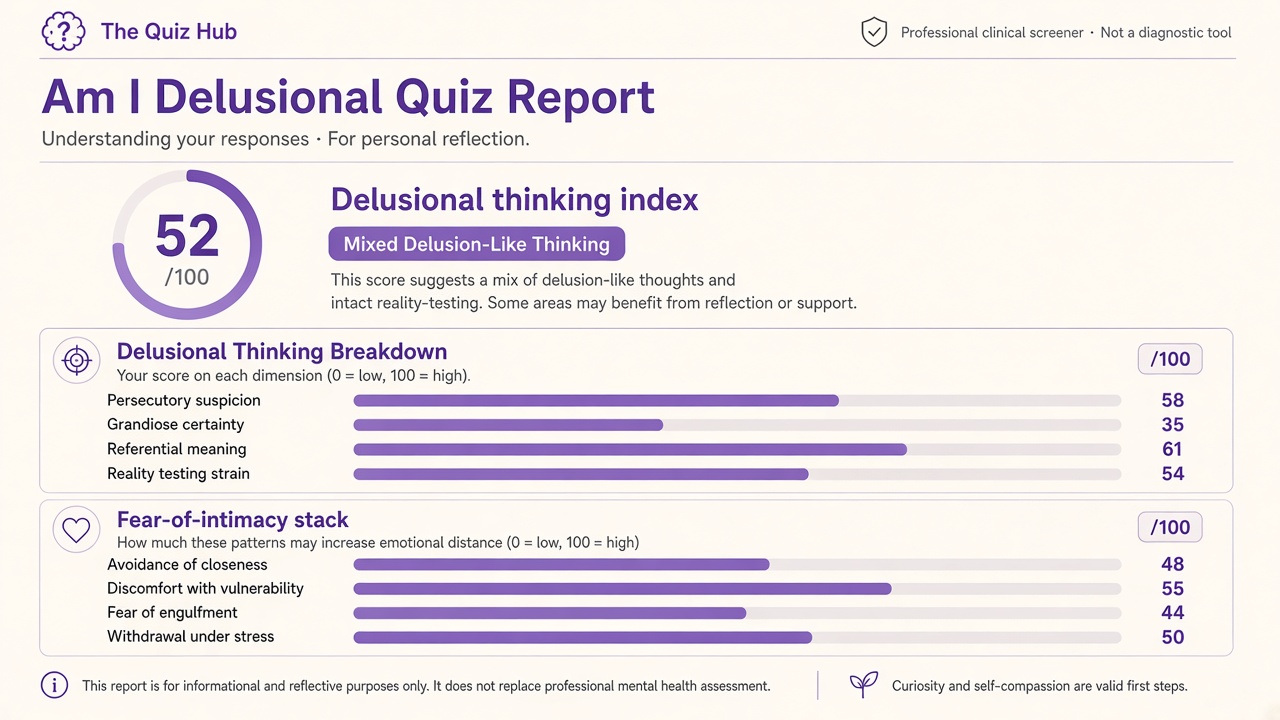
After all 22 items, you get a mania symptom index from 0 to 100, a band label, four symptom domain bars, and a fear-of-intimacy stack chart with vulnerability pull-back, trust hesitation, self-disclosure limits, and closeness anxiety layers. Percentages reflect how you report mood and energy patterns, not a clinical verdict about bipolar disorder.
What this quiz can and cannot tell you
Can tell you
- How often mania-like symptoms showed up for you over the past two weeks
- A mania symptom index and four domain bars for energy, sleep, cognition, and impulsive behavior
- A fear-of-intimacy stack chart showing how closeness guarding layers with elevated mood
- A starting point for mood disorder evaluation or retaking after sleep repair and treatment
Cannot tell you
- Whether you are manic, bipolar, or mentally ill as a person
- Whether you have bipolar I, bipolar II, cyclothymia, or any clinical diagnosis
- Whether ADHD, substance use, or sleep deprivation is the cause without medical evaluation
- What medication or treatment you need without a licensed clinician's evaluation
Mania symptoms, bipolar spectrum, and when to seek help
Psychiatrist Frederick Goodwin and Kay Redfield Jamison described in Manic-Depressive Illness (2007) how mania clusters elevated mood, decreased sleep need, racing thoughts, and poor judgment into episodes that can impair relationships and finances. The Young Mania Rating Scale (Young, Biggs, Ziegler, and Meyer, 1978) remains a common clinical tool for rating mania severity, though this quiz is an original screener inspired by those symptom themes rather than a copy of YMRS items. In everyday language, am I manic searches often map to feeling wired, sleeping less without fatigue, talking fast, or making impulsive choices that surprise people who know you.
The Quiz Hub built this am I manic quiz as an original self-report screener, not a reproduction of the Mood Disorder Questionnaire or any published clinical instrument. Readers often compare it to sibling tools on this site. Our depression test screens low mood and anhedonia rather than elevated activation. The am I anxious or normal quiz compares worry and tension patterns rather than mania symptom domains. The fear of intimacy quiz screens general intimacy avoidance without mania domain bars.
| The Quiz Hub test | What it adds |
|---|---|
| Depression test | PHQ-style low mood and functional impairment, not elevated energy or reduced sleep need |
| Am I anxious or normal quiz | Anxiety symptom frequency, not mania-like activation clusters |
| Do I have ADHD quiz | Attention and hyperactivity patterns across settings, not episodic mania symptom clusters |
| Am I delusional quiz | Unusual belief themes, not elevated mood and impulsive behavior domains |
| Fear of intimacy quiz | FOIS-inspired intimacy avoidance only, without mania symptom domain bars |
| This am I manic quiz | Four-domain mania symptom index plus fear-of-intimacy stack for elevated mood frequency |
Sample item types include frequency ratings such as whether you needed far less sleep than usual yet still felt rested, or whether you made sudden decisions about travel or relationships that surprised people who know you. High reduced sleep need with high impulsive behavior often lands in Mixed or Higher Mania Signals bands. Caffeine, stimulant medication, party weekends, and new romance can spike scores temporarily without meaning you have bipolar disorder. Read how we review quizzes in our editorial policy or browse more tools on our mental health and clinical hub.
Am I manic quiz FAQ
What does the am I manic quiz measure?
Twenty-two original frequency items ask how often mania-like symptoms showed up over the past two weeks: elevated energy and mood, reduced sleep need, racing thoughts and grandiosity, and impulsive or risky behavior. Each item also maps to a fear-of-intimacy stack layer. You receive a mania symptom index from 0 to 100 and screening bands. It is not a clinical diagnosis.
Does a higher mania symptom index mean I have bipolar disorder?
No. A higher index means your responses suggest more frequent mania-like symptom patterns on this screener. Only a licensed clinician can evaluate bipolar disorder, mania, or hypomania through structured interviews, mood history, and medical workup. Sleep deprivation, stimulants, and ADHD can mimic some items.
What is the fear-of-intimacy stack on this quiz?
The fear-of-intimacy stack is a second results chart inspired by FOIS-style intimacy avoidance themes, adapted to elevated mood framing. Each of the 22 items maps to one of four stack layers showing how closeness guarding may pair with high energy or impulsive patterns.
How is this different from the depression test?
The depression test screens low mood, anhedonia, and functional impairment from PHQ-style items. This am I manic quiz screens elevated activation: less sleep with preserved energy, racing thoughts, grandiosity, and impulsive choices. Many people search both when mood swings concern them.
What should I do if I get a Higher Mania Signals band?
Consider scheduling an evaluation with your primary care doctor or a psychiatrist who treats mood disorders. Bring your result summary and describe when symptoms began and how long episodes last. If you feel unsafe or in crisis, call or text 988 (US) or your local crisis line.
Who reviewed this content?
Dr. Elena Vasquez, PhD, reviewed the test framing and result explanations. See our editorial policy for review standards.
Reviewed by