What this am I a stalker quiz measures
This am I a stalker quiz estimates how often obsessive pursuit habits showed up toward someone you wanted closeness with in the past three months. Twenty-two original frequency items group into four domains drawn from obsessional following and stalking awareness research: persistent contact, surveillance monitoring, intrusive presence, and boundary respect. Each item also maps to a fear-of-intimacy stack layer so you can see whether pursuit connects to vulnerability pull-back, trust hesitation, self-disclosure limits, or closeness anxiety. Your obsessive pursuit index averages these patterns into a 0 to 100 score with plain-language bands.
Persistent contact
Repeated messages, calls, or platform switching after silence or a request for space.
Surveillance monitoring
Daily profile checks, location lookups, saved posts, and asking friends for updates.
Intrusive presence
Showing up uninvited, waiting near their routine, following in person, or leaving items.
Boundary respect
Accepting no, giving room after rejection, and seeking help when urges feel out of control.
How it works
Three steps from first question to your obsessive pursuit report with fear-of-intimacy stack. Click Start Quiz to open the interactive quiz in a full-screen modal.
Answer 22 frequency items
Rate how often each pursuit pattern showed up in the past three months, from Never to Almost always. You click Next after each answer; nothing auto-advances.
Items map to pursuit domains and intimacy stack
Your answers accumulate percentages for persistent contact, surveillance monitoring, intrusive presence, and boundary respect, plus four fear-of-intimacy stack layers.
View band and dual charts
Results show Lower, Mixed, or Higher Obsessive Pursuit with domain bars, a fear-of-intimacy stack chart, and reflection prompts. Higher bands include crisis resources.
Take the am I a stalker quiz
Rate 22 statements about repeated contact, monitoring, intrusive presence, and boundary respect toward someone you wanted closeness with. Your answers produce an obsessive pursuit index from 0 to 100, a fear-of-intimacy stack chart, and a band label for reflection or therapy conversation.
Opens in a focused modal. No account required. Results stay on screen.
What your result means
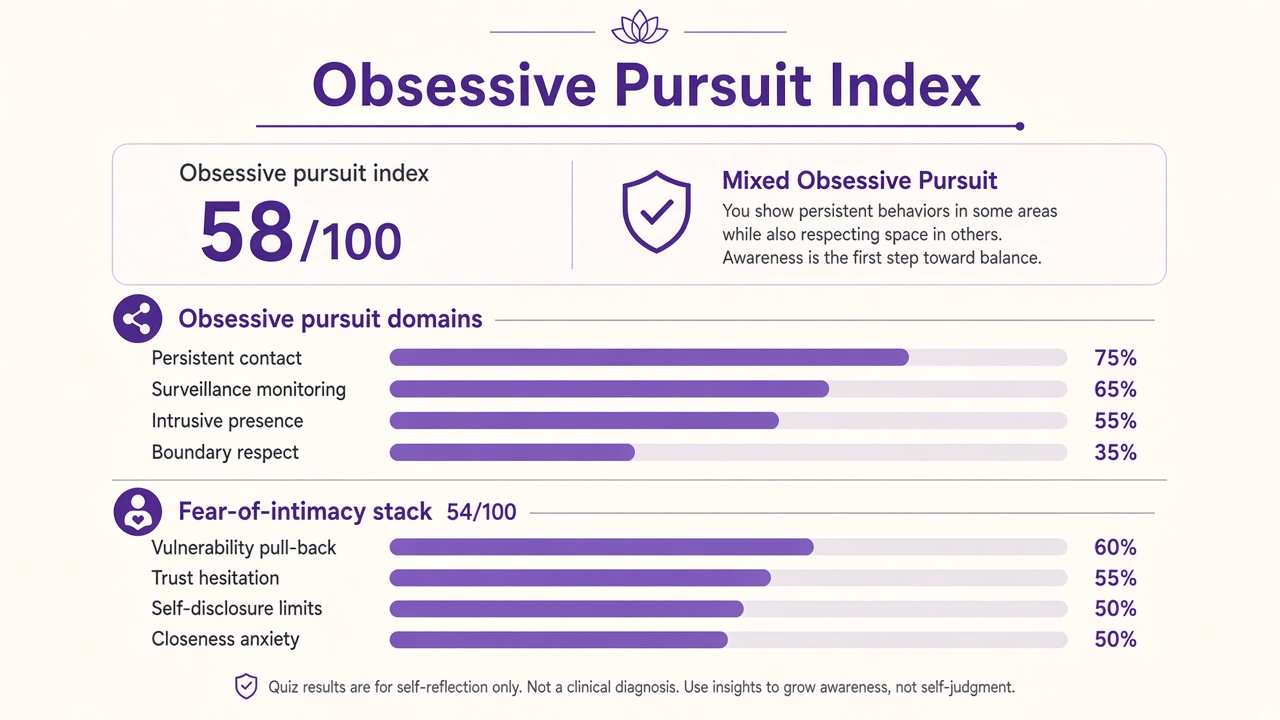
Your obsessive pursuit index is the normalized total across all 22 items on a 0 to 100 scale, with reverse scoring on boundary respect items so higher scores mean more pursuit overall. Domain bars show endorsement rates so you can see whether persistent contact, surveillance monitoring, intrusive presence, or low boundary respect drives your result most. The fear-of-intimacy stack chart shows parallel layers for vulnerability pull-back, trust hesitation, self-disclosure limits, and closeness anxiety alongside pursuit habits.
| Band | Index range | Typical reading |
|---|---|---|
| Lower Obsessive Pursuit | 0 to 35 | Fewer boundary-crossing pursuit signals on this screener; heartache can still feel intense |
| Mixed Obsessive Pursuit | 36 to 65 | Blend of longing and habits that may cross personal boundaries; worth changing early |
| Higher Obsessive Pursuit | 66 to 100 | Frequent contact, monitoring, or intrusive presence; stop contact and seek support |
What your am I a stalker quiz report looks like
After all 22 items, you get an obsessive pursuit index from 0 to 100, a band label, four pursuit domain bars, and a fear-of-intimacy stack chart with vulnerability pull-back, trust hesitation, self-disclosure limits, and closeness anxiety layers. Percentages reflect pursuit habits you notice, not a legal verdict or clinical label.
What this quiz can and cannot tell you
Can tell you
- How often pursuit habits toward someone you wanted closeness with showed up on this screener
- An obsessive pursuit index and four domain bars for contact, monitoring, presence, and boundary respect
- A fear-of-intimacy stack showing which closeness-avoidance layer feels strongest alongside pursuit
- A starting point for therapy conversation, no-contact plans, or retaking after behavior change
Cannot tell you
- Whether you meet a legal definition of stalking or harassment in your jurisdiction
- Whether you have obsessive love disorder, attachment disorder, or any clinical diagnosis
- Whether the other person feels safe or whether you should resume contact
- What legal or clinical steps you need without qualified professionals
Obsessional following, rejection, and the intimacy stack
Forensic psychologist Reid Meloy published research on obsessional following in 1998, describing how some people continue pursuit after clear rejection because longing, entitlement, or fantasy replaces mutual consent. The CDC National Intimate Partner and Sexual Violence Survey reports that about 1 in 3 women and 1 in 6 men experience stalking behavior in their lifetime, though many cases go unreported. Everyday am I a stalker searches often sit in that gray zone: someone wonders whether checking an ex daily, showing up uninvited, or sending apology loops crossed from heartbreak into harm.
The Quiz Hub built this am I a stalker quiz as an original self-report screener inspired by those themes and FOIS intimacy avoidance research from Descutner and Thelen (1991), not a reproduction of the Stalking Risk Profile or any published forensic instrument. Readers often compare it to sibling tools on this site. Our am I clingy quiz screens proximity demand inside an ongoing bond. The relationship anxiety quiz maps reassurance seeking and jealousy scan rather than post-rejection monitoring. The fear of intimacy quiz measures vulnerability avoidance without a pursuit lens.
| The Quiz Hub test | What it adds |
|---|---|
| Am I clingy quiz | Proximity demand and contact overload inside an ongoing bond, not post-rejection pursuit |
| Relationship anxiety quiz | Reassurance seeking and jealousy scan, not surveillance or showing up uninvited |
| Am I being love bombed quiz | Partner intensity and idealization toward you, not your pursuit habits toward them |
| Am I a bully quiz | Hostile words and intimidation toward others, not romantic pursuit after rejection |
| Fear of intimacy quiz | FOIS-inspired intimacy avoidance only, without obsessive pursuit domain bars |
| This am I a stalker quiz | Obsessive pursuit index plus fear-of-intimacy stack for contact, monitoring, and intrusive presence |
Sample item types include frequency ratings such as whether you checked their social media daily, or whether you accepted a clear stop contact request without trying to change their mind. High persistent contact with high trust hesitation on the intimacy stack often lands in Mixed or Higher Obsessive Pursuit. Breakups, ambiguous endings, and alcohol can spike scores temporarily. Stopping contact and speaking with a therapist protects both people when habits worry you. Read how we review quizzes in our editorial policy or browse more tools on our mental health and clinical hub.
Am I a stalker quiz FAQ
What counts as stalking behavior in relationships?
Stalking behavior usually means repeated unwanted contact, monitoring someone's life, showing up where they did not invite you, or ignoring clear requests for space. Psychologist Reid Meloy described obsessional following in 1998 as a pattern where pursuit continues after rejection or boundaries. Legal definitions vary by country and often require fear or harm. This am I a stalker quiz measures how often those pursuit habits showed up in your self-report over the past three months. It is not a legal finding.
What does this am I a stalker quiz measure?
Twenty-two original frequency items ask how often you notice persistent contact, surveillance monitoring, intrusive presence, or limited boundary respect toward someone you wanted closeness with. Each item also maps to a fear-of-intimacy stack layer: vulnerability pull-back, trust hesitation, self-disclosure limits, and closeness anxiety. You receive an obsessive pursuit index from 0 to 100 and a band from Lower through Higher Obsessive Pursuit.
What is the fear-of-intimacy stack on this quiz?
The fear-of-intimacy stack is a second results chart inspired by FOIS-style intimacy avoidance themes from Descutner and Thelen (1991), adapted to obsessive pursuit framing. Each of the 22 items maps to one of four stack layers showing how pursuit may connect to closeness guarding: hiding vulnerability, testing trust, limiting disclosure, or panicking when bonds deepen. The stack index summarizes those layers alongside the obsessive pursuit index.
How is this different from the am I clingy quiz?
The am I clingy quiz screens proximity demand and contact overload inside an ongoing bond. This am I a stalker quiz focuses on pursuit after distance, silence, or rejection: repeated messaging, monitoring their activity, showing up uninvited, and struggling to accept no. Both include a parallel fear-of-intimacy stack chart, but the primary domains measure different relational habits.
Can this quiz tell me if I am a stalker under the law?
No. The obsessive pursuit index describes self-reported habit frequency on this abbreviated screener. Only courts and legal professionals can determine whether conduct meets a stalking or harassment statute in your jurisdiction. Online quizzes cannot confirm or deny legal liability. If you received a cease-and-desist, restraining order, or police contact, consult an attorney.
Who reviewed this content?
Dr. Elena Vasquez, PhD, reviewed the test framing and result explanations. See our editorial policy for review standards.
Reviewed by