What this sexual boundary comfort quiz measures
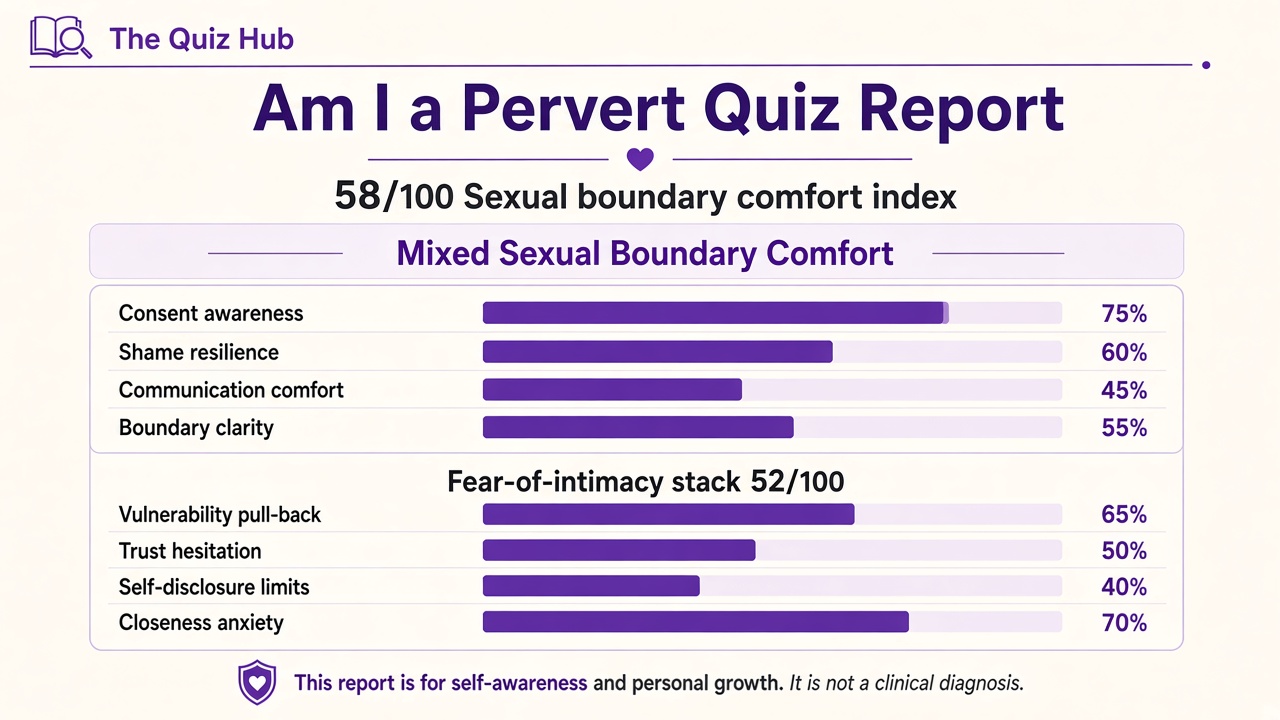
This am I a pervert quiz estimates how steady your sexual boundary comfort feels when shame, consent habits, and honest communication collide. Twenty-two original frequency items group into four domains: consent awareness, shame resilience, communication comfort, and boundary clarity. Each item also maps to a fear-of-intimacy stack layer so you can see whether vulnerability pull-back, trust hesitation, self-disclosure limits, or closeness anxiety feels strongest. Your sexual boundary comfort index averages these patterns into a 0 to 100 score where higher means steadier comfort, with plain-language bands.
Consent awareness
Checking in before escalating, stopping when someone is uncomfortable, and not pushing past soft nos.
Shame resilience
Separating fantasy from character, resisting the pervert label, and tolerating normal curiosity without spiraling.
Communication comfort
Naming desires and limits in plain language before resentment or panic sets in.
Boundary clarity
Knowing your yes and no, honoring lukewarm feelings, and not confusing chemistry with obligation.
How it works
Three steps from first question to your sexual boundary comfort report with fear-of-intimacy stack. Click Start Quiz to open the interactive quiz in a full-screen modal.
Answer 22 frequency items
Rate how often each shame, consent, and boundary pattern shows up when you think about desire, from Never to Almost always. You click Next after each answer; nothing auto-advances.
Items map to comfort domains and intimacy stack
Your answers accumulate comfort percentages for consent, shame, communication, and clarity domains, plus four fear-of-intimacy stack layers.
View band and dual charts
Results show Lower, Mixed, or Higher Sexual Boundary Comfort with domain bars and a fear-of-intimacy stack chart. Lower bands include crisis resources.
Take the am I a pervert quiz
Rate 22 statements about sexual thoughts, shame, and boundaries. Your answers produce a sexual boundary comfort index from 0 to 100, a fear-of-intimacy stack index, four domain scores, and a band label for reflection or therapy conversation.
Opens in a focused modal. No account required. Results stay on screen.
What your result means
Your sexual boundary comfort index is 100 minus the normalized distress total across all 22 items, with reverse scoring on protective items so higher scores mean steadier comfort overall. The fear-of-intimacy stack index uses the same answers mapped to vulnerability, trust, disclosure, and closeness anxiety layers where higher scores mean more avoidance. Domain bars show comfort percentages so you can see whether shame resilience, consent awareness, communication, or boundary clarity needs the most attention.
| Band | Index range | Typical reading |
|---|---|---|
| Lower Sexual Boundary Comfort | 0 to 35 | More shame spirals, consent hesitation, or silence about limits; professional support may help |
| Mixed Sexual Boundary Comfort | 36 to 65 | Blend of healthy instincts and moments when shame or avoidance gets in the way |
| Higher Sexual Boundary Comfort | 66 to 100 | Steadier consent habits, shame resilience, and clarity about limits on this screener |
What your sexual boundary comfort report looks like
After all 22 items, you get a sexual boundary comfort index from 0 to 100, a band label, four comfort domain bars, and a fear-of-intimacy stack chart with vulnerability pull-back, trust hesitation, self-disclosure limits, and closeness anxiety layers. Percentages reflect how you experience desire and limits right now, not a clinical verdict about your sexuality.
What this quiz can and cannot tell you
Can tell you
- How often shame, consent hesitation, and boundary confusion showed up for you on this screener
- A sexual boundary comfort index and fear-of-intimacy stack index with domain bars
- Which comfort domain or intimacy stack layer feels strained in your current experience
- A starting point for therapy conversation about desire, consent, and shame
Cannot tell you
- Whether you have a paraphilic disorder, sex addiction, or any clinical diagnosis
- Whether your fantasies are harmful without examining consent and behavior separately
- Whether a partner will accept your desires without honest dialogue
- What treatment you need without a licensed clinician's evaluation
Sexual shame, fantasy, and the fear-of-intimacy stack
Sex researcher Justin J. Lehmiller (2018) documents how common varied sexual fantasies are among adults and how shame often distorts private imagination into self-labels like pervert. Clinical paraphilic disorders require persistent distress, impairment, or nonconsenting targets evaluated by a licensed clinician, not a twenty-two item online quiz. Consent culture frameworks from groups such as the American Association of Sexuality Educators, Counselors and Therapists (AASECT) stress check-ins, clear limits, and separating fantasy from behavior.
The Quiz Hub built this am I a pervert quiz as an original self-report screener inspired by those themes, not a reproduction of any single published instrument. Readers often compare it to sibling tools on this site. Our fear of intimacy quiz maps vulnerability avoidance in romantic bonds without a sexual shame lens. The BDSM test explores kink preference facets for consensual adults. The am I asexual quiz screens low sexual attraction patterns rather than shame about desire.
| The Quiz Hub test | What it adds |
|---|---|
| Fear of intimacy quiz | FOIS-inspired avoidance index: vulnerability, closeness desire, trust, disclosure |
| BDSM test | Kink role and preference mapping for consensual exploration |
| Am I asexual quiz | Low attraction screener without shame-focused boundary domains |
| Am I being sexually harassed quiz | Harassment exposure index when someone else crosses your limits |
| Am I hypersexual because of trauma quiz | Trauma-linked hypersexuality pattern screener with coping domains |
| This sexual boundary comfort quiz | Comfort index plus parallel fear-of-intimacy stack when you worry you are a pervert |
Sample item types include frequency ratings such as whether you call yourself a pervert after normal curiosity, or whether you avoid naming what you want sexually because the words feel too exposing. High shame resilience strain with high self-disclosure limits on the stack often lands in Mixed or Lower Sexual Boundary Comfort. Strict upbringing, partner pressure, or past shaming can raise scores temporarily. Read how we review quizzes in our editorial policy or browse more tools on our relationships and dating hub.
Am I a pervert quiz FAQ
Does this quiz mean I am a pervert?
No. The word pervert is a harsh label people use when shame spikes, not a clinical category on its own. This am I a pervert quiz measures sexual boundary comfort: consent habits, shame resilience, communication about desire, and clarity about your limits. Your sexual boundary comfort index from 0 to 100 describes how steady those skills feel right now. It cannot diagnose paraphilia, sex addiction, or any disorder.
What does the sexual boundary comfort index measure?
Twenty-two original frequency items ask how often shame, consent hesitation, silence about limits, or going along when unsure shows up when you think about sexual thoughts and boundaries. Each item also maps to a fear-of-intimacy stack layer. You receive a sexual boundary comfort index from 0 to 100 where higher scores mean steadier comfort, plus a band from Lower through Higher Sexual Boundary Comfort.
What is the fear-of-intimacy stack on this quiz?
The fear-of-intimacy stack is a second results chart inspired by FOIS-style intimacy avoidance themes, adapted to sexual shame and disclosure. Each of the 22 items maps to one of four stack layers: vulnerability pull-back, trust hesitation, self-disclosure limits, or closeness anxiety. The stack index summarizes how sexual worry may overlap with emotional closeness habits.
How is this different from the BDSM test?
The BDSM test maps kink preference facets and role leanings for consensual adults exploring dynamics. This am I a pervert quiz screens shame, consent awareness, and boundary clarity when you worry your desires are wrong. It uses a YMYL self-reflection frame with crisis resources on lower comfort bands, not a kink archetype match chart.
Are sexual fantasies normal?
Research on sexual fantasy from scholars such as Justin J. Lehmiller (2018) finds wide variation in private imagination across adults. Fantasy alone is not the same as behavior you would act on without consent. This quiz helps you separate shame spirals from consent skills. Only a licensed clinician can evaluate paraphilic disorders through structured assessment.
What should I do if I get a lower sexual boundary comfort band?
Consider speaking with a licensed therapist or AASECT-certified sex therapist who uses shame-reducing, consent-forward language. Contact RAINN at 1-800-656-4673 or rainn.org if past coercion still shapes your limits. If you feel unsafe or in crisis, call or text 988 (US) or your local crisis line.
Who reviewed this content?
Dr. James Whitfield reviewed the test framing and result explanations. See our editorial policy for review standards.
Reviewed by