What this am I a hypochondriac quiz measures
This am I a hypochondriac quiz estimates how heavy illness worry and body scanning have felt during the past two weeks. Twenty-two original frequency items group into four domains: somatic preoccupation, illness catastrophizing, reassurance seeking, and health interference. Your health anxiety index averages these patterns into a 0 to 100 score with plain-language bands. A parallel fear-of-intimacy stack chart shows whether guarded closeness habits ride alongside health fear. It reflects your self-report, not what doctors secretly think about your symptoms.
Somatic preoccupation
Scanning the body, noticing heartbeats or tension, doubting normal results, and feeling uneasy when others ask about health.
Illness catastrophizing
Assuming minor aches are serious, imagining worst-case diagnoses, and feeling sure doctors missed something.
Reassurance seeking
Searching symptoms online, asking others for reassurance, extra medical visits, and avoiding activities until the body feels safe.
Health interference
Putting off plans because of worry, struggling to enjoy time with others, and hours spent thinking about illness.
How it works
Three steps from first question to your health anxiety report. Click Start Quiz to open the interactive quiz in a full-screen modal.
Answer 22 frequency items
Rate how often each health anxiety pattern showed up in the past two weeks, from Never to Very often. You click Next after each answer; nothing auto-advances.
Items map to four domains plus stack layers
Your answers accumulate percentages for somatic preoccupation, illness catastrophizing, reassurance seeking, and health interference, plus fear-of-intimacy stack layers and an overall health anxiety index.
View band, domain bars, and stack chart
Results show Lower, Mixed, or Higher Health Anxiety with domain bars, stack chart, and reflection prompts. Higher bands include crisis resources.
Take the am I a hypochondriac quiz
Rate 22 statements about illness worry and body scanning in the past two weeks. Your answers produce a health anxiety index from 0 to 100, four domain scores, a fear-of-intimacy stack chart, and a band label for reflection or clinical conversation.
Opens in a focused modal. No account required. Results stay on screen.
What your result means
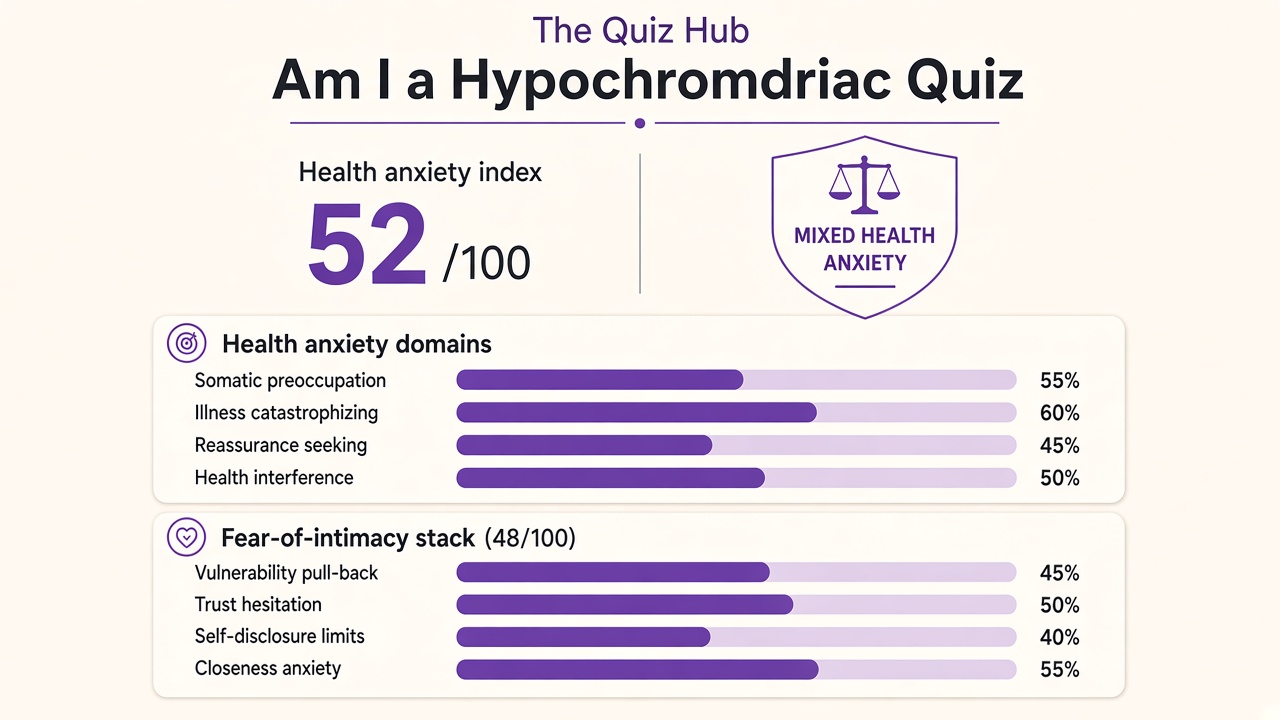
Your health anxiety index is the normalized total across all 22 items on a 0 to 100 scale. Domain bars show endorsement rates so you can see whether body scanning, illness catastrophizing, reassurance seeking, or health interference drives your result most. The fear-of-intimacy stack index summarizes parallel closeness-guard patterns mapped from the same items.
| Band | Index range | Typical reading |
|---|---|---|
| Lower Health Anxiety | 0 to 35 | Fewer illness worry patterns on this screener; medical stress spikes may still appear |
| Mixed Health Anxiety | 36 to 65 | Blend of realistic health caution and body worry habits; worth tracking if persistent |
| Higher Health Anxiety | 66 to 100 | Frequent body scanning, illness catastrophizing, or reassurance seeking; professional support may help |
What your health anxiety report looks like
After all 22 items, you get a health anxiety index from 0 to 100, a band label, four domain bars, and a fear-of-intimacy stack chart with vulnerability pull-back, trust hesitation, self-disclosure limits, and closeness anxiety layers. Percentages reflect how the past two weeks have felt, not a clinical verdict about your health.
What this quiz can and cannot tell you
Can tell you
- How often health anxiety patterns showed up for you in the past two weeks
- A health anxiety index and four domain bars for body scanning, catastrophizing, reassurance, and interference
- A fear-of-intimacy stack chart showing guarded closeness layers alongside illness worry
- A starting point for therapy or medical conversation after appropriate symptom follow-up
Cannot tell you
- Whether you have illness anxiety disorder, hypochondriasis, or any clinical diagnosis
- Whether your physical symptoms are imaginary without proper medical evaluation
- Whether body worry will fade without sleep, support, therapy, or coordinated medical care
- What treatment you need without licensed clinicians who know your full history
Health anxiety, SHAI themes, and guarded closeness
Psychiatrist Peter Tyrer and colleagues developed the Short Health Anxiety Inventory (SHAI) to measure illness worry and bodily preoccupation in outpatient settings. Their work built on earlier hypochondriasis research by Barsky and Wyshak (1990), who described how normal body sensations can be misread as evidence of serious disease when anxiety amplifies attention. In DSM-5, illness anxiety disorder replaced hypochondriasis as a diagnostic label, emphasizing persistent health fear despite medical reassurance. Psychologists Karen M. Descutner and Mark H. Thelen published the Fear-of-Intimacy Scale in 1991, linking guarded closeness to vulnerability avoidance that can make health fears harder to share openly.
The Quiz Hub built this am I a hypochondriac quiz as an original self-report screener inspired by SHAI and health anxiety research themes, not a reproduction of any single published instrument. Readers often compare it to sibling tools on this site. Our anxiety test screens GAD-style worry and tension across life domains. The OCD test measures washing, checking, and ordering rituals. The am I anxious or normal quiz maps everyday worry intensity with a parallel fear-of-intimacy stack.
| The Quiz Hub test | What it adds |
|---|---|
| Anxiety test | GAD-style worry and somatic tension across life, not illness-specific body scanning |
| OCD test | Obsessive-compulsive rituals and intrusive thoughts, not health reassurance loops alone |
| Am I anxious or normal quiz | Everyday worry intensity bands, not illness catastrophizing frequency |
| Mental health test | Broader mood, anxiety, sleep, and functioning screen, not health anxiety domains |
| Fear of intimacy quiz | Romantic closeness avoidance frequency, not illness worry across the body |
| This am I a hypochondriac quiz | Four-domain health anxiety index plus fear-of-intimacy stack for guarded closeness habits |
Sample item types include frequency ratings such as whether you scanned your body for unusual sensations, or whether you searched symptoms online to calm yourself down. High somatic preoccupation with high reassurance seeking often lands in Mixed or Higher Health Anxiety. Real medical events, caring for sick family, and sleep loss can spike scores temporarily. Read how we review quizzes in our editorial policy or browse more tools on our mental health and clinical hub.
Am I a hypochondriac quiz FAQ
What does hypochondriac mean on this quiz?
Hypochondriac here means your self-reported answers lean toward frequent body scanning, illness catastrophizing, reassurance seeking, or health-related life interference during the past two weeks. It does not mean you are faking symptoms, weak, or permanently broken. This am I a hypochondriac quiz maps those patterns to a health anxiety index from 0 to 100 for reflection, not a medical or personality verdict.
What does this am I a hypochondriac quiz measure?
Twenty-two original frequency items ask how often somatic preoccupation, illness catastrophizing, reassurance seeking, and health interference showed up in the past two weeks. Each item also feeds a parallel fear-of-intimacy stack with vulnerability pull-back, trust hesitation, self-disclosure limits, and closeness anxiety layers. You receive a health anxiety index from 0 to 100 and a band from Lower through Higher Health Anxiety.
What is the fear-of-intimacy stack on this quiz?
The fear-of-intimacy stack is a second results chart inspired by FOIS-style intimacy avoidance themes, adapted to health anxiety framing. Each of the 22 items also maps to one of four stack layers: vulnerability pull-back, trust hesitation, self-disclosure limits, and closeness anxiety. The stack index summarizes how often guarded closeness rides alongside illness worry.
How is this different from the anxiety test?
The anxiety test screens GAD-style worry, tension, and restlessness across many life domains over the past two weeks. This am I a hypochondriac quiz uses a health anxiety frame focused on body scanning, illness catastrophizing, reassurance seeking, and health interference, plus the fear-of-intimacy stack chart rather than general worry facets alone.
Can this quiz diagnose illness anxiety disorder or hypochondriasis?
No. The health anxiety index describes self-reported pattern signals on this abbreviated screener. It cannot diagnose illness anxiety disorder, hypochondriasis, somatic symptom disorder, or any clinical condition. Real medical illness, medication side effects, and sleep loss can all raise scores without meaning you are stuck forever.
What should I do if I get a higher health anxiety band?
Consider scheduling an evaluation with your primary care doctor and a licensed therapist who treats health anxiety. Bring your result summary and describe when body worry began. If you have new or worsening physical symptoms, get appropriate medical follow-up. If you feel unsafe or in crisis, call or text 988 (US) or your local crisis line.
Who reviewed this content?
Dr. Elena Vasquez, PhD, reviewed the test framing and result explanations. See our editorial policy for review standards.
Reviewed by