Tips at a glance
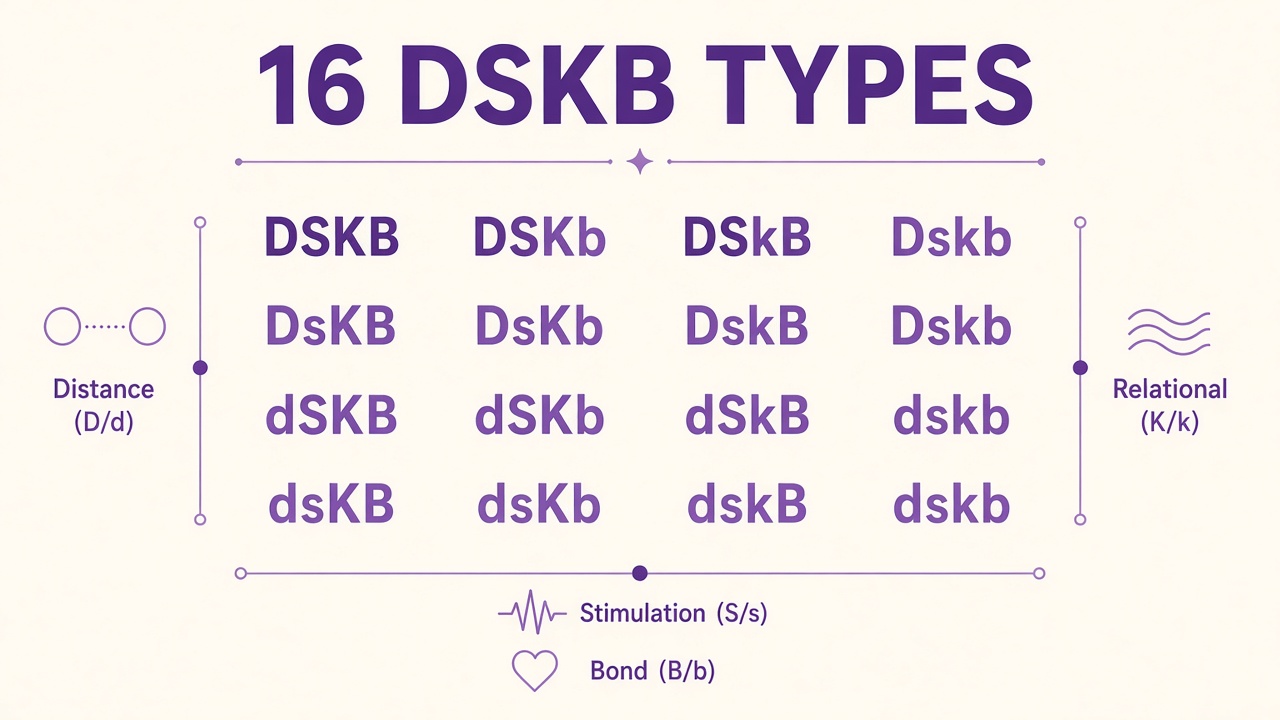
A quick takeaway graphic with topic tips (not your personal quiz scores). Start the quiz for your index, bands, and charts.
What the 16 DSKB types quiz can and cannot tell you
Can tell you
- A four-letter DSKB code and clarity on four intimacy-style dichotomies
- An original English archetype name, tagline, strengths, and shadow-side notes
- Language for journaling before partner negotiation
- Which sibling kink screeners might add complementary detail
Cannot tell you
- Whether you must call yourself dom, sub, switch, or any fixed label
- Whether you should pressure a partner into scenes they have not agreed to
- Clinical psychosexual scores from validated inventories
- Permission to skip safewords, limits, or aftercare because a type sounds bold
Why searchers ask for all 16 DSKB types
After the April 2026 viral spread of the DSKB kink typology through Japanese social video and indie visual-novel communities, English-speaking searchers often look up the full phrase 16 DSKB types rather than the acronym alone. They want the complete four-by-four grid, not a single meme screenshot. This page answers that curiosity with an expanded item bank, clarity scoring, and archetype copy written for The Quiz Hub.
The sibling DSKB test targets the shorter keyword with its own question wording and page framing. Pair it with our BDSM test for nine-domain preference mapping, the vanilla or kinky quiz for gentle-versus-adventurous spectrum bands, or the how kinky are you quiz for broader openness themes. Community educators such as the National Coalition for Sexual Freedom emphasize negotiated consent rather than typology labels as identity certificates.
| Quiz | Best for |
|---|---|
| 16 DSKB types (this page) | Full-name grid curiosity and four-letter clarity report |
| DSKB test | Shorter DSKB keyword and alternate question bank |
| BDSM test | Nine-domain kink preference snapshot |
| Dominant or submissive test | Power exchange lean separate from typology memes |
Sample scoring: agreeing that you want emotional intimacy to deepen after intense scenes pushes your Bond axis toward uppercase B. Preferring scenes that stay light without carryover feelings pushes toward lowercase b. Reverse-scored items flip direction so careless straight-lining cannot fake every uppercase letter. Read how we review quizzes in our editorial policy.
16 DSKB types FAQ
What are the 16 DSKB types?
The 16 DSKB types are four-letter codes built from four dichotomies: Distance (D bold vs d reserved), Stimulation (S taboo thrill vs s calm warmth), Relational flow (K teasing dominance vs k natural flow), and Bond (B deep immersion vs b playful detachment). Every combination from DSKB through dskb yields one of sixteen archetype profiles such as The Devoted Director or The Daydream Drifter.
How is this different from the DSKB test?
Both quizzes use the same viral four-dichotomy system and sixteen type codes. This 16 DSKB types page targets the full-name search phrase with a separate 32-item question bank, unique article copy, and clarity-focused result framing. For the shorter DSKB test keyword, try our sibling DSKB test page.
Can this quiz assign me a permanent kink role?
No. The 16 DSKB types quiz is a parody typology for adult self-reflection and entertainment. Your four-letter code describes patterns on these items only. It cannot certify dom, sub, switch, or any community label, and it never gives permission to skip consent.
What does clarity mean on each DSKB axis?
Clarity shows how decisively your answers leaned toward one pole on each dichotomy. High clarity means your bold-versus-reserved, thrill-versus-warmth, teasing-versus-flow, and deep-versus-light scores separated clearly. Low clarity suggests you may sit near the middle and should read neighboring type profiles.
Is the 16 DSKB types quiz for adults only?
Yes. All kink typology content on The Quiz Hub is for adults 18 and older. Items assume SSC or RACK frameworks where enthusiastic consent, limits, safewords, and aftercare are non-negotiable. The quiz is not graphic and not for minors.
Who reviewed this content?
Dr. Morgan Chen, PhD, reviewed the test framing and result explanations. See our editorial policy for review standards.
Reviewed by