How to Get Over Someone and Move On: Psychologist-Backed Steps
Last updated:
Educational only: This article offers psychologist-informed steps for getting over a romantic partner and moving forward. It is not couples therapy, legal advice, or a substitute for care from a licensed mental health professional. If an ex threatens you, stalks you, or you fear physical harm, call or text 988 (U.S.), contact Samaritans at 116 123 (UK), or use local emergency services. For ongoing abuse, the National Domestic Violence Hotline is 1-800-799-7233.
Getting over someone and moving on means grieving the relationship while rebuilding routines, identity, and support that do not depend on your ex's attention. Psychologists rarely promise you will never think of the person again; they help you shrink rumination, resist contact loops that reactivate attachment panic, and choose behaviors aligned with your values. Timelines are uneven, and marriage or cohabitation can lengthen the emotional work even without legal divorce. Abuse, coercion, or stalking always require safety plans before generic breakup tips.
Key takeaways
- Moving on is behavioral progress plus grief, not a switch that flips on a deadline.
- Contact boundaries, trigger management, and social support speed nervous system recovery when safe.
- Attachment style and intimacy fears shape how hard release feels; screeners clarify themes, not reunion odds.
- Divorce and long cohabitation add identity and logistics stress beyond a short dating breakup.
- Therapy helps when mood, trauma, or functioning stays impaired for months.
- Quizzes support reflection; they do not tell you to text your ex.
Moving on versus forgetting
Searchers often type "get over someone" when they want the ache to stop interfering with sleep, work, or new dating. Forgetting every memory is usually unrealistic. Romantic partners frequently become primary attachment figures; when the bond ends, the brain still scans for their cues (Hazan and Shaver, 1987). Progress looks like catching spirals faster, tolerating waves without acting on urge-to-text, and rebuilding a self-story that is not only "their partner."
If you want language for lowering mental preoccupation after a split, our forget an ex psychologist advice guide goes deeper on rumination, no contact, and social media triggers. This article emphasizes forward motion: values, routines, and relationship skills for the next chapter.
When the relationship included shared property, children, or legal separation, grief overlaps with divorce adjustment. Read how to cope with divorce for identity shifts, coparent friction, and when court stress prolongs mood dips. Even without papers, years of cohabitation can produce similar waves when leases end or friend groups split.
Stages of recovery: a practical timeline table
Phases are not linear. Coparent handoffs, weddings, or a new partner announcement can restart grief without erasing earlier progress. Use the table as a conversation starter with a therapist, not a grade on your worth.
| Phase (approximate) | What you might notice | Psychologist-leaning focus |
|---|---|---|
| Weeks 1 to 4 | Shock, sleep changes, bargaining, urge to fix things immediately | Stabilize basics, delay big decisions, crisis line if hopelessness is unsafe |
| Months 1 to 3 | Anger, replaying fights, comparing yourself to their online life | Limit contact when safe, mute triggers, name facts versus stories |
| Months 3 to 6 | Softer sadness, mixed good days, sudden triggers from places or songs | Rebuild friendships, gentle structure, therapy if rumination blocks work |
| Months 6 to 12 | Identity outside the couple feels more solid; anniversary spikes | Values-based goals, screen for depression if energy stays low |
| Year one and beyond | Brief memories without daily preoccupation for many people | Trauma care if abuse history drives hypervigilance in new bonds |
| Ongoing shared obligations | Grief spikes at school events, asset talks, or new partner introductions | Logistics-only scripts, parallel parenting when conflict is high |
Step 1: Clarify what you are actually grieving
People mourn the person, the future they imagined, shared rituals, and sometimes the version of themselves they were in the relationship. Naming which layer hurts most guides your next move. Missing Saturday coffee runs is different from fearing you will die alone; the second fear may need attachment work with a clinician, not another late-night message.
Write a two-column list: what you genuinely want to keep in your life (values, skills, friendships) and what belonged only to that partnership (inside jokes, shared subscriptions). This exercise reduces the fantasy that moving on requires amputating your whole personality.
Step 2: Set contact boundaries that match reality
Moving on is harder when every notification reopens the bond. A planned pause in contact for thirty to ninety days can cool reward circuits tied to their replies when safety allows. Treat checking their profile as contact even if you never type words. Coparents and coworkers may need logistics-only channels with neutral tone and deadlines.
Abuse caveat: If the relationship included threats, stalking, or coercive control, announcing sudden silence without support can raise risk. Work with the National Domestic Violence Hotline on documentation, blocks, and legal orders. Moving on in those cases means protection first, not winning a silence contest.
Step 3: Work with attachment and intimacy patterns
Anxious patterns may send double texts or seek reassurance from mutual friends. Avoidant patterns may look fine publicly while numbing with work or rebounds, then crash in private. Neither style means you failed; they are strategies that made sense earlier. If partners often pull back when you want closeness, read emotional withdrawal causes and how to reconnect for distance dynamics. After a breakup, use that knowledge to choose healthier partners later, not to rewrite the past with your ex.
Take the free attachment style test for vocabulary to bring to therapy. Pair it with the fear of intimacy quiz if new dating scares you more than missing your ex. Results are screeners, not instructions to reunite.
Step 4: Reduce rumination without shaming your feelings
Rumination is repetitive thought about why the breakup happened and how it could have gone differently. Cognitive behavioral therapists track triggers (lonely evenings, alcohol, certain playlists) and insert a short delay before acting. Emotion-focused therapists validate sadness while teaching you to tolerate waves without texting. Both agree that scolding yourself with "I should be over this" usually deepens shame.
Limit story-retelling to one trusted friend per week, write unsent letters you delete, and move memorabilia out of your bedside until grief softens. Exercise and sleep hygiene lower arousal that fuels midnight scrolling. If mornings feel worse after drinking, mention the pattern to a clinician.
Step 5: Rebuild identity and meaning
Couples merge routines: gyms, shows, friend groups, future plans. Empty weekends can feel like proof you are nothing without them. Psychologists encourage re-expanding roles you paused: hobbies, volunteering, career skills, friendships that do not center the ex. Small wins beat dramatic reinvention posts.
Dating too fast can confuse grief with novelty. A simple readiness check: can you hear about them dating without sending a message or drafting a speech? That bar is about stability, not punishment. Peer support groups for separation can normalize waves without turning into ex-bashing sessions.
When therapy or other modalities help
Individual therapy supports moving on when rumination blocks sleep, work suffers, or abuse memories intrude. Some people also benefit from structured skills training. A CBT therapist can target thought loops and behavioral activation while you grieve. Others want experiential work on contact and boundaries; gestalt-oriented clinicians focus on present-moment patterns, described in our gestalt psychologist guide. Family sessions may enter the picture when relatives amplify conflict; see gestalt family therapy for how multi-person formats differ from solo care.
If you process breakups through symbols, dreams, or long-range meaning questions, Jungian therapy may complement stabilization work after acute symptoms are managed. Medication sometimes helps depression or anxiety that outlasts the first grief wave; a prescriber needs your full history, not a quiz score.
Comparison: helpful moves versus common traps
| Helpful moves | Common traps |
|---|---|
| Planned no contact or logistics-only messages when safe | "Friendship" that hides hope for reunion |
| Muting social triggers and asking friends not to relay updates | Checking their stories "just to see" |
| Therapy or support groups when waves block functioning | Posting subtweets or revenge content that prolong conflict |
| Values-based routines: sleep, movement, meals with others | Rebound dating to prove you are wanted |
| Safety planning with advocates after abuse or stalking | Copying generic silence advice that raises risk |
| Screeners to prepare therapy topics | Treating quiz scores as signs to reach out |
When professional help makes sense
Therapy helps when grief, trauma, or depression blocks safety for months. Couples therapy with an ex is rare and only appropriate when both want reconciliation, violence screening is clear, and no active stalking is present. Otherwise solo therapy plus firm boundaries is the safer default.
Browse the Mental Health & Clinical test category for mood and stress screeners to discuss with a clinician. They do not diagnose or replace emergency care. Call or text 988 in the U.S. if you have thoughts of suicide. Our editorial policy explains how we review relationship mental health articles.
Related quizzes on The Quiz Hub
- Attachment style test: maps closeness and distance habits that may intensify post-breakup protest or numbness.
- Fear of intimacy quiz: screens avoidance of closeness when new dating begins.
- Mental Health & Clinical category: mood and stress screeners when grief feels stuck or unsafe.
Tips at a glance
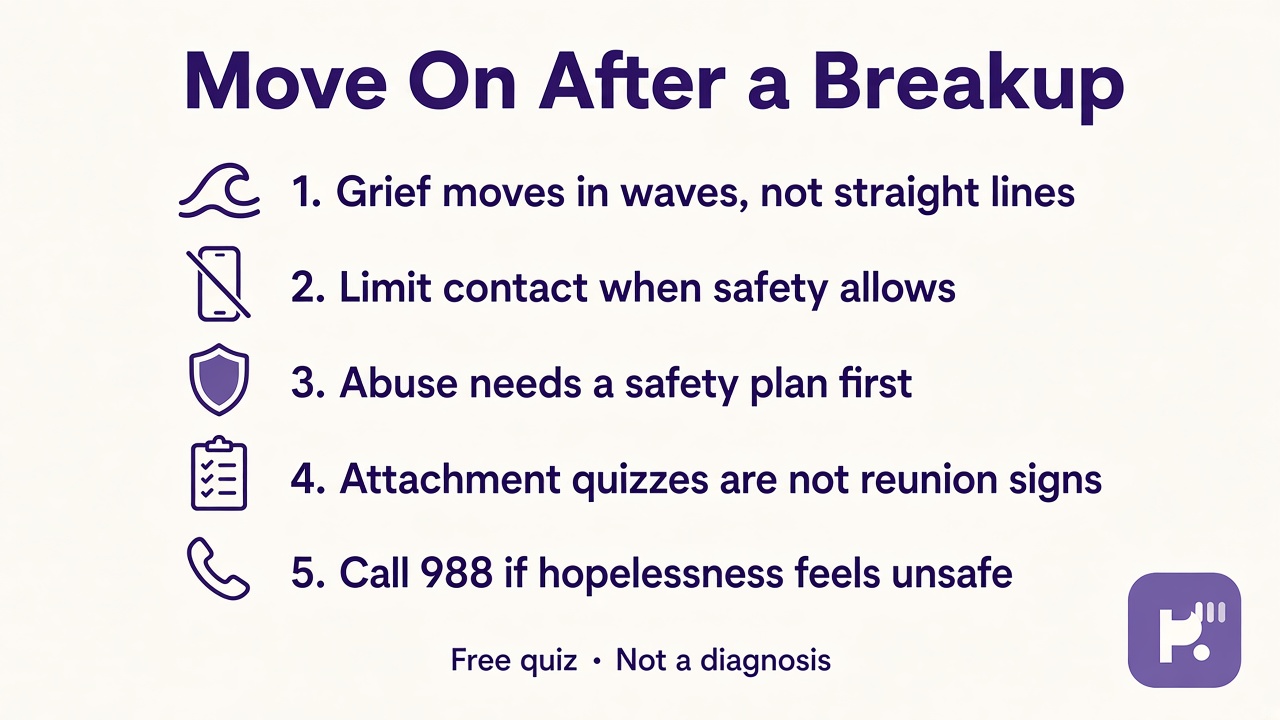
The hero graphic summarizes grief waves, contact limits when safe, abuse safety planning, attachment quiz limits, and crisis resources when hopelessness feels unsafe.
Frequently asked questions
How long does it take to get over someone?
There is no fixed calendar. Many people feel the sharpest distress in the first three to six months, with waves around reminders, holidays, or shared friends. Healing looks like shorter rumination episodes, less urge to check their social profiles, and more energy for daily roles. If functioning stays crushed past twelve to eighteen months, a clinician can screen for depression, trauma, or prolonged grief patterns that need targeted care.
Does getting over someone mean you stop caring?
Moving on usually means you care differently, not that you become cold. You may still wish them well or feel tender on anniversaries while choosing not to rebuild romance. Coparents and former spouses often maintain practical care without reunion. The goal is a life that does not orbit their reactions; indifference is not required.
Should I stay friends with someone I want to get over?
Friendship right after a breakup often keeps attachment circuits warm, especially if one person still hopes for reunion. A pause in contact for thirty to ninety days can help when safety allows. If you share children or workplaces, use brief logistics-only messages instead of emotional processing. Abuse or stalking history overrides friendship goals; safety planning comes first.
Why can I not stop thinking about them even when the relationship was bad?
Attachment bonds and intermittent reward can keep craving alive after logic says stay away. Your nervous system may still scan for their cues the way it scans for safety signals. That is common after emotional neglect or on-again-off-again patterns. Therapy and structured routines usually help more than debating whether you should miss them.
When is therapy helpful for moving on?
Consider therapy when rumination blocks sleep for weeks, you cannot perform at work, you rely on alcohol or self-harm urges, or abuse memories intrude as flashbacks. Individual therapists can map triggers, build urge delays, and coordinate with psychiatry if mood symptoms persist. Couples therapy with an ex is rarely appropriate unless both want reconciliation and violence screening is clear.
Can quizzes tell me if I am ready to date again?
Attachment and intimacy screeners highlight patterns worth discussing with a clinician. They cannot predict whether your ex wants contact, whether reunion is safe, or whether you are fully healed. Readiness is behavioral: you can hear about them dating without sending messages or drafting speeches for hours.
Sources
- Hazan, C., & Shaver, P. (1987). Romantic love conceptualized as an attachment process. Journal of Personality and Social Psychology, 52(3), 511-524.
- American Psychological Association. (2023). Divorce and co-parenting resources.
- Centers for Disease Control and Prevention. (2022). Intimate partner violence prevention.
- National Domestic Violence Hotline. (2024). Stalking and digital abuse.
- Prigerson, H. G., & Maciejewski, P. K. (2008). Prolonged grief disorder: A case for inclusion in DSM-V. In M. J. Horowitz et al. (Eds.), Stress and Trauma. Routledge. (Framework for when grief may need clinical attention.)