What Fake Friend Quiz measures
This quiz does not diagnose personality disorders, prove someone is evil without context, or replace calm boundary talks, mediation, or licensed support when friendship pain persists. It measures how much you agree with statements grouped four ways: cancel plans pattern about last-minute cancels, shinier-plan reschedules, apology loops without follow-through change, and catastrophizing myths that one flake means total hatred; gossip and triangulation about secret trading, one-sided stories, learning harm through rumor instead of direct talk, and loyalty tests tied to repeating drama; one-sided support about favor-only contact, skimmed support for your hard weeks, competitive vibes around your wins, and instant-reply myths that ignore real life; and quiz not gossip court about keeping this page as private reflection, refusing group-chat conviction posts, skipping face-to-face asks, and captioning shares as unofficial habits not orders for mutual friends. You rate 22 statements from strongly disagree to strongly agree, with reverse-worded traps so one angry week cannot hide healthy follow-through or limit slips. Your answers also feed a second chart on closeness and trust habits, because friendship stress sometimes overlaps with how much you fear judgment when vulnerability meets performance pressure. The total becomes an index from 0 to 100 where higher means more reported red flag exposure on this unofficial screener, not proof you should publicly shame a friend from one score.
Cancel plans pattern
Flake loops, reschedules, and follow-through strain without one-cancel doom myths.
Gossip and triangulation
Secrets, sides, and rumor loops versus offline ask-first habits.
One-sided support
Uneven care, competitive wins, and favor-only contact patterns.
Quiz not gossip court
Unofficial reflection only; offline talks stay separate from dunk threads.
How it works
Answer 22 agreement items
Rate each statement from Strongly disagree to Strongly agree. Tap Next after each answer.
Answers sort into four domains
Each answer feeds one of four friendship red flag groups, and every item also feeds a closeness and trust layer.
See your index and charts
You get a 0 to 100 index, a band, four domain bars, and a second chart for intimacy habits.
Take the Fake Friend Quiz
Answer 22 short statements to see your friendship red flag exposure index, four domain bars, and a closeness and trust chart.
What your result means
Your index is the average of all 22 answers, scaled from 0 to 100, with reverse-worded items flipped first. Read quiz-not-gossip-court together with cancel, gossip, and support bars before you treat the total as a public verdict, destiny, or a reason to dunk someone in group chats.
| Band | Index range | Typical reading |
|---|---|---|
| Quieter fake friend red flag endorsement | 0 to 35 | Less agreement with cancel, gossip, one-sided support, or conviction-post myths on this screener. |
| Mixed fake friend red flag endorsement | 36 to 65 | Some domains show flake, gossip, or uneven care; others show limit items or healthy reverse habits. |
| Stronger fake friend red flag endorsement | 66 to 100 | Frequent agreement with cancel, gossip, or one-sided support items; pair with quiz-not-gossip-court bars. |
Tips at a glance
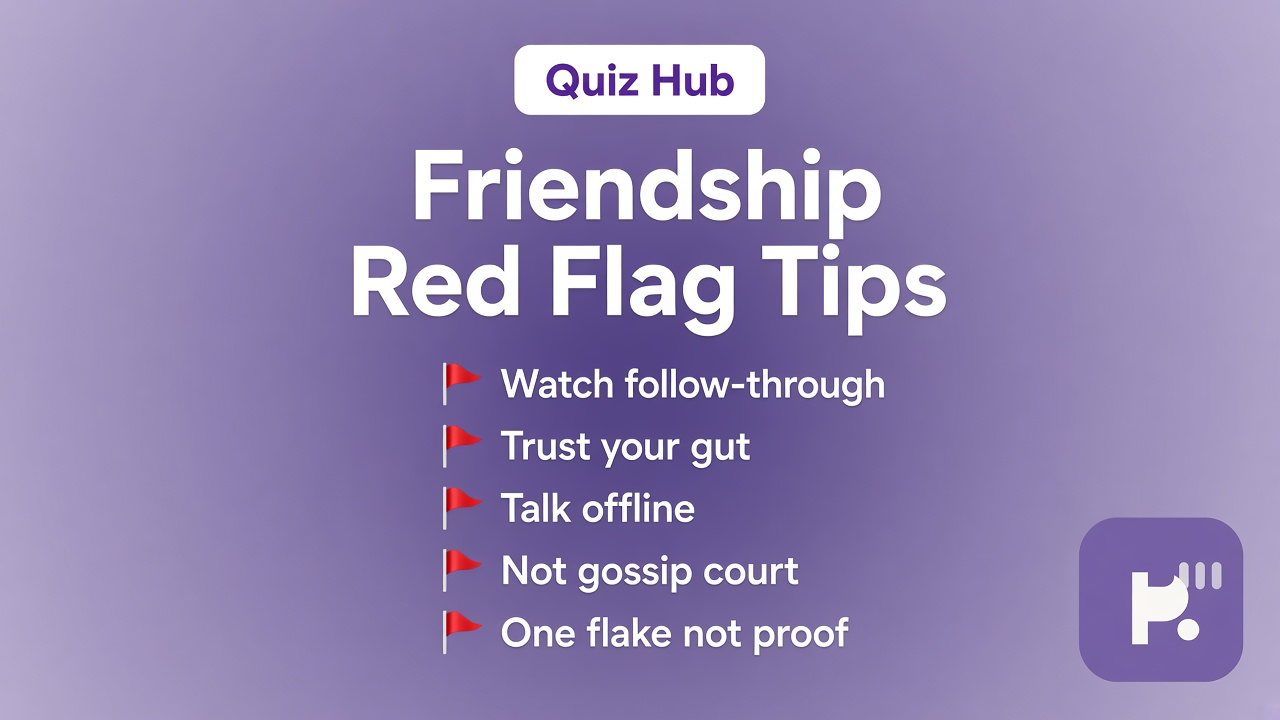
A quick takeaway graphic with topic tips (not your personal quiz scores). Start the quiz for your index, bands, and charts.
What this quiz can and cannot tell you
Can tell you
- Name whether cancel, gossip, support, or limit habits feel loudest in the current season
- Separate friendship strain from myths about instant replies or one-flake total hatred
- Spark honest offline conversations about follow-through, rumors, and reciprocal care
- Highlight limit myths you might unlearn before you post scores as gossip court proof
Cannot tell you
- Replace therapy, mediation, safety planning, or calm boundary talks with someone who hurt you
- Prove a friend is abusive or perfect without context, consent, and professional screening when needed
- License public harassment, rumor spreading, or cutting off people who never opted into your share thread
- Override respect for friends who need space when your red flag bars look higher after one hard week
Cancel plans, gossip loops, and scores that are not gossip court
Search traffic around fake friend quizzes often wants a verdict: are they fake, should I cut them off, or finally validated after months of flake and rumor hurt. Those questions help when they spark honest offline talks, follow-through checks, and therapist visits when loneliness persists. They hurt when context disappears and group chats replace listening, or when one cancel becomes proof of total hatred in a public thread.
Dr. James Whitfield reviews relationships-dating reflection tools with a respect-first lens. Cancel plans pattern tracks flake loops and apology-without-change habits without shaming people who truly juggle caregiving or shift work. Gossip and triangulation tracks secret trading and side-picking without treating every vent as proof someone is evil. One-sided support tracks uneven care without instant-reply purity tests that ignore real life. Quiz not gossip court tracks offline-first framing so friendship talk does not slide into web verdicts, pile-ons, or skipping face-to-face asks.
Real friendship habits mix bars. You might score high on cancel plans while strong on quiz-not-gossip-court limits, which often describes people with painful history who still refuse to post scores as public trials. You might score high on gossip while moderate on support, which is a cue for one calm conversation, not shame. Reverse items catch myths: one cancel always means secret hatred, refusing rumors means disloyal exile, instant text replies define real care, or web scores prove you should convict someone without letting them respond should not inflate bars meant to track strain habits.
Pair results with siblings on this hub instead of forcing one friendship story. Our am I losing my best friend quiz explores drift and distance language with its own stem bank when grief dominates more than flake or gossip here. Our am I a good friend quiz turns the mirror toward your own care habits rather than red flag exposure on this page. Our are we friends quiz stays on bonding labels and mutual vibe checks separate from cancel and rumor loops here. Browse the relationships and dating hub for more low-stakes screeners. Share scores as conversation starters with therapists or trusted allies, not as orders to surveil or humiliate someone.
Habits change with sleep, moves, apps, and workload. A cancel bar might spike after festival season while gossip holds steady from old boundary homework. Retake after one honest offline talk and notice whether quiz-not-gossip-court stays high even when support bars rise; that often marks healthier friendship hygiene. Strain is data for boundaries, not destiny boxes or gossip court sentences.
| Test | Focus |
|---|---|
| Am I losing my best friend quiz | Drift and distance grief language rather than cancel, gossip, and one-sided support red flags on this slug |
| Am I a good friend quiz | Your own care and reciprocity habits rather than fake friend red flag exposure measured here |
| Are we friends quiz | Mutual bonding and vibe labels rather than flake, rumor, and uneven support patterns on this page |
Fake Friend Quiz FAQ
What does Fake Friend Quiz measure?
It measures how much you agree with statements about cancel plans pattern, gossip and triangulation, one-sided support, and quiz-not-gossip-court limits. You get an index from 0 to 100 plus four bars. It describes self-reported friendship strain on this unofficial screener, not proof someone must be publicly shamed.
Does a high score mean I should cut off my friend?
Not automatically. High bars mean you related to many red flag statements here. Context, safety, and repeated patterns matter. Quiz-not-gossip-court items push offline talks and licensed support before group-chat verdicts.
What is the cancel plans pattern domain?
Those items cover last-minute cancels, reschedules for shinier plans, apology loops without change, and myths that one flake proves total hatred. Watch follow-through over time rather than one busy week alone.
Can I use my results in group chats to prove someone is fake?
No. Limit items reject gossip court behavior. Caption shares as unofficial reflection, talk offline first, and skip conviction posts that deny someone a response.
How is this different from am I a good friend quiz?
The good friend sibling focuses on your own care habits. This page focuses on red flag exposure you report around cancel, gossip, and uneven support patterns with its own stem bank.
Who reviewed this quiz?
Dr. James Whitfield, PhD reviewed the unofficial framing, gossip court limits, and result explanations. See our editorial policy for review standards.
Reviewed by