
What this executive dysfunction test measures
This page does not administer the BRIEF, WAIS working memory indices, or any licensed neuropsych battery, and it cannot diagnose ADHD from one score. It measures how often you noticed habits clinicians and coaches often discuss when executive strain shows up at work or school, organized four ways: task initiation when opening files, first sentences, or routine chores stalls despite plans; working memory slips when steps, lists, or conversation threads drop mid-task; emotional regulation at work or school when feedback shame, shutdowns, or sharp reactions block return to duties the same day; and quiz not ADHD diagnosis limits when unofficial screeners replace interviews, burnout context gets ignored, or crisis outreach stays missing. You answer 22 how-often statements about the past two weeks, with reverse-worded items so one organized week cannot hide frequent slips on other days. Your responses also feed a second chart on closeness and trust habits, because shame about productivity sometimes blocks asking for help. The total becomes an index from 0 to 100 where higher means more frequent reported executive strain on this screener. Your responses suggest intensity to discuss with support; they do not prove laziness or genius.
Task initiation
How often the first step stalled despite plans, timers, or caring about outcomes.
Working memory slips
How often steps, lists, or places in conversation dropped mid-task.
Emotional regulation at work or school
How often setbacks triggered shame, shutdown, or reactions that blocked return to duties.
Quiz not ADHD diagnosis limits
How often quiz humility, burnout context, and 988 awareness showed up versus label myths.
How it works
Answer 22 frequency items
Rate each statement from Never to Very often for the past two weeks. Tap Next after each answer.
Answers sort into four domains
Each answer feeds one of four executive strain groups, and every item also feeds a closeness and trust layer.
See your index and charts
You get a 0 to 100 index, a band, and two bar charts you can bring to a clinician or disability office.
Take the Executive Dysfunction Test
Answer 22 short statements to see your executive dysfunction strain index, four domain bars, and a closeness and trust chart.
What your result means
Your index is the average of all 22 answers, scaled from 0 to 100, with reverse-worded items flipped first. Higher means more frequent reported initiation, memory, or regulation strain on this screener. Read quiz-not-ADHD-diagnosis limits with initiation bars before you treat any total as diagnostic proof. Persistent hopelessness or safety worries deserve crisis support, not only productivity tips.
| Band | Index range | Typical reading |
|---|---|---|
| Lower reported executive strain | 0 to 35 | Fewer frequent initiation stalls, memory slips, regulation spikes, or quiz-as-diagnosis habits in the past two weeks. |
| Mixed reported executive strain | 36 to 65 | Some steadier stretches alongside initiation, memory, regulation, or limit myths on other days. |
| Higher reported executive strain | 66 to 100 | Frequent initiation, memory, or regulation strain; professional evaluation and crisis lines may help more than another solo retake. |
Tips at a glance
A quick takeaway graphic with topic tips (not your personal quiz scores). Start the quiz for your index, bands, and charts.
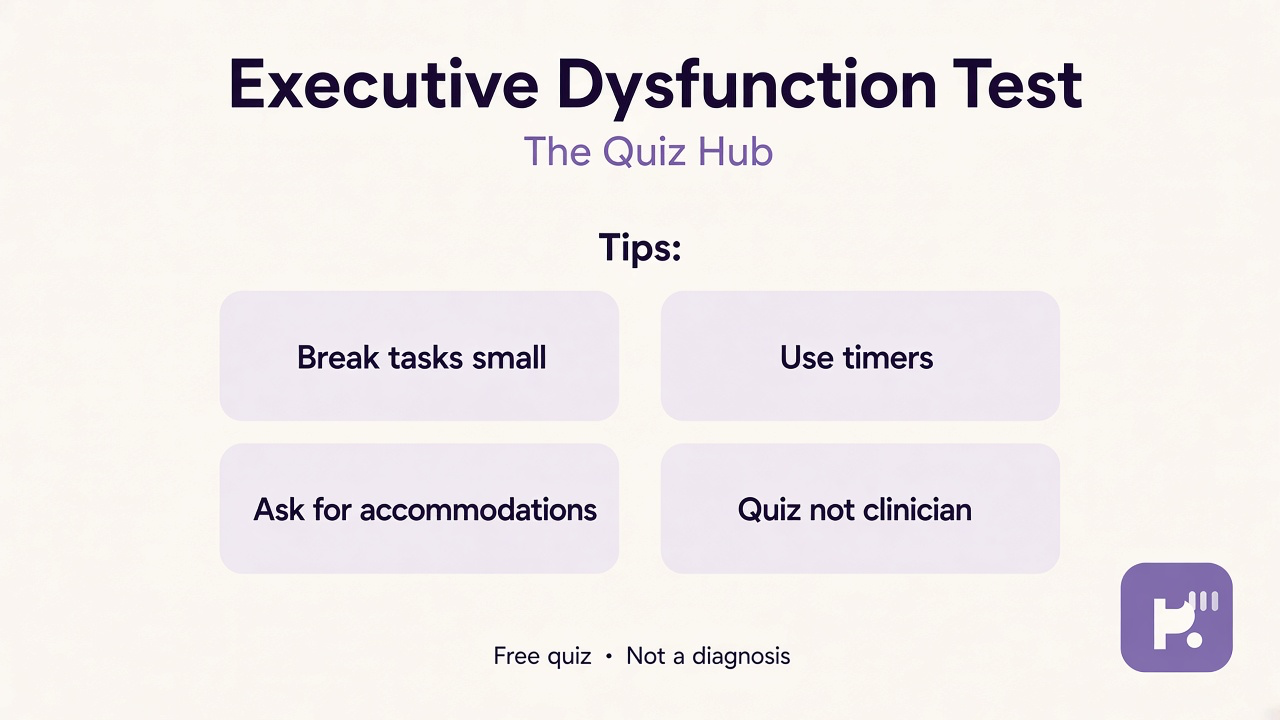
What this quiz can and cannot tell you
Can tell you
- Name initiation, memory slip, and regulation habits in plain language for intake or accommodation meetings
- Highlight when burnout context, timers, or help-seeking habits are missing
- Support honest overlap conversations with clinicians without forcing one online label
- Offer a baseline if you retake after one externalized planning experiment
Cannot tell you
- Diagnose ADHD, learning disorders, or executive function disorder from one score
- Replace neuropsych testing, medication decisions, or legal disability determinations
- Prove you should or should not receive workplace or school accommodations
- Substitute for crisis care when hopelessness or safety fears feel urgent
Task starts, memory threads, and quiz-not-diagnosis limits
People search executive dysfunction tests when the first step feels heavier than the whole project, when mental sticky notes fail mid-meeting, or when one bad grade triggers a day-long shutdown. Clinicians and disability offices discuss executive function as planning, initiation, working memory, and emotion regulation skills that stress, sleep loss, anxiety, ADHD, learning differences, and grief can all strain. This online screener uses that reflection lens unofficially; it cannot replace interview-based assessment or tell you which single cause fits without history.
Task initiation covers stalls before meaningful work begins even when you care about grades or paychecks. Working memory slips covers forgotten steps, re-reading loops, and mixed-up details while juggling deadlines. Emotional regulation at work or school covers shame after feedback, shutdowns, and reactions that block return to duties. Quiz not ADHD diagnosis limits covers overlap honesty, refusing to treat fan screeners as clinician verdicts, naming burnout context, and knowing 988 when strain feels unbearable.
Real readers mix bars. You might score high on initiation while moderate on memory, which often describes dread before openers yet decent mid-task tracking once started. You might score high on regulation with low limit outreach, which can mean you feel the meltdown yet still treat web totals as proof of disorder. Reverse items catch overconfidence: prompt starts without crisis push, holding three items in mind, returning after a break, remembering sleep and grief context, refusing quiz-as-diagnosis myths, and looking up 988 should not inflate a strain index meant to track frequency of slips.
Pair results with siblings on this hub instead of forcing one label story. Our do I have ADHD quiz screens attention, restlessness, and organization frequency with a separate stem bank, not a duplicate of this executive strain bank. The focus test sibling emphasizes concentration drift without initiation-specific items here. Browse the mental health and clinical test hub for more YMYL screeners with study-not-diagnosis framing.
Higher scores mean more frequent self-reported strain on this tool, not proof you failed school or work forever. Bring domain bars to intake so sessions start with examples, not shame. If hopelessness spikes, skip online debate and prioritize 988 or a clinician. Retake after one week of timed starters and visible lists when safe and compare bars, not only the total.
| Test | Focus |
|---|---|
| Do I have ADHD quiz | Attention, restlessness, and organization frequency with ASRS-inspired framing, not this initiation and memory slip bank |
| Focus test | Concentration drift and distractibility rather than task start paralysis stems here |
| Emotional dysregulation questionnaire | Surge, impulse, and shame loops rather than school and job executive start habits here |
Executive Dysfunction Test FAQ
What does this executive dysfunction test measure?
It measures how often you noticed task initiation stalls, working memory slips, emotional regulation strain at work or school, and quiz-not-diagnosis limit habits during the past two weeks. You get an index from 0 to 100 plus four domain bars. Your responses suggest self-reported frequency for reflection, not a clinical diagnosis.
Does a high score mean I have ADHD?
No. High bars describe frequent strain habits on this screener, not proof of ADHD or any other disorder. Licensed clinicians use interviews, history, and sometimes formal testing. Quiz-not-diagnosis items explicitly reject label myths from one web score.
How is this different from the do I have ADHD quiz?
The do I have ADHD sibling focuses on attention, restlessness, and organization frequency with its own stem bank. This page focuses on initiation paralysis, working memory slips, and regulation after school or job setbacks with separate wording.
Why mention burnout, sleep, and anxiety in the limits domain?
Intent brief readers asked for ADHD overlap honesty. Limit items keep sleep debt, grief, and anxiety visible so unofficial bars do not replace clinician context.
What should I do if my score is high or I feel overwhelmed?
Call or text 988 (US) if crisis feels immediate, or contact a licensed clinician or disability office with domain examples from your results. Prioritize support over retakes when hopelessness or safety fears spike.
Who reviewed this test?
Dr. Sarah Chen, PhD reviewed the YMYL framing, crisis resources, quiz-not-diagnosis language, unofficial assessment limits, and result explanations. See our editorial policy for review standards.
Reviewed by
