What the Emotional Dysregulation Questionnaire measures
This quiz does not diagnose borderline personality disorder, bipolar disorder, ADHD, PTSD, or any other condition. Only a licensed clinician using interview methods, safety screening, and history can do that. It measures how often you noticed dysregulation-linked strain patterns grouped four ways: regulation strain when feelings flooded, numbed, swung fast, or colored neutral moments more than the facts seemed to need; impulse and heat when urges drove sharp words, avoidance, numbing shortcuts, or messages before cool-down; shame and recovery lag when self-attack or slow baseline return kept you stuck after spikes; and skills and support limits when you treat regulation as learnable with DBT-style practice, clinicians, and humility rather than as moral rank from one web total or hype that skills should work overnight. You answer 22 how-often statements about the past two weeks, with reverse-worded items so one steady day cannot hide frequent strain across other days. Your responses also feed a second chart on closeness and trust habits, because some people surge or shut down hardest when vulnerability already feels unsafe. The total becomes an index from 0 to 100 where higher means more frequent reported strain patterns on this screener. Your responses suggest intensity and habits to discuss with support; they do not mean you are permanently dysregulated.
Regulation strain
How often feelings surged, shut down, or swung faster than the moment seemed to need.
Impulse and heat
How often urges moved words, avoidance, or numbing before you had cool-down space.
Shame and recovery lag
How often shame or slow baseline return kept loops alive after the peak.
Skills and support limits
How often you treat regulation as practice with DBT support, not moral rank from quizzes.
How it works
Answer 22 frequency items
Rate each statement from Never to Very often for the past two weeks. Tap Next after each answer.
Answers sort into four domains
Each answer feeds one of four dysregulation strain groups, and every item also feeds a closeness and trust layer.
See your index and charts
You get a 0 to 100 index, a band, and two bar charts you can bring to a clinician.
Take the Emotional Dysregulation Questionnaire
Answer 22 short statements to see your dysregulation strain index, four domain bars, and a closeness and trust chart.
What your result means
Your index is the average of all 22 answers, scaled from 0 to 100, with reverse-worded items flipped first. Higher means more frequent reported strain patterns on this screener. Read surge and impulse bars together before the total, because flooding and fast action often rise as a pair.
| Band | Index range | Typical reading |
|---|---|---|
| Lower reported dysregulation strain | 0 to 35 | Fewer frequent surge, impulse, shame-loop, or quiz-as-verdict patterns in the past two weeks. |
| Mixed reported dysregulation strain | 36 to 65 | Some steadier stretches alongside surge, impulse, shame, or hype spikes on others. |
| Higher reported dysregulation strain | 66 to 100 | Frequent surge, impulse, or shame loops; skilled support may help more than self-attack. |
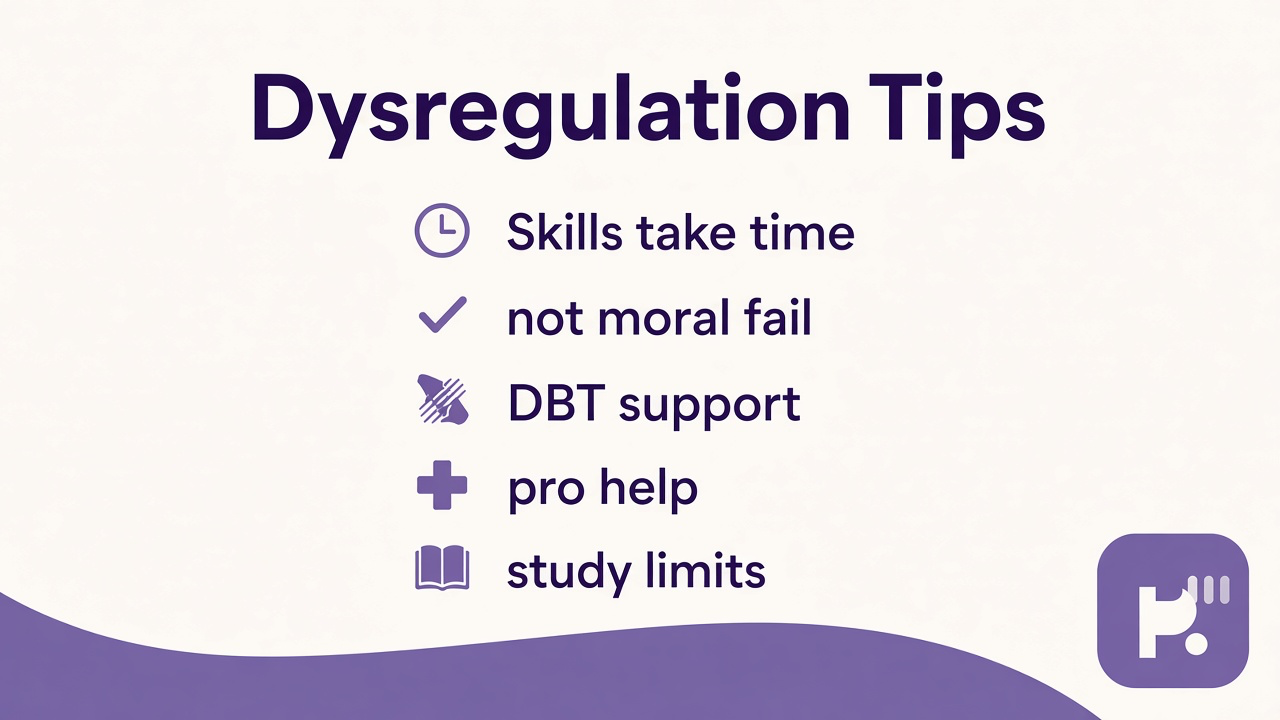
Tips at a glance
A quick takeaway graphic with topic tips (not your personal quiz scores). Start the quiz for your index, bands, and charts.
What this quiz can and cannot tell you
Can tell you
- Name surge, impulse, and shame-loop patterns in plain language for intake
- Highlight when dysregulation-linked bars run high enough to deserve compassion or care
- Support early conversations with therapists, DBT skills groups, or coaches
- Offer a baseline if you retake after one pause-or-support experiment
Cannot tell you
- Diagnose emotion dysregulation, personality disorders, or trauma conditions without evaluation
- Replace DBT skills training, trauma therapy, or safety planning when urges feel unsafe
- Prove you are cruel or broken from one score when context and sleep matter
- Tell you that struggling means moral failure instead of a skills gap that takes time
Dysregulation strain: reflection, skills over time, and support limits
People search emotional dysregulation questionnaires when memes promise instant calm yet their week still holds floods, shutdowns, and shame that outlasts the argument. Clinicians talk about window of tolerance and skills practice; online hype often skips how long rehearsal takes and how much context matters. This page scores frequency so your responses suggest where strain clusters, not whether you earn a diagnosis or a moral failing from a bar chart.
Regulation strain is the first domain because reflection starts with noticing overshoot. Feelings that surge past the facts, numb right after intensity, or swing without a named trigger are common during sleep debt, hormones, grief, ADHD overload, and trauma anniversaries. Checking whether pain, hunger, or exhaustion amplified a reaction is not excuse-making; it is data that keeps shame from writing the only story. Reverse items capture when you already paused to weigh context, signs practice is landing, not proof you will never flood again.
Impulse and heat is the second domain because urges often move before labels arrive. Sharp messages, avoidance, nitpicking when hurt sits underneath, or quick numbing can be attempts to escape unbearable states, not proof you are evil. A brief delay, grounding move, or step-away is a DBT-flavored skill many groups rehearse; this screener only asks how often those moves showed up for you lately. Agreeing that you sometimes chose delay before acting on a strong urge should not inflate an index meant to track strain on other days.
Shame and recovery lag is the third domain because the hangover can hurt longer than the spike. Carrying shame for days, avoiding repair because you feel exiled, or treating one brutal week as permanent toxicity keeps dysregulation loops alive even when others moved on. Reaching for therapists, DBT skills groups, or trusted clinicians when patterns repeat is a support move, not admission of defeat. Letting yourself rest without calling it laziness is part of recovery pacing many trauma-informed therapists teach.
Skills and support limits are the fourth domain, patterned after YMYL honesty on screeners. Treating a low bar as moral failure, expecting DBT to work in one week, or believing this page is the validated Emotional Dysregulation Questionnaire with clinic cutoffs should not inflate a strain index meant to track real moments. Regulation grows with repetition, coaching, setbacks, and time; viral calm aesthetics rarely teach the rehearsal. Agreeing that learning takes time and that high bars still deserve professional help when sleep, work, or safety suffer keeps scores tied to habits, not hype. Our emotion regulation situations quiz sibling emphasizes pause-and-repair habits in heated scenes when you want situation-specific reflection. Our Difficulties in Emotion Regulation Scale sibling stresses non-diagnostic limits on research-shaped items. Our emotion regulation critics review offers literacy on pop scale hype when you want critique beside strain reflection. Browse the mental health and clinical test hub for more screeners with study-not-diagnosis language.
Retake after two weeks of one concrete experiment, one delay before a trigger message, one feeling name aloud, or one outreach to a clinician, and compare domain bars. Your responses suggest whether habits are shifting, not whether you deserve care. Licensed clinicians turn examples into skills plans this page cannot deliver. If distress feels unbearable tonight, call or text 988 in the US or your local crisis line before debating results alone.
| Test | Focus |
|---|---|
| Emotion regulation situations quiz | Pause, label, and repair in heated scenes rather than broad surge-and-shame strain items |
| Difficulties in Emotion Regulation Scale Ders 18 1928 | Scale-shaped self-reflection with study-not-diagnosis framing, not unofficial EDQ stems |
| Emotion regulation critics review | Pop scale literacy and hype limits rather than dysregulation strain frequency |
Emotional Dysregulation Questionnaire FAQ
What does this quiz measure?
It measures how often you noticed dysregulation-linked strain patterns in four areas during the past two weeks: regulation strain, impulse and heat, shame and recovery lag, and skills and support limits. You get an index from 0 to 100 plus four domain bars. Your responses suggest self-reported frequency for reflection, not a clinical diagnosis.
Does a high score mean I am emotionally dysregulated forever?
No. Your responses suggest how often strain patterns showed up on this screener lately. Skills grow with practice, sleep, support, and time; intensity is not a moral failure. Only a licensed clinician can evaluate dysregulation or related conditions after a full interview. Use bars to describe habits, not to shame yourself.
Is this the official Emotional Dysregulation Questionnaire from research clinics?
No. This is an unofficial frequency screener inspired by common search intent, not a validated instrument with fixed cutoffs. Clinicians use interviews, history, and sometimes validated scales inside structured assessment. Treat your bars as conversation starters, not clinic verdicts.
How does this relate to DBT or therapy?
DBT skills groups, individual therapy, and trauma-informed care teach regulation over months of practice. This page is education and self-reflection only. If intensity disrupts sleep, work, relationships, or safety for weeks, qualified care beats retaking the same quiz for a greener bar.
What should I do if my score is high or I feel in crisis?
Contact a trauma-informed therapist or your primary care clinician with domain examples from your results. Call or text 988 (US) if you feel hopeless, unsafe, or in emotional crisis. Seek urgent help if urges turn into threats or violence toward yourself or others.
Who reviewed this quiz?
Dr. Elena Vasquez, PhD reviewed the YMYL framing, crisis resources, skills-take-time limits, and result explanations. See our editorial policy for review standards.
Reviewed by