What Emotional State Scale ESS measures
This quiz does not diagnose depression, anxiety, bipolar disorder, or any other condition, and it is not a validated ESS research mood battery from peer-reviewed instruments. Only a licensed clinician using interview methods, safety screening, and history can evaluate mood disorders. It measures how often you noticed emotional-state-linked habits grouped four ways: positive mood when interest, warmth, humor, or quiet satisfaction showed up versus flatness or nothing-good myths; low mood and tension when sadness, emptiness, irritability, worry loops, or shame about mood owned hours; energy regulation when sleep, appetite, focus, restlessness, or avoidance through busyness disrupted rhythm; and state not diagnosis when you treated this screener as mood weather reflection, sought clinicians when strain disrupted life, and rejected myths that web bars replace evaluation or define you forever. You answer 22 how-often statements about the past two weeks, with reverse-worded items so one good day cannot hide frequent strain across other days. Your responses also feed a second chart on closeness and trust habits, because some people hide mood dips when vulnerability feels unsafe. The total becomes an index from 0 to 100 where higher means more frequent reported mood strain on this screener. Your responses suggest intensity and habits to discuss with support; they do not mean you carry a clinical label from this page alone.
Positive mood
How often interest, warmth, humor, and quiet satisfaction showed up versus flatness.
Low mood and tension
How often sadness, irritability, worry loops, and shame about mood owned time.
Energy regulation
How often sleep, appetite, focus, and restlessness disrupted your usual pace.
State not diagnosis
How often clinician outreach, crisis awareness, and weather-not-label humility showed up.
How it works
Answer 22 frequency items
Rate each statement from Never to Very often for the past two weeks. Tap Next after each answer.
Answers sort into four domains
Each answer feeds one of four mood-state groups, and every item also feeds a closeness and trust layer.
See your index and charts
You get a 0 to 100 index, a band, and two bar charts you can bring to a clinician.
Take the Emotional State Scale (ESS)
Answer 22 short statements to see your ESS mood state index, four domain bars, and a closeness and trust chart.
What your result means
Your index is the average of all 22 answers, scaled from 0 to 100, with reverse-worded items flipped first. Higher means more frequent reported mood strain on this screener. Read low mood and energy bars together before the total, because tension and fatigue often rise as a pair.
| Band | Index range | Typical reading |
|---|---|---|
| Lower reported mood strain | 0 to 35 | Fewer frequent low mood, tension, energy disruption, or blocked-help signals in the past two weeks. |
| Mixed reported mood strain | 36 to 65 | Some brighter stretches alongside low mood, tension, or energy dips on others. |
| Higher reported mood strain | 66 to 100 | Frequent low mood, tension, energy disruption, or blocked clinician outreach in the past two weeks. |
Tips at a glance
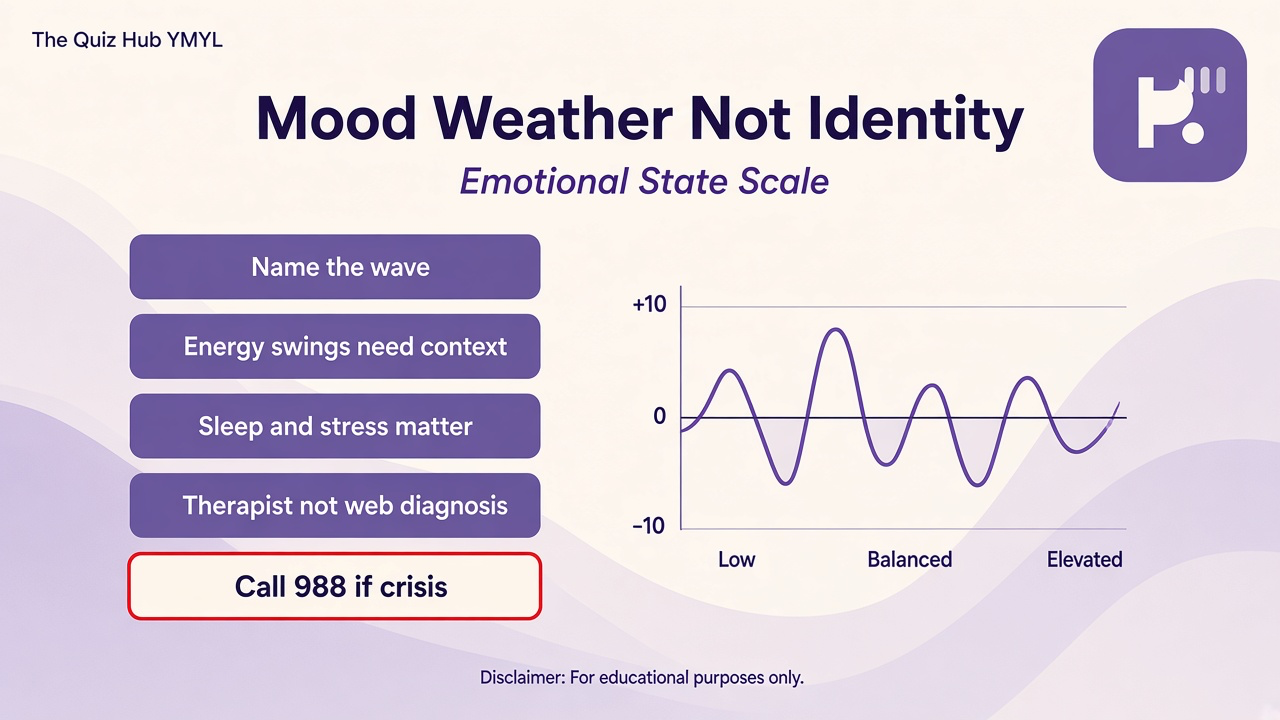
A quick takeaway graphic with topic tips (not your personal quiz scores). Start the quiz for your index, bands, and charts.
What this quiz can and cannot tell you
Can tell you
- Name positive mood, tension, energy, and support patterns in plain language for intake
- Highlight when strain bars run high enough to deserve compassion or clinical conversation
- Support early talks with therapists, primary care clinicians, or trusted friends
- Offer a baseline if you retake after one sleep, routine, or therapy experiment
Cannot tell you
- Diagnose depression, anxiety, bipolar disorder, or any condition without a licensed evaluation
- Replace therapy, medical care, medication decisions, or crisis services with a bar chart
- Prove you are broken or that others see your mood the way you feel it from one score
- Rank you against friends as a happiness leaderboard
Mood weather beyond diagnosis posts: lift, tension, energy, and limits
People search emotional state scales when they want language for how the last fortnight felt without turning every dip into a disorder headline. Clinical mood instruments exist for research and hospital settings; this page is an original frequency screener for emotional weather habits, not a copy of validated ESS forms. Your responses suggest where habits cluster so you can describe them to a clinician, not so a bar chart replaces sleep care or therapy.
Positive mood is the first domain because state reflection should notice lift as well as pain. Interest in hobbies, warmth in conversation, and quiet satisfaction after small wins are data points, not proof you must perform happiness online. Flatness during usually enjoyable activities or believing nothing good can happen this month are strain signals worth context, not instant labels.
Low mood and tension is the second domain because sadness, irritability, and worry loops are common human weather. Guilt about your mood can make help harder to ask for; naming tension without shame is literacy that pairs well with support. A stretch where worry eased after sleep or a safe talk is a reverse signal that state can shift.
Energy regulation is the third domain because mood lives in the body. Unrested waking, appetite shifts, focus fog, or wired nights teach your nervous system that recovery is optional. Using busyness to outrun feelings is different from choosing rest; both belong in honest state talk.
State not diagnosis is the fourth domain because web scores are not clinician interviews. Avoiding therapy because labels feel scary, treating screeners as formal ESS results, or calling yourself permanently broken from one bad fortnight keeps pain private. Asking a primary care clinician for mood screening, treating this page as weather reflection, and knowing when to call or text 988 when crisis spikes are YMYL honesty, not weakness. Our emotional dysregulation questionnaire sibling emphasizes heat-of-moment swings when regulation skills need attention. Our emotional awareness test explores naming feelings when clarity is the bottleneck. Our depression test offers another unofficial reflection lane with its own limits. Browse the mental health and clinical test hub for more non-diagnostic screeners.
Retake after a fortnight of one measurable experiment, one protected sleep block, one therapy intake, and compare domain bars. Your responses suggest whether strain is easing, not whether you deserve care. Licensed clinicians turn examples into treatment plans this page cannot deliver. If distress feels unbearable tonight, call or text 988 in the US or your local crisis line before debating results alone.
| Test | Focus |
|---|---|
| Emotional dysregulation questionnaire | Heat-of-moment swings and regulation habits when reactivity dominates |
| Emotional awareness test | Naming and noticing feelings when clarity is the main bottleneck |
| Depression test | Broader low-mood reflection with separate unofficial limits |
Emotional State Scale (ESS) FAQ
What does ESS measure?
It measures how often you noticed positive mood, low mood and tension, energy regulation, and state-not-diagnosis habits during the past two weeks. You get an index from 0 to 100 plus four domain bars. Your responses suggest self-reported mood weather for reflection, not a clinical diagnosis or a validated ESS research score.
Is this the same as a published ESS mood research scale?
No. This is an original frequency screener for emotional state reflection, not a licensed copy of any specific peer-reviewed ESS form and cannot replace clinician-administered assessment.
Does a high score mean I have depression or bipolar disorder?
No. Your responses suggest how often strain habits showed up on this screener. Only a licensed clinician can evaluate mood disorders after a full interview. Bring domain examples to therapy or primary care if strain disrupts daily life.
Why are some statements worded as positive mood, energy, or help-seeking?
Reverse-worded items catch overconfidence. Agreeing that you felt interest or warmth, kept focus on most days, sought clinicians, or kept screeners separate from formal labels should not inflate a strain index meant to track difficulty.
What should I do if my score is high or I feel unsafe?
Contact a licensed therapist or ask your primary care clinician for referral with domain examples from your results. Call or text 988 (US) if you feel hopeless, unsafe, or in emotional crisis. Seek urgent medical care for physical emergencies, not quiz scores alone.
Who reviewed this quiz?
Dr. Elena Vasquez, PhD reviewed the YMYL framing, crisis resources, state-not-diagnosis limits, and result explanations. See our editorial policy for review standards.
Reviewed by