What the Dog Food Quiz measures
This quiz does not choose your dog's diet, dose calories for disease, or prescribe therapeutic foods. It measures how much you agree with everyday nutrition literacy grouped four ways: label reading about ingredients, AAFCO adequacy, and analysis limits; portion and change habits about cups, treats, life stages, and gradual switches; allergy myth resistance about grains, itch, and marketing words; and vet-when judgment about symptoms that deserve an exam before another brand swap. You answer 22 statements from strongly disagree to strongly agree, with reverse-worded myths so buzzword optimism cannot inflate every bar. Your answers also feed a second chart on closeness and trust habits, because food worry sometimes pushes people toward quick internet certainty. The total becomes an index from 0 to 100 where higher means more reported nutrition literacy on this screener, not proof your current bag is medically perfect.
Label literacy
Ingredient order, AAFCO statements, analysis limits, and what packaging cannot prove.
Portion and change
Measuring food, counting treats, life stages, and gradual transitions.
Allergy myths
Grain-free hype, itch causes, and why vet-guided trials beat random hopping.
Vet when
Appetite, stool, and weight red flags that need a clinic, not only a new flavor.
How it works
Answer 22 agreement items
Rate each statement from Strongly disagree to Strongly agree. Tap Next after each answer.
Answers sort into four domains
Each answer feeds one of four nutrition groups, and every item also feeds a closeness and trust layer.
See your index and charts
You get a 0 to 100 index, a band, and two bar charts you can use to spot myths before your next store run.
Take the Dog Food Quiz
Answer 22 short statements to see your canine nutrition literacy index, four domain bars, and a closeness and trust chart.
What your result means
Your index is the average of all 22 answers, scaled from 0 to 100, with reverse-worded items flipped first. Higher means more reported nutrition literacy on this screener. Read allergy myths and vet-when bars together before you treat the total as permission to skip an exam.
| Band | Index range | Typical reading |
|---|---|---|
| Building nutrition literacy | 0 to 35 | Fewer agreed facts on labels, portions, allergy myths, or vet-timing on this screener. |
| Mixed nutrition literacy | 36 to 65 | Solid label or portion habits mixed with buzzword traps or brand-hopping reflexes. |
| Strong nutrition literacy | 66 to 100 | Frequent agreement with label, portion, myth-busting, and vet-timing literacy. |
Tips at a glance
A quick takeaway graphic with topic tips (not your personal quiz scores). Start the quiz for your index, bands, and charts.
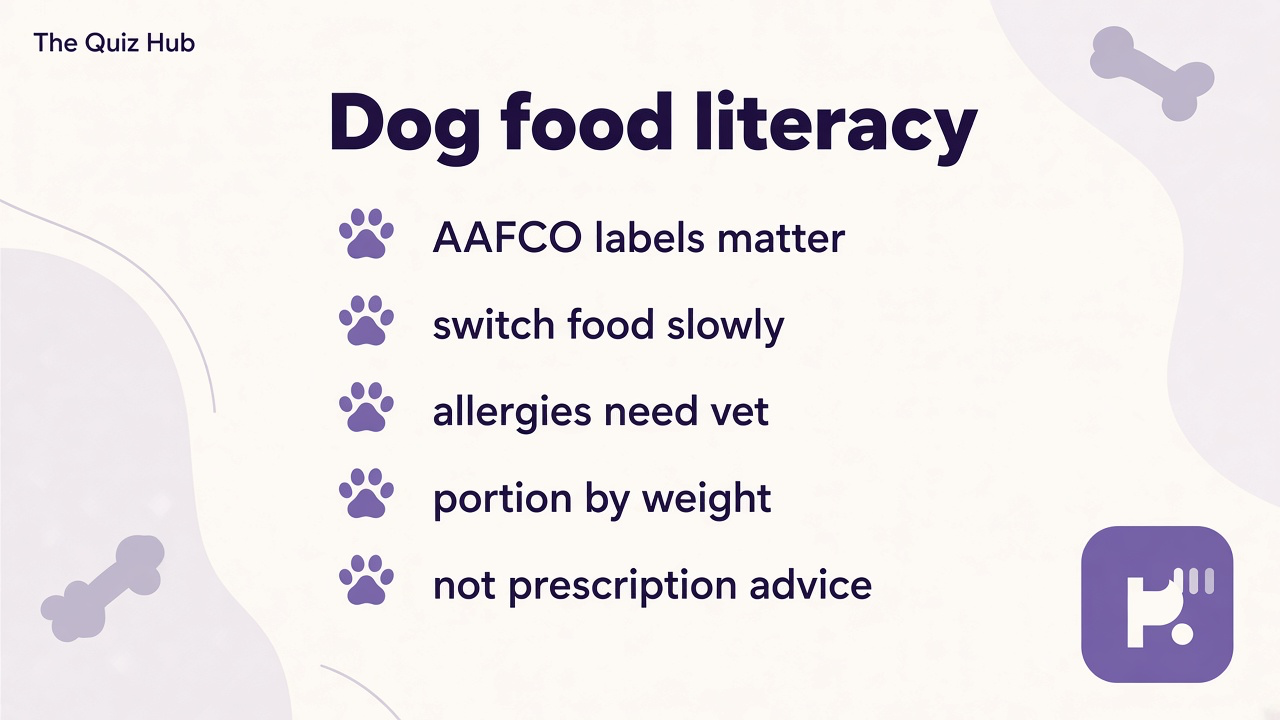
What this quiz can and cannot tell you
Can tell you
- Separate label facts from influencer packaging hype
- Highlight portion and transition habits worth keeping
- Flag common grain and itch myths before you brand-hop
- Encourage vet visits when symptoms outrank shopping
Cannot tell you
- Prescribe therapeutic, prescription, or homemade medical diets
- Calculate exact calories for disease without a clinician
- Diagnose food allergy or intolerance from a quiz score
- Replace blood work, imaging, or elimination trials supervised by a vet
Dog food literacy without kibble wars
Owners search dog food quizzes when every bag claims ancestral wolves and every forum insists grains are poison. Real nutrition literacy starts quieter: read the ingredient list in weight order, find the AAFCO adequacy statement for your dog's life stage, and treat guaranteed analysis as a summary, not a calorie calculator printed in magic numbers. Packaging art and influencer reels cannot tell you whether a diet is complete, balanced, or appropriate for kidney disease, growth, or pregnancy.
Portions and transitions are where good intentions meet messy kitchens. Bag feeding guides are starting points; body condition, activity, neuter status, and treats still matter. Sudden wholesale switches can trigger vomiting or loose stool even when the new food is high quality. Puppy and senior formulas exist because nutrient density and calories differ, not because marketers needed another SKU. Cutting food aggressively for weight loss without a vet check can hide thyroid disease, pain, or other problems that need treatment first.
Allergy myths fuel the most expensive shopping carts. Grain-free is not automatically healthier for most dogs, and FDA has tracked concerns linking some grain-free patterns to heart issues in certain cases, which is why veterinarians ask what you feed. Itchy skin can reflect fleas, pollen, infection, or food, and repeated brand roulette without a plan delays real answers. Limited-ingredient or hydrolyzed diets belong in supervised elimination trials, not guesswork in the checkout line. Human-grade language is marketing context, not permission to ignore dog balance or portions.
Vet-when judgment keeps literacy humble. Repeated vomiting, bloody stool, anorexia beyond a day, or rapid weight change deserve an exam before the tenth kibble experiment. Clinicians can pair body condition scoring with calorie targets when diabetes, kidney disease, or recovery needs structured nutrition. Raw and homemade recipes vary wildly in completeness; internet heroes rarely sign your dog's lab results. Pair this quiz with our dog anatomy quiz when you want body basics, the does my dog have anxiety quiz when stress suppresses appetite, or browse fun and novelty tests for more low-stakes pet games.
Save your lowest bar as one homework item this week. Read a label aloud, measure a cup, and list symptoms that would make you call the clinic before Amazon delivers another bag. Nutrition literacy is a leash on knowledge, not a license to prescribe from a score.
| Test | Focus |
|---|---|
| Dog anatomy quiz | Skeleton and organ trivia, not label reading or portion math |
| Does my dog have diabetes quiz | Medical symptom reflection when thirst and weight worry you, not kibble literacy |
Dog Food Quiz FAQ
What does this quiz measure?
It measures how much you agree with everyday dog nutrition literacy across labels, portions, allergy myths, and vet-timing. You get an index from 0 to 100 and four bars. It reflects self-reported knowledge on this screener, not a clinical diet plan.
Can this quiz tell me which food to buy?
No. It builds literacy and myth resistance, not a shopping prescription. Therapeutic diets, elimination trials, and calorie targets for illness need your veterinarian.
Is grain-free bad for every dog?
Not every dog, but grain-free is not automatically superior, and some patterns have been linked to heart concerns in certain dogs. Your vet can weigh breed, history, and symptoms instead of aisle slogans.
Why are some statements worded as myths?
Reverse-worded myths catch hype. Agreeing that guaranteed analysis gives exact cup calories, or that this quiz prescribes a brand, should not inflate your literacy index.
Who reviewed this quiz?
Dr. Elena Vasquez, PhD reviewed the nutrition literacy limits, non-prescription framing, and vet-referral language. See our editorial policy for review standards.
Reviewed by