What the Does My Dog Have Diabetes Quiz measures
This quiz does not test blood sugar at your kitchen table. It measures how often you have noticed owner-reported signs veterinarians often discuss when diabetes is on the list: polydipsia and polyuria, appetite changes with weight shift, fatigue or weakness, and emergency red flags such as repeated vomiting or collapse. You answer 22 how-often statements about the past few weeks, with reverse-worded items so one normal day cannot hide a worsening pattern. Your answers also feed a second chart on closeness and trust habits, because health worry can make owners hyper-vigilant or avoidant about vet bills. The total becomes an index from 0 to 100 where higher means more reported concern signs on this screener, not a confirmed disease label. Only your veterinarian can diagnose diabetes and prescribe treatment.
Thirst and urination
How often drinking and potty load have climbed beyond your dog's usual baseline.
Appetite and weight
How often hunger and body condition have shifted in opposite or worrying directions.
Energy and mobility
How often tiredness, panting, or weak hind legs showed up without a clear cause.
Urgent red flags
How often severe signs appeared that need same-day veterinary care.
How it works
Answer 22 frequency items
Rate each statement from Never to Very often for the past few weeks. Tap Next after each answer.
Answers sort into four domains
Each answer feeds one of four symptom groups, and every item also feeds a closeness and trust layer.
See your index and charts
You get a 0 to 100 index, a band, and two bar charts to bring to a vet conversation.
Take the Does My Dog Have Diabetes Quiz
Answer 22 short statements to see your canine diabetes concern index, four symptom bars, and a closeness and trust chart.
What your result means
Your index is the average of all 22 answers, scaled from 0 to 100, with reverse-worded items flipped first. Higher means more reported concern signs. Read urgent red flags alongside thirst before you interpret the total.
| Band | Index range | Typical reading |
|---|---|---|
| Lower diabetes pattern concern | 0 to 35 | Fewer drinking, urination, weight, or energy shifts in the past few weeks. |
| Mixed diabetes pattern concern | 36 to 65 | Some thirst or urination changes; other days seem normal. |
| Higher diabetes pattern concern | 66 to 100 | Frequent thirst, urination, and weight-energy shifts; prompt vet testing. |
Tips at a glance
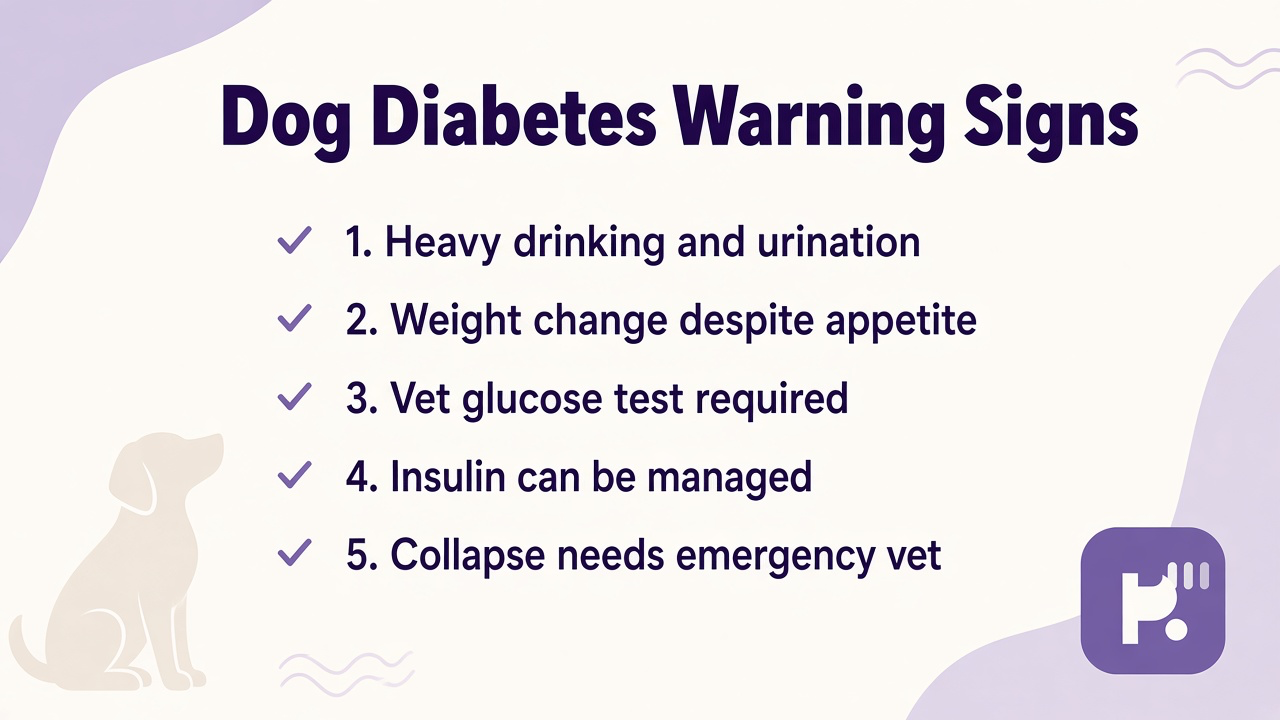
A quick takeaway graphic with topic tips (not your personal quiz scores). Start the quiz for your index, bands, and charts.
What this quiz can and cannot tell you
Can tell you
- Organize vague worry into four symptom domains
- Prompt a vet visit conversation with clearer examples
- Highlight when same-day care may be needed
- Offer a baseline to retake after testing or treatment starts
Cannot tell you
- Diagnose diabetes or prescribe insulin
- Replace bloodwork, urinalysis, or a physical exam
- Rule out infection, kidney disease, or Cushing's syndrome
- Predict cost, prognosis, or treatment success
Dog diabetes signs owners notice first
Owners often arrive at this question after the water bowl becomes a full-time job. Diabetes mellitus in dogs usually means the body is not using glucose normally, so sugar builds up in the blood while cells feel starved. The classic owner pattern is drink more, pee more, sometimes eat more, yet lose weight. Not every thirsty dog has diabetes, but the overlap is common enough that veterinarians take the combo seriously.
Polydipsia and polyuria are the headline signs because the kidneys spill excess glucose and pull water with it. Accidents in a previously house-trained dog, midnight potty requests, and enormous puddles are data, not discipline problems. Appetite can rise while ribs get easier to feel. Some dogs act ravenous yet thin; others go off food when they feel nauseated from secondary problems. Weight and appetite belong in the same sentence as thirst, not as a separate worry you can ignore.
Energy changes matter too. Dogs may tire on walks, pant without exercise, or seem weak in the hind legs. Cloudy eyes can reflect cataracts that develop with chronic high glucose. Reverse items in this quiz flag stable weeks so a single hot day does not fake a disease pattern. Urgent red flags such as repeated vomiting, collapse, sweet or fruity breath, or extreme sleepiness after drinking can signal diabetic ketoacidosis or another emergency. Those signs bypass online quizzes and go straight to the clinic.
Diagnosis requires veterinary testing: blood glucose, sometimes fructosamine, and urine checks to rule infection and kidney issues. Treatment often includes insulin injections, consistent feeding times, and follow-up curves your vet adjusts. Many dogs live well with a plan; the hard part is starting the plan before a crisis. Our does my dog have anxiety quiz fits better if panic on walks dominates, not thirst. The does my dog have ADHD quiz is a lighter lens on hyperactivity when a medical workup is still pending.
Retake after your vet visit if you want a personal baseline, but let lab results lead treatment. Your job is observation and follow-through, not guilt about missing a sign. Dogs depend on owners to translate thirst and accidents into appointments early enough to help.
| Test | Focus |
|---|---|
| Does my dog have anxiety quiz | Fear and panic triggers, not metabolic thirst and urination |
| Does my dog have ADHD quiz | Impulsive energy and focus, not glucose-related weight loss |
Does My Dog Have Diabetes Quiz FAQ
What does this quiz measure?
It measures how often you have noticed diabetes-related symptom patterns in the past few weeks across thirst, urination, appetite-weight, energy, and urgent signs. You get an index from 0 to 100 and four bars. It reflects your observations, not lab results.
Can this quiz diagnose diabetes in my dog?
No. Only a veterinarian can diagnose diabetes with examination and testing. Use your results to describe patterns at an appointment, especially if drinking and urination have increased together.
My dog drinks more in summer. Does that count?
Heat and exercise change thirst. This quiz asks about changes beyond your dog's normal for size, weather, and activity. Note whether accidents and weight shifted too.
What if urgent red flags scored high?
Call your veterinarian or an emergency clinic the same day for repeated vomiting, collapse, weakness, or sweet-smelling breath. Do not wait for a higher total index.
Who reviewed this quiz?
Dr. Elena Vasquez, PhD reviewed the symptom framing, YMYL limits, and result explanations. See our editorial policy for review standards.
Reviewed by