What the Does My Dog Have Anxiety Quiz measures
This quiz does not replace veterinary or certified behavior professional care. It measures how often you notice anxiety-linked behaviors in four groups: body alarm signs like panting and pacing, noise and storm reactions, alone panic when you leave, and social novelty stress around strangers, clinics, or new places. You answer 22 how-often statements about a typical week, with reverse-worded items so one good day cannot hide a scary pattern. Your answers also feed a second chart on closeness and trust habits, because owners sometimes confuse clingy love with fear. The total becomes an index from 0 to 100 where higher means more reported anxiety strain on this screener, not a formal diagnosis or permission to punish.
Body alarm
How often panting, pacing, trembling, or over-grooming shows stress without clear cause.
Noise and storm
How often bangs, booms, or sirens trigger hiding, vocalizing, or clingy panic.
Alone panic
How often departures or solo time bring destruction, escape tries, or frantic reunions.
Social novelty
How often new people, dogs, or environments shrink confidence or spark shutdown.
How it works
Answer 22 frequency items
Rate each statement from Never to Very often for a typical week. Tap Next after each answer.
Answers sort into four domains
Each answer feeds one of four anxiety groups, and every item also feeds a closeness and trust layer.
See your index and charts
You get a 0 to 100 index, a band, and two bar charts you can share with a vet or trainer.
Take the Does My Dog Have Anxiety Quiz
Answer 22 short statements to see your canine anxiety index, four behavior bars, and a closeness and trust chart.
What your result means
Your index is the average of all 22 answers, scaled from 0 to 100, with reverse-worded items flipped first. Higher means more reported strain. Pair alone-panic answers with a camera clip when you can.
| Band | Index range | Typical reading |
|---|---|---|
| Lower anxiety strain | 0 to 35 | Few weekly body alarms or trigger meltdowns. |
| Mixed anxiety strain | 36 to 65 | Some triggers bite; others look fine. |
| Higher anxiety strain | 66 to 100 | Frequent panic signs; vet and behavior plan, not yelling. |
Tips at a glance
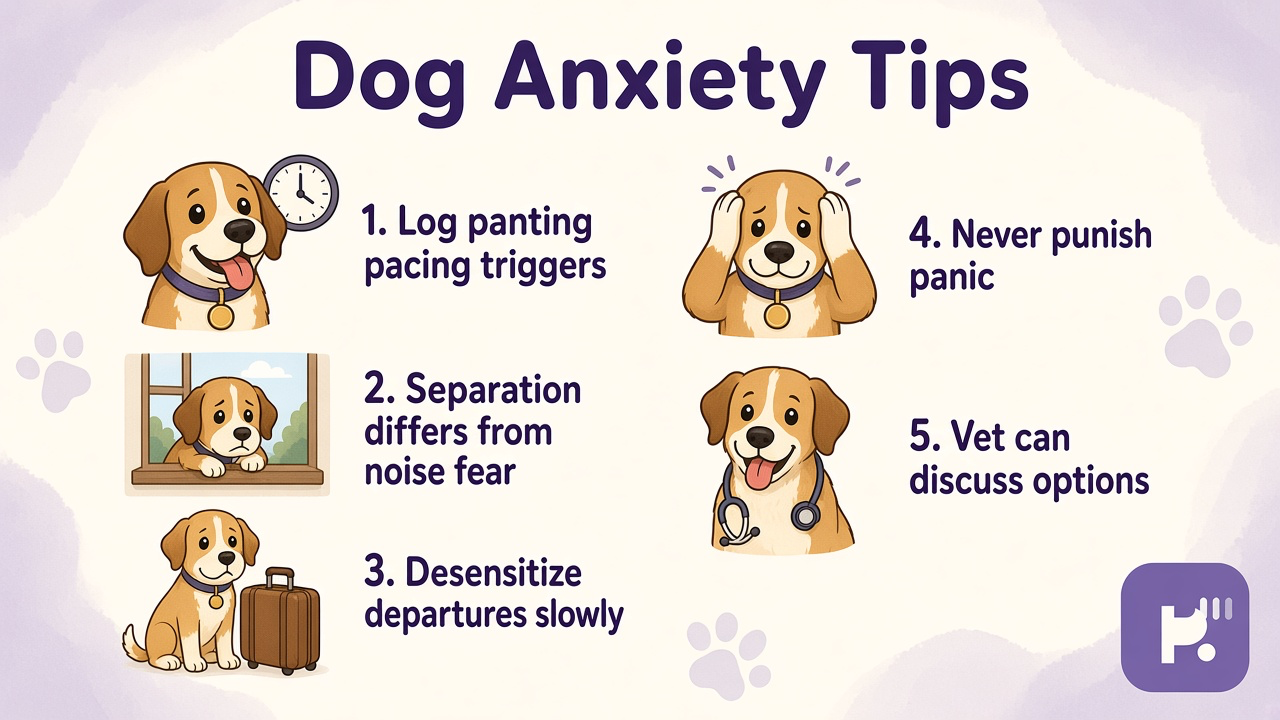
A quick takeaway graphic with topic tips (not your personal quiz scores). Start the quiz for your index, bands, and charts.
What this quiz can and cannot tell you
Can tell you
- Separate noise fear from separation panic from social shutdown
- Give you vocabulary for a vet or behavior consult
- Highlight when medical rule-out should come first
- Track whether desensitization weeks lower your bars
Cannot tell you
- Diagnose anxiety or any medical problem in dogs
- Choose medications, supplements, or dosages
- Replace gradual exposure plans from qualified professionals
- Predict whether your dog will panic next thunderstorm
Dog anxiety: triggers, logs, and what actually helps
Owners type does my dog have anxiety at 2 a.m. while a terrier shakes through another storm. Competitors mash separation panic, leash reactivity, and noise phobia into one list, then suggest calm treats without mentioning vets, cameras, or the fact that punishment makes fear worse. This quiz splits body alarm, noise and storm, alone panic, and social novelty so you can see which trigger owns the week.
Dr. Elena Vasquez emphasizes trigger logs before labels. Panting after exercise is normal; panting on a cool couch is data. Trembling at the vet can be classic fear; trembling every evening might track pain or metabolic issues. A veterinarian should rule out medical mimics before you commit to months of training alone.
Desensitization is slow on purpose. For noise, that might mean playing storm recordings at whisper volume while your dog eats. For separation, it might mean seconds-long exits that stay sub-threshold on camera. For social novelty, it might mean parallel walks with a calm dog before face-to-face greetings. High scores in one bar mean one plan, not four simultaneous wars.
Medication is not cheating. Some dogs need short-term support for fireworks week; others need longer plans after a behavior consult. Never use human sedatives without veterinary dosing. Our cat separation anxiety quiz mirrors alone panic if you are comparing species in one household. Our does my dog have ADHD quiz fits better when joy zoomies dominate more than trembling hides.
Retake after four weeks of a boring goodbye ritual, a safe den, and one professional session. Progress is often a shorter pant, not a dog who loves thunderstorms. Celebrate micro wins and keep punishment off the table. Fear is communication, not defiance.
| Test | Focus |
|---|---|
| Does my dog have ADHD quiz | High-drive impulse and sniff focus more than fear trembling |
| Does my cat have separation anxiety quiz | Feline alone panic patterns for multi-pet homes |
Does My Dog Have Anxiety Quiz FAQ
What does this quiz measure?
It measures how often you notice anxiety-linked behaviors in four areas: body alarm signs, noise reactions, alone panic, and social novelty stress. You get an index from 0 to 100 and four bars.
Is separation anxiety the same as general anxiety?
Separation distress is one common pattern. This quiz keeps alone panic separate from noise and social bars so you can target the right trigger.
Will crating fix anxiety?
Crates help some dogs feel safe and trap others into panic. A behavior professional can assess whether confinement helps or harms your dog.
Should I punish barking when I leave?
No. Punishment increases fear and can worsen destruction. Change departure cues and use gradual absence plans instead.
Who reviewed this quiz?
Dr. Elena Vasquez reviewed the framing, the veterinary referral notes, and the limits on diagnosis. See our editorial policy for review standards.
Reviewed by