What this character personality test measures
This quiz maps everyday behavior to ten story archetypes drawn from narrative psychology and brand storytelling traditions. Each archetype names a recurring role you may play in groups, conflict, and change.
Hero
Courage, duty, and rising to the challenge.
Sage
Truth-seeking, analysis, and teaching.
Rebel
Independence, rule-breaking, and authenticity.
Caregiver
Nurturing, empathy, and practical support.
Explorer
Curiosity, freedom, and new experience.
Ruler
Structure, leadership, and long-range order.
Creator
Imagination, craft, and original vision.
Innocent
Hope, trust, and moral optimism.
Everyperson
Belonging, fairness, and grounded relatability.
Jester
Humor, play, and easing tension.
How it works
Three steps from first question to your archetype profile. Click Start Test to open the interactive quiz in a full-screen modal.
Answer 45 statements
Rate how much you agree with each story-and-life item on a five-point scale. Example: stepping up when a group needs leadership.
Items map to ten archetypes
Your answers accumulate scores across all ten patterns. The highest score becomes your primary archetype.
View archetype and influence
Results show your primary type, secondary influence, score chart, strengths, growth edges, and shadow-side notes.
Take the character personality test
Rate 45 story-style statements on a five-point agree-disagree scale. Your answers reveal a likely primary archetype plus a secondary influence from your next-highest score.
Opens in a focused modal. No account required. Results stay on screen.
What your result means
Your primary archetype is the pattern with the highest item score. The secondary influence is your runner-up archetype, such as Hero with Sage influence or Explorer with Jester influence.
| Score pattern | Typical reading |
|---|---|
| One archetype clearly highest | Strong primary signal; secondary adds nuance |
| Two archetypes close together | You may blend roles; read both profiles |
| Flat scores across archetypes | Many neutral answers or mixed roles; retake when focused |
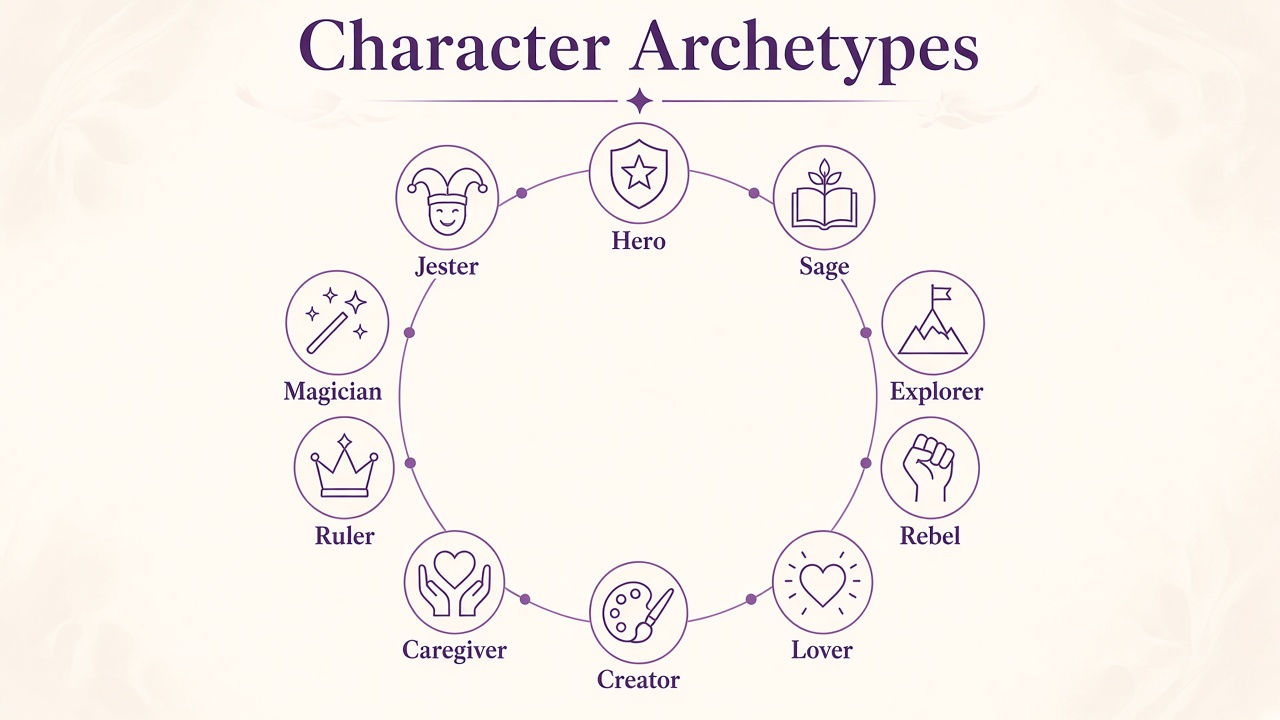
The ten character archetypes
Archetypes appear across myths, novels, and screenwriting. They describe recurring roles people adopt when facing pressure, belonging, or creative work.
What this test can and cannot tell you
Can tell you
- Your self-reported archetype pattern among ten story roles
- A secondary influence from your next-highest score
- Plain-language strengths, growth edges, and shadow-side notes
- A starting point for creative writing or team reflection
Cannot tell you
- Official Jungian or literary criticism certification
- Clinical diagnoses or mental health conditions
- Whether you should be cast, hired, or promoted
- A permanent identity that never shifts with context
Understanding character archetypes
Story archetypes trace back to comparative mythology and were popularized for modern audiences by thinkers such as Joseph Campbell and later adapted in marketing by Carol S. Pearson. Unlike trait inventories that score continuous dimensions, archetype language describes the roles you gravitate toward when facing conflict, belonging, or creative pressure.
Many readers pair archetype results with other frameworks on The Quiz Hub. The Enneagram test explores nine motivation types with wing influences. The MBTI type test maps four preference dichotomies into sixteen types. The Big Five personality test offers research-backed trait percentiles. Archetype language is especially useful when you want a narrative label for how you show up in stories, teams, or personal branding.
Free online archetype quizzes shorten the item count and use plain-language paraphrases. Treat any result as a creative hypothesis, not a casting decision. For lone-wolf hierarchy language from internet culture, try our sigma personality test on self-direction. Browse more tests on our personality psychology hub.
Character personality test FAQ
What is a character personality test?
A character personality test maps your self-reported tendencies to story archetypes such as Hero, Sage, or Rebel. It uses fiction-inspired language to describe how you show up in groups, conflict, and change.
How long does this character archetype quiz take?
Most people finish in about 7 minutes. There are 45 agree-disagree statements. You can pause and return in the same browser session.
What archetypes does this test include?
The quiz scores ten archetypes: Hero, Sage, Rebel, Caregiver, Explorer, Ruler, Creator, Innocent, Everyperson, and Jester. Your primary result is the highest score; the runner-up appears as a secondary influence.
Is this the same as the Enneagram or MBTI?
No. Archetype tests borrow narrative language from storytelling and brand psychology. The Enneagram maps nine motivation types; MBTI maps four preference pairs. Each framework offers a different lens.
Can my character archetype change?
Archetype expression can shift with life stage, roles, and stress. Treat results as a snapshot for reflection, not a fixed casting call.
Who reviewed this content?
Dr. James Whitfield, PhD, reviewed the test framing and result explanations. See our editorial policy for review standards.
Reviewed by