What this anxiety or intuition quiz measures
This anxiety or intuition in relationship quiz estimates whether uncertainty with your partner shows up as body flooding and reassurance loops, or as calmer gut reads and context-aware cue reading. Twenty-two original frequency items group into four domains drawn from attachment hyperactivation themes and Gottman's physiological flooding concept. Your anxiety index averages these patterns into a 0 to 100 score where higher means more anxiety-driven responses on this screener.
Body alarm
Chest tightness, racing heart, restless sleep, and physical flooding before clear proof something is wrong.
Reassurance seeking
Re-reading texts, polling friends, checking social media, and asking repeatedly whether your partner still loves you.
Gut clarity
Calm inner knowing, sitting with ambiguity, and separating fear spikes from real red flags within hours.
Partner cue reading
Reading tone, space bids, and short replies with context versus assuming the worst without a pattern.
How it works
Three steps from first question to your anxiety vs intuition report. Click Start Quiz to open the interactive quiz in a full-screen modal.
Answer 22 frequency items
Rate how often each pattern appears when relationship uncertainty shows up, from Never to Almost always. You click Next after each answer; nothing auto-advances.
Items map to four domains
Your answers accumulate percentages for body alarm, reassurance seeking, gut clarity, and partner cue reading, plus an overall anxiety index.
View band and domain bars
Results show Gut-Trust Leaning, Mixed Anxiety and Intuition, or Anxiety-Driven Pattern with domain bars and reflection prompts.
Take the anxiety or intuition in relationship quiz
Rate 22 statements about how uncertainty lands when something feels off with your partner. Your answers produce an anxiety index from 0 to 100, four domain scores, and a band label for reflection or therapy conversation.
Opens in a focused modal. No account required. Results stay on screen.
What your result means
Your anxiety index is the normalized total across all 22 items on a 0 to 100 scale, with reverse scoring on gut clarity and balanced cue-reading items so higher scores mean more anxiety-driven patterns overall. Domain bars show raw endorsement rates so you can see whether body alarm, reassurance loops, or cue confusion drives your result most.
| Band | Index range | Typical reading |
|---|---|---|
| Gut-Trust Leaning | 0 to 35 | Steadier gut reads and context-aware cue reading; lower body alarm on this screener |
| Mixed Anxiety and Intuition | 36 to 65 | Both flooding spikes and calm gut moments; stress can widen the mix |
| Anxiety-Driven Pattern | 66 to 100 | Frequent body alarm and reassurance loops when uncertainty appears; not proof your worries are wrong |
What your anxiety or intuition report looks like
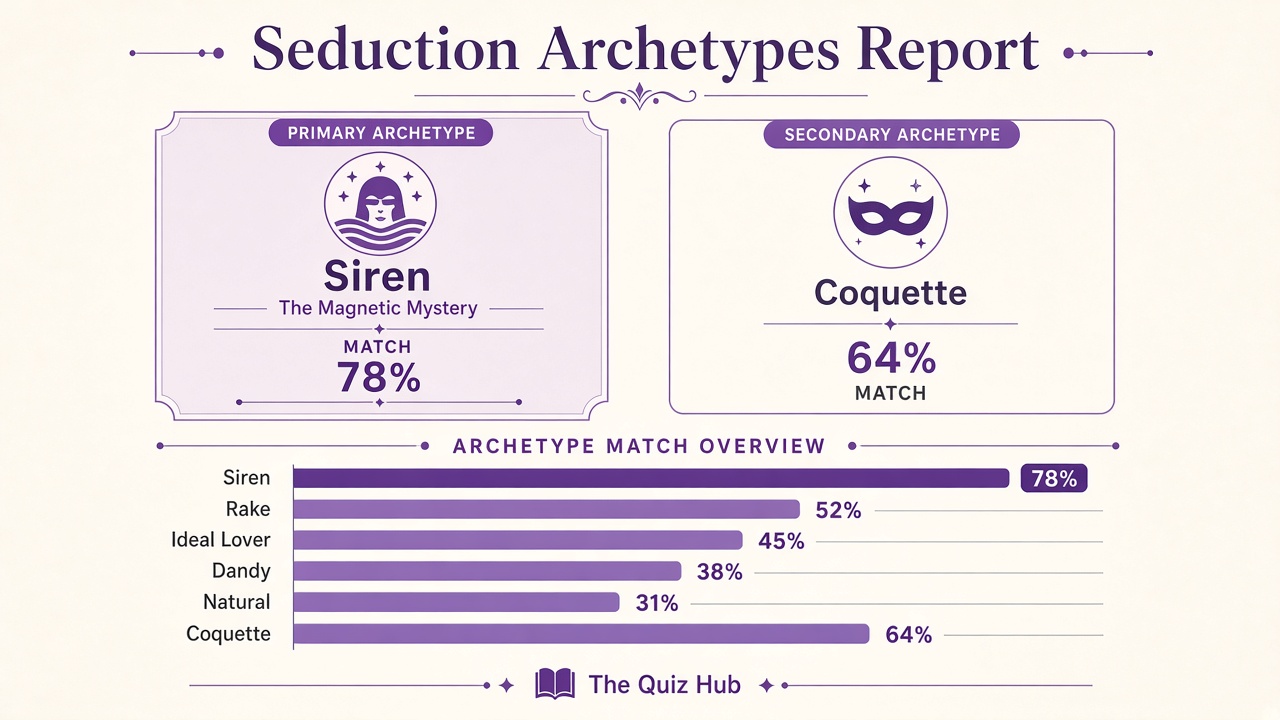
After all 22 items, you get an anxiety index from 0 to 100, a band label, and four domain bars for body alarm, reassurance seeking, gut clarity, and partner cue reading. Percentages reflect how uncertainty shows up for you, not a clinical verdict about your partner.
What this quiz can and cannot tell you
Can tell you
- Whether uncertainty tends to flood your body or land as calmer gut reads on this screener
- An anxiety index and four domain bars for body alarm, reassurance, gut clarity, and cue reading
- Which domain pattern feels strongest when something feels off with your partner
- A starting point for reflection, journaling, or therapy conversation
Cannot tell you
- Whether your gut instinct is right or wrong about your partner without their input
- Whether you have GAD, ROCD, or an attachment disorder
- Whether you should break up or stay based on this score alone
- What your partner truly thinks, feels, or intends without honest dialogue
Attachment flooding, gut trust, and reading partner cues
Adult attachment researchers describe hyperactivation as scanning for rejection cues and seeking proximity when closeness feels threatened. John Gottman and colleagues studied physiological flooding, the state where heart rate and stress hormones spike and thinking narrows during conflict. In everyday romance, those ideas overlap with a common question: is this feeling intuition about a real problem, or anxiety running ahead of evidence?
The Quiz Hub built this anxiety or intuition in relationship quiz as an original self-report screener inspired by those frameworks, not a reproduction of published clinical instruments. Readers often compare it to sibling tools on this site. Our attachment style test screens ECR-inspired anxiety and avoidance quadrants. Our anxiety test measures GAD-style worry across life domains over two weeks. Our compatibility test maps values overlap and lifestyle fit. Our bird test relationship quiz screens partner bid responsiveness to small everyday shares. This quiz stays narrow: your inner response when uncertainty appears.
| The Quiz Hub test | What it adds |
|---|---|
| Attachment style test | Closeness anxiety and avoidance quadrants, not body alarm vs gut clarity split |
| Anxiety test | General worry and tension over two weeks, not romance-specific cue reading |
| Compatibility test | Values and lifestyle fit bars, not flooding vs intuition when texts go quiet |
| Bird test relationship | Partner bid responsiveness to small shares, not your internal alarm response |
| This anxiety or intuition quiz | Four-domain anxiety index for body alarm, reassurance, gut clarity, and partner cue reading |
Sample item types include frequency ratings such as whether you re-read old texts for hidden meaning, or whether you read distraction as fatigue rather than rejection unless you see a clear pattern. High body alarm with low gut clarity often lands in Anxiety-Driven Pattern. Steady gut trust with context-aware cue reading may land in Gut-Trust Leaning even when occasional worry appears. Read how we review quizzes in our editorial policy or browse more tools on our relationships and dating hub.
Anxiety or intuition in relationship FAQ
What is the difference between anxiety and intuition in a relationship?
Intuition in relationships often feels like calm inner knowing built from consistent partner behavior over time. Anxiety tends to arrive as body flooding (racing heart, tight chest, lost sleep) before clear evidence appears, plus reassurance loops like re-reading texts or polling friends. This anxiety or intuition in relationship quiz separates those patterns across four domains so you can name what you are experiencing.
What does this anxiety or intuition in relationship quiz measure?
Twenty-two original frequency items ask how often body alarm, reassurance seeking, gut clarity, and partner cue reading show up when something feels uncertain with your partner. You receive an anxiety index from 0 to 100 (higher means more anxiety-driven patterns on this screener) and four domain bars. Bands range from Gut-Trust Leaning through Mixed Anxiety and Intuition to Anxiety-Driven Pattern. It reflects your self-report, not your partner's secret intentions.
Can this quiz tell me if I should break up?
No. The anxiety index describes how uncertainty lands in your body and mind on this screener. It cannot judge your partner, predict breakup, or prove whether your gut is right. Real red flags and real compatibility questions need honest conversation and, when needed, professional support. Use results for reflection, not ultimatums.
How is this different from the attachment style test or anxiety test?
Our attachment style test screens ECR-inspired anxiety and avoidance in closeness across relationships. Our anxiety test measures GAD-style worry and tension over two weeks across life domains. This quiz stays narrow: when romance feels uncertain, do you flood and seek reassurance, or read cues with steadier gut clarity? Pair with our compatibility test for values overlap beyond gut feel.
Is a high anxiety index a diagnosis?
No. A higher anxiety index means your responses suggest frequent body alarm and reassurance loops on this abbreviated screener. Only a licensed clinician can evaluate generalized anxiety, ROCD, or attachment disorders through structured interviews. Online quizzes cannot confirm or deny a diagnosis.
Who reviewed this content?
Dr. Priya Sharma, PhD, reviewed the test framing and result explanations. See our editorial policy for review standards.
Reviewed by