What this am I overtraining quiz measures
This am I overtraining quiz estimates how often your self-report aligns with overtraining-like symptom patterns over the past two weeks. Twenty-two original frequency items group into four domains inspired by sports medicine literature: persistent fatigue, performance decline, recovery difficulty, and mood and sleep disruption. Each item also maps to a fear-of-intimacy stack layer so you can see whether hiding strain from coaches or partners rides alongside physical symptoms. Your overtraining symptom index averages these signals into a 0 to 100 score where higher numbers mean more frequent endorsement on this screener.
Persistent fatigue
Unusual tiredness that lingers despite rest days or full sleep.
Performance decline
Slower times, weaker lifts, or stalled progress despite consistent effort.
Recovery difficulty
Soreness, heaviness, or flat energy that takes longer than usual to clear.
Mood and sleep disruption
Irritability, low motivation, insomnia, or restless sleep tied to heavy training blocks.
How it works
Three steps from first question to your overtraining symptom report with fear-of-intimacy stack. Click Start Quiz to open the interactive quiz in a full-screen modal.
Answer 22 frequency items
Rate how often each symptom occurred in the past two weeks, from Never to Very often. You click Next after each answer; nothing auto-advances.
Items map to symptom domains and intimacy stack
Your answers accumulate percentages for persistent fatigue, performance decline, recovery difficulty, and mood or sleep disruption, plus four fear-of-intimacy stack layers.
View band, domain bars, and stack chart
Results show Lower, Mixed, or Higher Overtraining Signals with domain bars, stack layers, and medical referral notes on elevated bands.
Take the am I overtraining quiz
Rate 22 symptoms about fatigue, performance, recovery, and mood or sleep over the past two weeks. Your answers produce an overtraining symptom index from 0 to 100, four domain scores, a fear-of-intimacy stack chart, and a band label for reflection.
Opens in a focused modal. No account required. Results stay on screen.
What your overtraining symptom result means
Your overtraining symptom index is the normalized total across all 22 items on a 0 to 100 scale. Higher scores mean more frequent endorsement of fatigue, performance drops, recovery strain, and mood or sleep changes on this screener. Domain bars show which pattern drives your result most. The fear-of-intimacy stack chart shows parallel layers that can complicate getting help when self-disclosure limits stay high despite physical strain. Higher Overtraining Signals bands include medical referral guidance because Meeusen et al. (2013) emphasize that persistent performance decrements with mood changes warrant professional evaluation.
| Band | Index range | Typical reading |
|---|---|---|
| Lower Overtraining Signals | 0 to 35 | Fewer overtraining-like symptom patterns lately; load may match recovery |
| Mixed Overtraining Signals | 36 to 65 | Blend of strain and stable areas; common during hard training blocks or sleep debt |
| Higher Overtraining Signals | 66 to 100 | Frequent fatigue, performance decline, recovery strain, or mood and sleep disruption; consider sports medicine review |
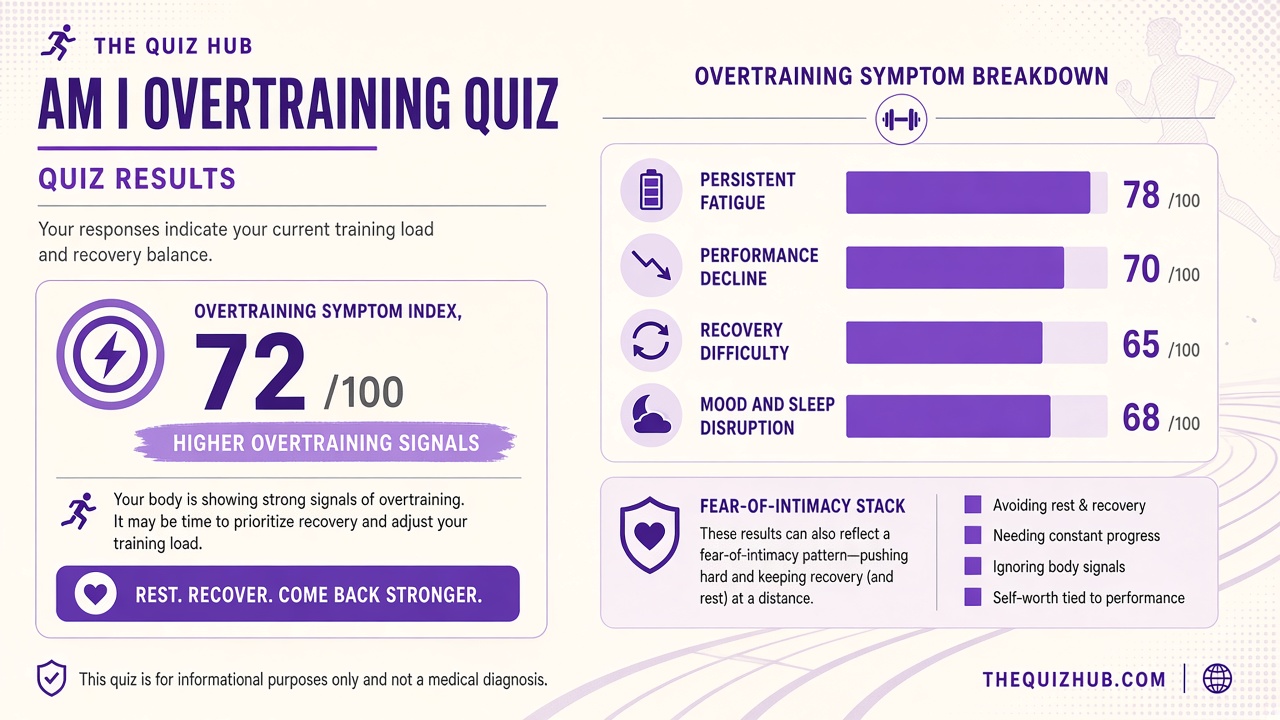
What your overtraining report looks like
After all 22 items, you get an overtraining symptom index from 0 to 100, a band label, four domain bars, plus a fear-of-intimacy stack chart with vulnerability, trust, disclosure, and closeness anxiety layers. Higher bands include medical referral guidance.
What this quiz can and cannot tell you
Can tell you
- How often overtraining-like symptoms showed up in your self-report over the past two weeks
- An overtraining symptom index and four domain bars for fatigue, performance, recovery, and mood or sleep
- A fear-of-intimacy stack showing whether hiding strain from others may delay help
- A starting point for deload planning and conversation with a coach or clinician
Cannot tell you
- Whether you have overtraining syndrome, anemia, thyroid disease, or any medical diagnosis
- Exact training volume you should cut without individualized sports medicine review
- Whether illness, life stress, or poor sleep alone caused your scores
- Whether you should continue competing without professional guidance on elevated bands
Overtraining research, deload habits, and honest screening limits
Athletes often search am I overtraining when rest days no longer refresh them, PRs stall, or irritability spikes during heavy blocks. Meeusen et al. (2013) published a consensus review in the European Journal of Sport Science describing nonfunctional overreaching and overtraining syndrome as states where performance drops persist despite rest, often with mood and sleep changes. That research emphasizes individualized load history and clinical workup rather than any single checklist score.
The Quiz Hub built this am I overtraining quiz as an original non-diagnostic screener inspired by those symptom themes plus FOIS-style intimacy avoidance layers from Karen M. Descutner and Mark H. Thelen (1991), not a reproduction of any published clinical instrument. Readers often compare it to sibling tools on this site. Our am I burnt out quiz screens emotional exhaustion and cynicism across roles. The am I fit quiz maps general fitness habits rather than overtraining symptom frequency. The am I dehydrated quiz screens fluid-related symptoms that can mimic fatigue.
| The Quiz Hub test | What it adds |
|---|---|
| Am I burnt out quiz | Work and life exhaustion domains, not training-specific performance decline items |
| Am I fit quiz | General fitness habit snapshot, not past-two-weeks symptom frequency |
| Am I dehydrated quiz | Fluid and hydration symptom screening, not load-recovery mismatch framing |
| Am I emotionally exhausted quiz | Emotional drain frequency, not athlete performance decline domains |
| Fear of intimacy quiz | General closeness avoidance, not overtraining symptom items |
| This am I overtraining quiz | Overtraining symptom index plus fear-of-intimacy stack for fatigue, performance, recovery, and mood or sleep disruption |
Sample item types include frequency ratings such as whether workouts feel harder at the same pace, or whether soreness lingers beyond usual. High persistent fatigue with high self-disclosure limits on the stack may mean you train through pain quietly. Illness, poor nutrition, or life stress can raise scores without overtraining syndrome. Read our editorial policy or browse the mental health and clinical tests hub.
Am I overtraining quiz FAQ
What is overtraining syndrome?
Overtraining syndrome describes a prolonged state where training load outpaces recovery, leading to performance decline, persistent fatigue, mood changes, and sleep disruption. Sports medicine research by Meeusen et al. (2013) distinguishes nonfunctional overreaching from full overtraining syndrome based on duration and recovery needs. This am I overtraining quiz screens self-reported symptom frequency. It cannot diagnose overtraining syndrome or replace sports medicine evaluation.
What does this am I overtraining quiz measure?
Twenty-two original frequency items ask how often in the past two weeks you experienced persistent fatigue, performance decline, recovery difficulty, and mood or sleep disruption aligned with overtraining themes. Scores map to four domains plus a parallel fear-of-intimacy stack with vulnerability pull-back, trust hesitation, self-disclosure limits, and closeness anxiety layers. You receive an overtraining symptom index from 0 to 100 where higher scores mean more frequent endorsement on this screener.
How is this different from the am I burnt out quiz?
The am I burnt out quiz screens emotional exhaustion, cynicism, and reduced efficacy inspired by Maslach burnout inventory themes across work and life roles. This quiz focuses on training-specific fatigue, performance drops, slow recovery, and athlete-adjacent mood or sleep changes over the past two weeks. Both use frequency items and a fear-of-intimacy stack chart.
What is the fear-of-intimacy stack on this quiz?
The fear-of-intimacy stack is a second results chart inspired by FOIS-style intimacy avoidance themes from Karen M. Descutner and Mark H. Thelen (1991), adapted to athletic strain framing. Each of the 22 items also maps to one of four stack layers. The stack index summarizes how often hiding exhaustion from coaches, partners, or clinicians rides alongside overtraining-like symptoms.
Should I see a doctor if I score high?
Higher overtraining symptom index bands suggest professional evaluation may help, especially if symptoms persist after a structured recovery week. A sports medicine clinician or primary care provider can review training load, sleep, nutrition, labs, and mood history. This quiz cannot order tests or confirm overtraining syndrome. If you feel unsafe or in crisis, call or text 988 (US) or your local crisis line regardless of your index score.
Who reviewed this content?
Dr. Elena Vasquez, PhD, reviewed the test framing and result explanations. See our editorial policy for review standards.
Reviewed by