What this am i nonchalant quiz measures
This am I nonchalant quiz estimates how much a cool, detached, or casually unaffected presentation shows up in how you report reacting to life and relationships. Twenty original agree-disagree items group into four domains inspired by emotional regulation and low-arousal presentation themes from James Gross on emotion regulation and Dialectical Behavior Therapy skills on distress tolerance: emotional detachment, low reactivity, casual priorities, and unaffected presentation. Each item also maps to a fear-of-intimacy stack layer. Your nonchalant vibe index averages these patterns into a 0 to 100 score where higher numbers mean more endorsement on this screener.
Emotional detachment
Mild interest in others big news, distance in close ties, shrugging off praise or criticism.
Low reactivity
Quick recovery from delays or conflict, calm tone when others escalate, not replaying awkward moments.
Casual priorities
Comfort over optimized schedules, late or underdressed arrival without shame, chores when you feel like it.
Unaffected presentation
It is whatever phrasing, flat voice in emotional moments, downplaying wins, acting unbothered when stung.
How it works
Three steps from first question to your nonchalant vibe index report with fear-of-intimacy stack. Click Start Quiz to open the interactive quiz in a full-screen modal.
Answer 20 agree-disagree items
Rate how much you agree with each statement, from Strongly disagree to Strongly agree. You click Next after each answer; nothing auto-advances.
Items map to domains and intimacy stack
Your answers accumulate percentages for emotional detachment, low reactivity, casual priorities, unaffected presentation, plus four fear-of-intimacy stack layers.
View band and dual charts
Results show Lower Nonchalant Vibe, Mixed Nonchalant Vibe, or Higher Nonchalant Vibe with domain bars and a fear-of-intimacy stack chart.
Take the am i nonchalant quiz
Rate 20 statements about nonchalant vibe patterns. Your answers produce a nonchalant vibe index from 0 to 100, a fear-of-intimacy stack index, four domain scores, and a band label for reflection or therapy conversation.
Opens in a focused modal. No account required. Results stay on screen.
What your nonchalant vibe index result means
Your nonchalant vibe index is the normalized total across all 20 items on a 0 to 100 scale, with reverse scoring on protective items. The fear-of-intimacy stack index uses the same answers mapped to vulnerability, trust, disclosure, and closeness anxiety layers where higher stack scores mean more avoidance patterns. Domain bars show endorsement rates so you can see which domain drives your result most.
| Band | Index range | Typical reading |
|---|---|---|
| Lower Nonchalant Vibe | 0 to 35 | Lower endorsement on this screener; context and stress can still shift individual items |
| Mixed Nonchalant Vibe | 36 to 65 | Blend of patterns; domain and stack charts show where closeness guarding appears |
| Higher Nonchalant Vibe | 66 to 100 | Frequent endorsement on this screener; worth reflecting on impact in close ties |
What your am i nonchalant quiz report looks like
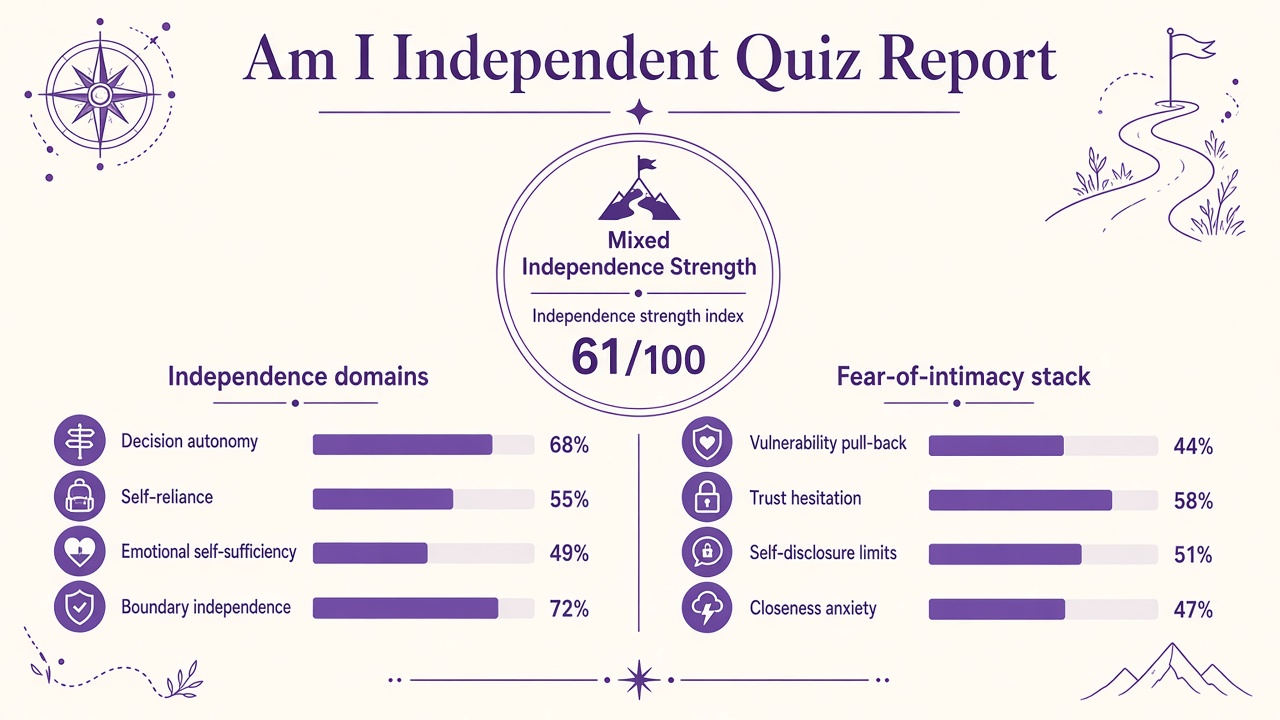
After all 20 items, you get a nonchalant vibe index from 0 to 100, a band label, four domain bars, and a fear-of-intimacy stack chart with vulnerability pull-back, trust hesitation, self-disclosure limits, and closeness anxiety layers.
What this quiz can and cannot tell you
Can tell you
- How much emotional detachment, low reactivity, casual priorities, unaffected presentation showed up in your self-report
- A nonchalant vibe index and fear-of-intimacy stack index with domain bars
- Which domain or intimacy stack layer feels strongest in your current patterns
- A starting point for therapy conversation about self-presentation and closeness
Cannot tell you
- Whether you have a personality disorder without clinical evaluation
- How every person experiences you in real life
- Whether cultural norms or trauma history explain your scores without professional context
- What specific behavior changes others want without honest conversation
Nonchalant vibe, detachment, and hidden investment
Psychologists drawing on emotion regulation and distress tolerance themes note that self-report patterns on short screeners capture tendencies people notice in themselves, not fixed labels assigned by others. Research from James Gross on emotion regulation and DBT distress tolerance skills helps explain why adults search for quizzes like this one when they want language for habits that feel automatic in conflict, privacy, or social settings.
The Quiz Hub built this am i nonchalant quiz as an original self-report screener inspired by those themes plus FOIS-style intimacy avoidance layers from Descutner and Thelen (1991), not a reproduction of any single published scale. Readers often compare it to sibling tools on this site.
| The Quiz Hub test | What it adds |
|---|---|
| Am I mysterious quiz | Enigmatic intrigue and selective disclosure, not detached low reactivity |
| Am I cold quiz | Emotional unavailability screening without four nonchalant domain bars |
| Am I independent quiz | Autonomy and self-reliance domains, not casual unaffected presentation |
| Am I lazy quiz | Task procrastination domains, not emotional flatness or it is whatever phrasing |
| Fear of intimacy quiz | FOIS-inspired intimacy avoidance only, without nonchalant vibe domain bars |
| This am i nonchalant quiz | nonchalant vibe index plus fear-of-intimacy stack for emotional detachment, low reactivity, casual priorities, unaffected presentation |
Sample item types include agree-disagree ratings such as whether you use phrases like it is whatever when people expect a stronger reaction, or whether you show up late or underdressed without feeling much shame about it. High scores on one domain with high intimacy stack layers often land in Mixed bands. Read how we review quizzes in our editorial policy or browse more tools on our personality psychology hub.
Am I Nonchalant Quiz FAQ
What does the am i nonchalant quiz measure?
20 original agree-disagree items ask how much you endorse emotional detachment, low reactivity, casual priorities, unaffected presentation patterns in daily life and close relationships. Each item also maps to a fear-of-intimacy stack layer. You receive a nonchalant vibe index from 0 to 100 where higher scores mean more endorsement on this screener. Self-reflection tool, not a clinical diagnosis.
What is the fear-of-intimacy stack on this quiz?
The fear-of-intimacy stack is a second results chart inspired by FOIS-style intimacy avoidance themes from Descutner and Thelen (1991), adapted to am i nonchalant framing. Each item maps to one of four stack layers: vulnerability pull-back, trust hesitation, self-disclosure limits, and closeness anxiety.
How is this different from the fear of intimacy quiz?
The fear of intimacy quiz uses frequency items about general intimacy avoidance across vulnerability and trust without four nonchalant vibe domains. This am i nonchalant quiz uses agree-disagree items focused on emotional detachment and related domains with a parallel fear-of-intimacy stack chart in one report.
Can this quiz diagnose a personality disorder?
No. The nonchalant vibe index describes self-reported patterns on this abbreviated screener. Only a licensed clinician can evaluate personality or relational patterns through structured interviews. Online quizzes cannot confirm or deny a diagnosis.
How long does the quiz take?
Most people finish in about 4 minutes. There are 20 items on a five-point agree-disagree scale. You can pause and return in the same browser session thanks to autosave.
Who reviewed this content?
Dr. James Whitfield, PhD, reviewed the test framing and result explanations. See our editorial policy for review standards.
Reviewed by