What this am i mean quiz measures
This am I mean quiz estimates how often harsh, dismissive, conditional, or retaliatory patterns show up in how you report treating others. Twenty-two original agree-disagree items group into four domains inspired by interpersonal hostility and contempt research from Todorov on rapid trait inference and Bushman on displaced aggression themes: hostile tone, dismissive contempt, conditional kindness, and retaliation patterns. Each item also maps to a fear-of-intimacy stack layer. Your meanness tendency index averages these patterns into a 0 to 100 score where higher numbers mean more endorsement on this screener.
Hostile tone
Snapping when stressed, sharp tone when asked about feelings, heavy sarcasm, and raised voice to shut down personal talk.
Dismissive contempt
Eye-rolling at others problems, talking over emotional stories, assuming drama, and minimizing hurt by comparison.
Conditional kindness
Warmth that depends on agreement, withdrawing affection after disappointment, scorekeeping favors, and public generosity with private criticism.
Retaliation patterns
Cutting remarks when disrespected, bringing up old mistakes to win, punitive silence, and sharing private details to embarrass after fights.
How it works
Three steps from first question to your meanness tendency index report with fear-of-intimacy stack. Click Start Quiz to open the interactive quiz in a full-screen modal.
Answer 22 agree-disagree items
Rate how much you agree with each statement, from Strongly disagree to Strongly agree. You click Next after each answer; nothing auto-advances.
Items map to domains and intimacy stack
Your answers accumulate percentages for hostile tone, dismissive contempt, conditional kindness, retaliation patterns, plus four fear-of-intimacy stack layers.
View band and dual charts
Results show Lower Meanness Tendency, Mixed Meanness Tendency, or Higher Meanness Tendency with domain bars and a fear-of-intimacy stack chart.
Take the am i mean quiz
Rate 22 statements about meanness tendency patterns. Your answers produce a meanness tendency index from 0 to 100, a fear-of-intimacy stack index, four domain scores, and a band label for reflection or therapy conversation.
Opens in a focused modal. No account required. Results stay on screen.
What your meanness tendency index result means
Your meanness tendency index is the normalized total across all 22 items on a 0 to 100 scale, with reverse scoring on protective items. The fear-of-intimacy stack index uses the same answers mapped to vulnerability, trust, disclosure, and closeness anxiety layers where higher stack scores mean more avoidance patterns. Domain bars show endorsement rates so you can see which domain drives your result most.
| Band | Index range | Typical reading |
|---|---|---|
| Lower Meanness Tendency | 0 to 35 | Lower endorsement on this screener; context and stress can still shift individual items |
| Mixed Meanness Tendency | 36 to 65 | Blend of patterns; domain and stack charts show where closeness guarding appears |
| Higher Meanness Tendency | 66 to 100 | Frequent endorsement on this screener; worth reflecting on impact in close ties |
What your am i mean quiz report looks like
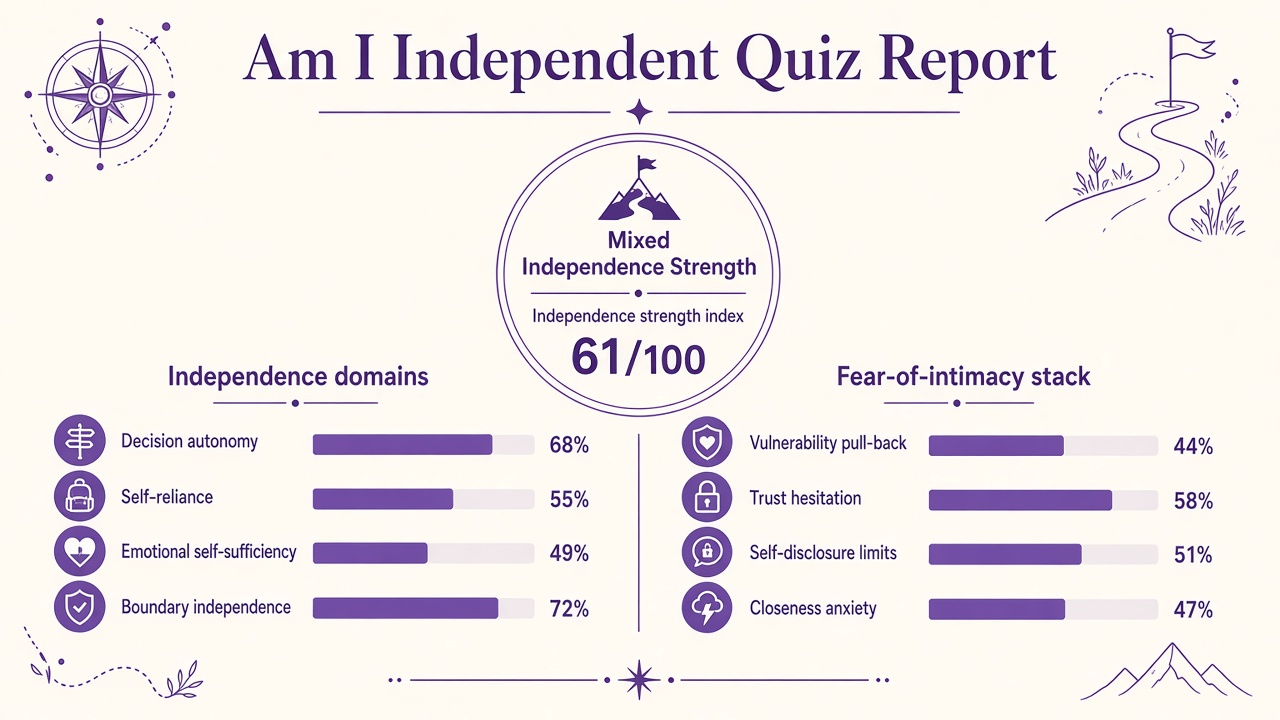
After all 22 items, you get a meanness tendency index from 0 to 100, a band label, four domain bars, and a fear-of-intimacy stack chart with vulnerability pull-back, trust hesitation, self-disclosure limits, and closeness anxiety layers.
What this quiz can and cannot tell you
Can tell you
- How much hostile tone, dismissive contempt, conditional kindness, retaliation patterns showed up in your self-report
- A meanness tendency index and fear-of-intimacy stack index with domain bars
- Which domain or intimacy stack layer feels strongest in your current patterns
- A starting point for therapy conversation about self-presentation and closeness
Cannot tell you
- Whether you have a personality disorder without clinical evaluation
- How every person experiences you in real life
- Whether cultural norms or trauma history explain your scores without professional context
- What specific behavior changes others want without honest conversation
Meanness, contempt, and the fear-of-intimacy stack
Psychologists drawing on interpersonal hostility and contempt research note that self-report patterns on short screeners capture tendencies people notice in themselves, not fixed labels assigned by others. Research from Brad Bushman on aggression displacement and Alexander Todorov on face-based trait judgments helps explain why adults search for quizzes like this one when they want language for habits that feel automatic in conflict, privacy, or social settings.
The Quiz Hub built this am i mean quiz as an original self-report screener inspired by those themes plus FOIS-style intimacy avoidance layers from Descutner and Thelen (1991), not a reproduction of any single published scale. Readers often compare it to sibling tools on this site.
| The Quiz Hub test | What it adds |
|---|---|
| Am I a bad person quiz | Moral self-judgment framing rather than four meanness domain bars |
| Am I nice quiz | Warmth and accommodation domains, not hostile tone or retaliation patterns |
| Am I entitled quiz | Special treatment and exploitation frequency, not sarcasm or punitive silence |
| Am I intimidating quiz | Presence and emotional reserve, not conditional kindness or scorekeeping |
| Fear of intimacy quiz | FOIS-inspired intimacy avoidance only, without meanness domain bars |
| This am i mean quiz | meanness tendency index plus fear-of-intimacy stack for hostile tone, dismissive contempt, conditional kindness, retaliation patterns |
Sample item types include agree-disagree ratings such as whether you roll your eyes when someone shares a problem you think is minor, or whether you punish someone with silence until they apologize first. High scores on one domain with high intimacy stack layers often land in Mixed bands. Read how we review quizzes in our editorial policy or browse more tools on our personality psychology hub.
Am I Mean Quiz FAQ
What does the am i mean quiz measure?
22 original agree-disagree items ask how much you endorse hostile tone, dismissive contempt, conditional kindness, retaliation patterns patterns in daily life and close relationships. Each item also maps to a fear-of-intimacy stack layer. You receive a meanness tendency index from 0 to 100 where higher scores mean more endorsement on this screener. Self-reflection tool, not a clinical diagnosis.
What is the fear-of-intimacy stack on this quiz?
The fear-of-intimacy stack is a second results chart inspired by FOIS-style intimacy avoidance themes from Descutner and Thelen (1991), adapted to am i mean framing. Each item maps to one of four stack layers: vulnerability pull-back, trust hesitation, self-disclosure limits, and closeness anxiety.
How is this different from the fear of intimacy quiz?
The fear of intimacy quiz uses frequency items about general intimacy avoidance across vulnerability and trust without four meanness domains. This am i mean quiz uses agree-disagree items focused on hostile tone and related domains with a parallel fear-of-intimacy stack chart in one report.
Can this quiz diagnose a personality disorder?
No. The meanness tendency index describes self-reported patterns on this abbreviated screener. Only a licensed clinician can evaluate personality or relational patterns through structured interviews. Online quizzes cannot confirm or deny a diagnosis.
How long does the quiz take?
Most people finish in about 5 minutes. There are 22 items on a five-point agree-disagree scale. You can pause and return in the same browser session thanks to autosave.
Who reviewed this content?
Dr. James Whitfield, PhD, reviewed the test framing and result explanations. See our editorial policy for review standards.
Reviewed by