What this French cultural resonance quiz measures
This am I French quiz estimates how often stereotype-adjacent French social habits show up in how you report everyday life. Twenty original frequency items group into four domains inspired by sociologist Pierre Bourdieu's work on taste and cultural capital in Distinction (1979) plus UNESCO's recognition of the French gastronomic meal tradition: food wine and café culture, debate and conversation style, style and presentation, and media language identity. Each item also maps to a fear-of-intimacy stack layer so you can see whether closeness guarding pairs with polished warmth or slang code-switching. Your French cultural resonance index averages these patterns into a 0 to 100 score where higher numbers mean more French habit signals on this screener.
Food, wine, and café culture
Baguette scrutiny, wine pairing worry, terrace lunch comfort, hiding cheap pastry habits, and meal-as-social-event rituals.
Debate and conversation style
Dinner-table arguments, distrust of constant agreement, guarded je t aime timing, and abstract topics over raw feelings.
Style and presentation
Scarf-and-coat polish, hiding messy photos, everyday dress as respect signal, and deflecting outfit compliments.
Media, language, and identity
French film and song references, slang code-switching, accent softening on calls, and art-house pretension worries.
How it works
Three steps from first question to your French cultural resonance report with fear-of-intimacy stack. Click Start Quiz to open the interactive quiz in a full-screen modal.
Answer 20 frequency items
Rate how often each French cultural habit pattern shows up in everyday social life, from Never to Almost always. You click Next after each answer; nothing auto-advances.
Items map to cultural domains and intimacy stack
Your answers accumulate percentages for café culture, debate style, presentation, and media language, plus four fear-of-intimacy stack layers.
View band and dual charts
Results show Lower, Mixed, or Higher French Resonance with domain bars and a fear-of-intimacy stack chart. Higher index means more French habit signals on this screener.
Take the am I French quiz
Rate 20 statements about baguette standards, dinner debate, presentation polish, and French media references in everyday social life. Your answers produce a French cultural resonance index from 0 to 100, a fear-of-intimacy stack index, four domain scores, and a band label for group-chat reflection or honest identity talks.
Opens in a focused modal. No account required. Results stay on screen.
What your French cultural resonance result means
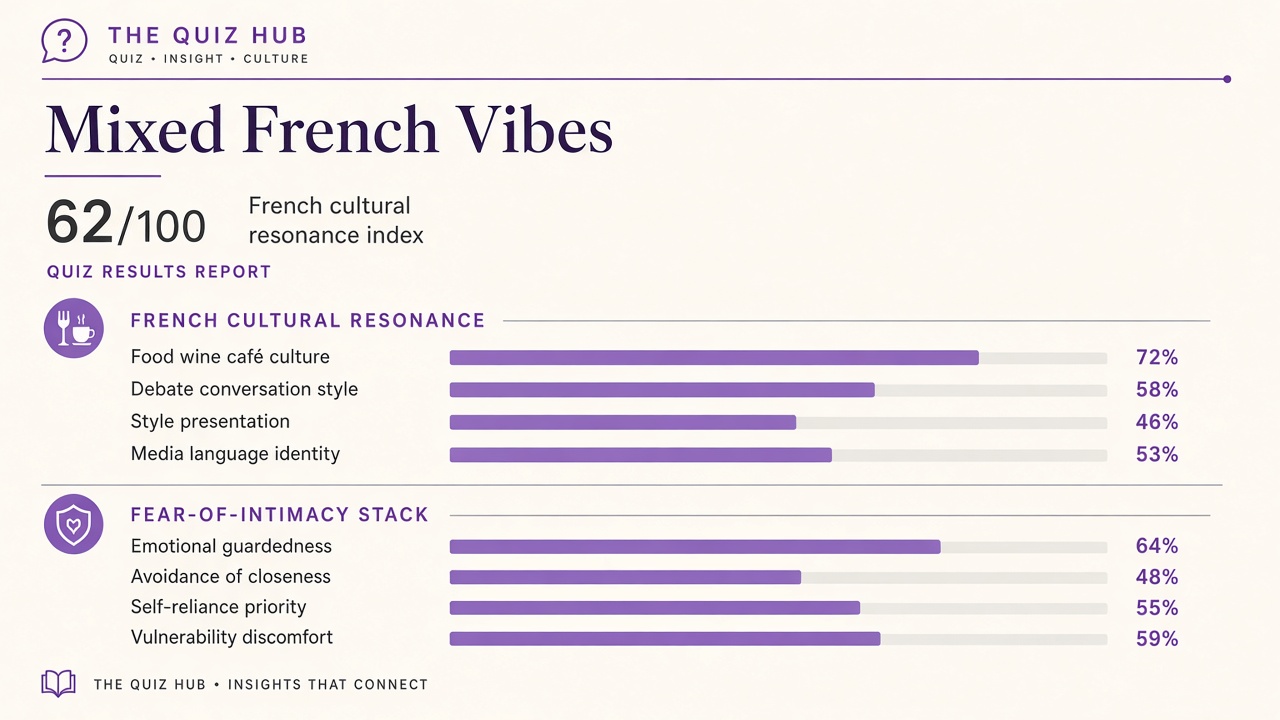
Your French cultural resonance index is the normalized total across all 20 items on a 0 to 100 scale, with reverse scoring on non-French comfort items so higher scores mean more French habit signals overall. The fear-of-intimacy stack index uses the same answers mapped to vulnerability, trust, disclosure, and closeness anxiety layers where higher stack scores mean more avoidance patterns. Domain bars show endorsement rates so you can see whether café culture, debate style, presentation, or media language drives your result most.
| Band | Index range | Typical reading |
|---|---|---|
| Lower French Resonance | 0 to 35 | Fewer baguette scrutiny, terrace lunch, debate-at-dinner, or French film reference habits; diaspora or other cultural frames may explain low scores |
| Mixed French Vibes | 36 to 65 | Blend of French habits and other social styles; domain and stack charts show where code-switching or guarded warmth shows up |
| Higher French Resonance | 66 to 100 | Frequent café rituals, dinner debate, presentation polish, or French slang sensitivity on this screener |
What your French cultural resonance report looks like
After all 20 items, you get a French cultural resonance index from 0 to 100, a band label, four cultural domain bars, and a fear-of-intimacy stack chart with vulnerability pull-back, trust hesitation, self-disclosure limits, and closeness anxiety layers. Percentages reflect how you report social habits, not a passport stamp.
What this quiz can and cannot tell you
Can tell you
- How often café rituals, debate habits, presentation polish, and French media reference patterns showed up in your self-report
- A French cultural resonance index and fear-of-intimacy stack index with domain bars
- Which cultural domain or intimacy stack layer feels strongest in your current habits
- A starting point for group-chat jokes, identity reflection, or therapy conversation about belonging and closeness
Cannot tell you
- Your citizenship, ancestry, or legal nationality from habit self-report alone
- Whether every French friend would agree with your band without their side of the story
- Whether Quebec, Belgian, Swiss, or diaspora identity explains your score better than meme Paris framing
- Where you should live, work, or study without real-life constraints and honest planning
French meme culture, taste signals, and the fear-of-intimacy stack
Internet memes turned French into a playful label for baguette jokes, terrace lunches, intellectual sparring, and effortless scarf style. Sociologist Pierre Bourdieu argued in Distinction (1979) that taste choices signal cultural capital, from wine knowledge to presentation habits that feel natural inside one social class and performative outside it. UNESCO also listed the French gastronomic meal as intangible cultural heritage in 2010, which helps explain why meal rituals and café pacing show up in meme quizzes even when real French life varies by region, class, and diaspora history. In real life, hiding cheap pastry habits, softening accent on work calls, or debating film instead of feelings can feel safe while closeness stays guarded.
The Quiz Hub built this am I French quiz as an original self-report screener inspired by those social habit themes plus FOIS-style intimacy avoidance layers from Descutner and Thelen (1991), not a reproduction of any single published Frenchness scale. Readers often compare it to sibling tools on this site. Our am I British quiz uses frequency items about dry humour, tea and pub culture, and weather chat. The am I bougie quiz maps premium taste and status flex habits. The am I cool quiz uses agree-disagree items about effortless style and calm-under-pressure vibes.
| The Quiz Hub test | What it adds |
|---|---|
| Am I British quiz | Dry humour, tea and pub culture, weather chat, not café debate or scarf presentation habits |
| Am I bougie quiz | Premium taste and status flex frequency, not baguette scrutiny or French film references |
| Am I cool quiz | Effortless style and calm-under-pressure domains, not terrace lunch or debate-at-dinner habits |
| Am I classy quiz | Etiquette and poise frequency, not French slang code-switching or media identity |
| Fear of intimacy quiz | General intimacy avoidance across vulnerability and trust, not French meme framing |
| This French quiz | French cultural resonance index plus fear-of-intimacy stack for café culture, debate style, presentation, and media language |
Sample item types include frequency ratings such as whether you judge a bakery by crust sound, or whether you avoid French slang around people who might not get the tone. High debate style with high self-disclosure limits on the stack often lands in Mixed or Higher French Resonance bands. Loving terrace lunches but skipping film references can split domain scores. Read how we review quizzes in our editorial policy or browse more tools on our fun and novelty hub.
Am I French quiz FAQ
What does the am I French quiz measure?
Twenty original frequency items ask how often café rituals, dinner-table debate, polished presentation, and French media or slang reference patterns show up in everyday social life. Each item also maps to a fear-of-intimacy stack layer: vulnerability pull-back, trust hesitation, self-disclosure limits, and closeness anxiety. You receive a French cultural resonance index from 0 to 100 where higher scores mean more French habit signals on this screener, plus a parallel stack index.
Does a higher French cultural resonance index mean I am French?
No. On this screener, a higher index means you endorsed more baguette scrutiny, terrace lunch comfort, debate-at-dinner, scarf-level presentation, or French film and slang sensitivity items. Diaspora readers, Francophiles, and France residents can all land in any band. This quiz cannot prove citizenship, ancestry, or where you belong without your own identity story.
What is the fear-of-intimacy stack on this quiz?
The fear-of-intimacy stack is a second results chart inspired by FOIS-style intimacy avoidance themes from Descutner and Thelen (1991), adapted to French cultural framing. Each of the 20 items maps to one of four stack layers showing how closeness guarding may pair with polished presentation, debate habits, or slang code-switching. Higher stack scores mean more avoidance patterns on these items.
How is this different from the am I British quiz?
The am I British quiz uses frequency items about dry humour, tea and pub culture, weather chat, and BBC references with a parallel fear-of-intimacy stack. This am I French quiz uses how-often items about café rituals, intellectual debate, effortless style, and French cinema or slang with the same stack structure but different cultural domains.
How is this different from the am I bougie quiz?
The am I bougie quiz uses frequency items about premium taste, status flex, and luxury habit signals with intimacy stack layers. This am I French quiz uses how-often items about baguette standards, dinner debate, presentation polish, and French media references rather than bougie status habits alone.
Can this quiz tell me where I should live?
No. The French cultural resonance index describes self-reported social habit patterns on this abbreviated entertainment screener. Climate, work, family, and passport rules all matter more than meme quiz scores for real relocation choices.
Who reviewed this content?
Dr. James Whitfield, PhD, reviewed the test framing and result explanations. See our editorial policy for review standards.
Reviewed by