What this am I classy quiz measures
This am I classy quiz estimates how often poise, courtesy, restraint, and respectful treatment show up in your self-report about social behavior. Twenty original frequency items group into four domains drawn from etiquette research and everyday language about grace: poise under pressure, refined manners, understated presence, and respectful treatment. Each item also maps to a fear-of-intimacy stack layer so you can see whether vulnerability pull-back, trust hesitation, self-disclosure limits, or closeness anxiety rides alongside polished public habits. Your classiness trait index averages these patterns into a 0 to 100 score where higher numbers mean more poise and courtesy endorsement.
Poise under pressure
Staying calm when plans fail, avoiding public scenes, pausing before snap replies, and tolerating awkward silences.
Refined manners
Replying to invitations promptly, thanking hosts, using please and thank you with staff, and staying present in conversation.
Understated presence
Skipping flashy status displays, moderating volume in shared spaces, and letting actions speak before bragging.
Respectful treatment
Courtesy toward service staff, prompt apologies for small mistakes, listening without interrupting, and including quieter guests.
How it works
Three steps from first question to your classiness trait report with fear-of-intimacy stack. Click Start Quiz to open the interactive quiz in a full-screen modal.
Answer 20 frequency items
Rate how often each poise, manners, restraint, or respect habit shows up, from Never to Almost always. You click Next after each answer; nothing auto-advances.
Items map to classiness domains and intimacy stack
Your answers accumulate percentages for poise under pressure, refined manners, understated presence, and respectful treatment, plus four fear-of-intimacy stack layers.
View band, domain bars, and stack chart
Results show Lower, Mixed, or Higher Classiness Signals with domain bars, stack layers, and reflection prompts.
Take the am I classy quiz
Rate 20 statements about poise, manners, understated presence, and respectful treatment. Your answers produce a classiness trait index from 0 to 100, four domain scores, a fear-of-intimacy stack chart, and a band label for reflection.
Opens in a focused modal. No account required. Results stay on screen.
What your classiness trait result means
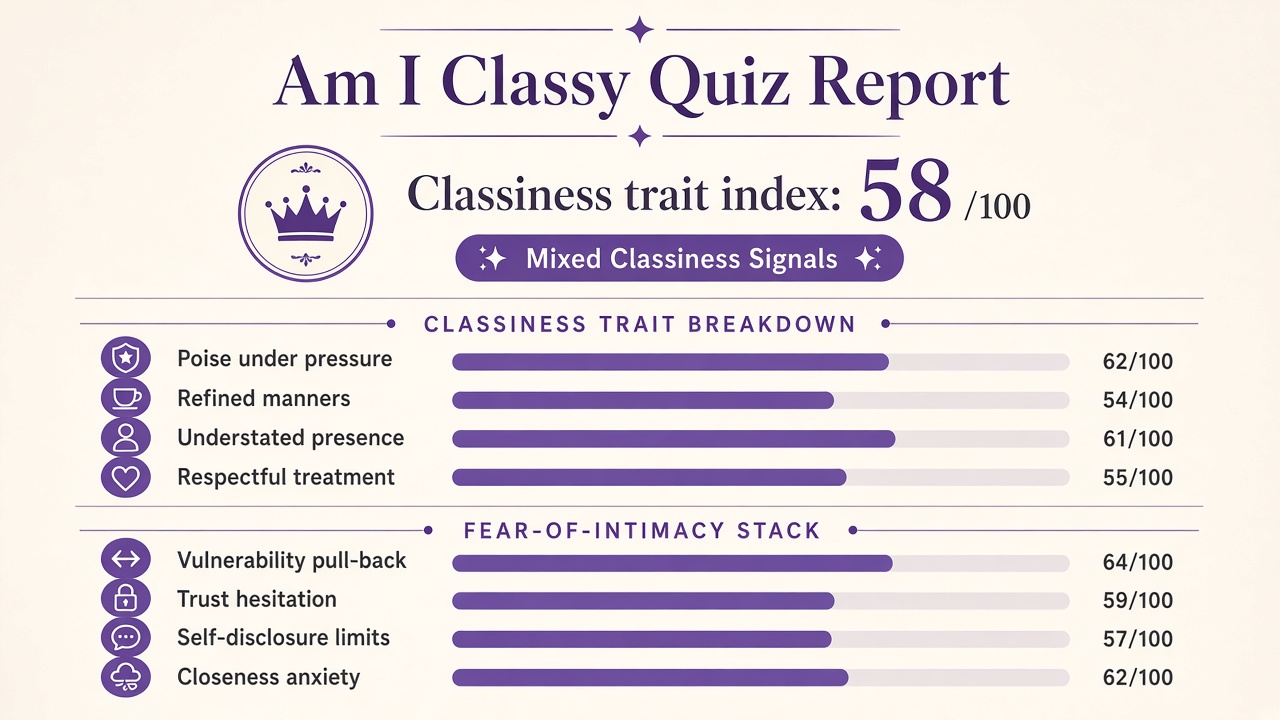
Your classiness trait index is the normalized total across all 20 items on a 0 to 100 scale. Higher scores mean more frequent endorsement of poise, courtesy, restraint, and respectful treatment items on this screener. Domain bars show endorsement rates so you can see whether calm reactions, manners, understated presence, or dignified treatment drives your result most. The fear-of-intimacy stack chart shows parallel layers for vulnerability pull-back, trust hesitation, self-disclosure limits, and closeness anxiety when polished habits may include guarded closeness.
| Band | Index range | Typical reading |
|---|---|---|
| Lower Classiness Signals | 0 to 35 | Fewer poise and courtesy habits; stress or reactive seasons can still lower scores temporarily |
| Mixed Classiness Signals | 36 to 65 | Blend of gracious moments and habits that can read as unclassy; domain and stack charts show where you struggle most |
| Higher Classiness Signals | 66 to 100 | Frequent poise, manners, restraint, and respect; check stack if polish feels like distance from closeness |
What your classy trait report looks like
After all 20 items, you get a classiness trait index from 0 to 100, a band label, four domain bars for poise under pressure, refined manners, understated presence, and respectful treatment, plus a fear-of-intimacy stack chart with vulnerability, trust, disclosure, and closeness anxiety layers.
What this quiz can and cannot tell you
Can tell you
- How often poise, courtesy, restraint, and respect patterns showed up in this self-report screener
- A classiness trait index and four domain bars for poise, manners, presence, and treatment
- A fear-of-intimacy stack showing which closeness-guarding layer feels strongest
- A starting point for reflection, etiquette practice, or comparing with sibling tests
Cannot tell you
- Whether you are wealthy, elite, or permanently unclassy
- Whether polished habits are rooted in anxiety, culture, or genuine values without context
- Whether friends, dates, or colleagues agree with your self-view
- What social rules apply in every culture or setting without local knowledge
Classiness traits, etiquette, and guarded closeness
People search am I classy when they catch themselves losing patience in public, skipping thank-yous, or wondering whether their habits read as graceful or reactive. Sociologist Pierre Bourdieu wrote about distinction as taste shaped by class background, though everyday classy language often means poise and respect rather than income alone. Emily Post Institute etiquette guides emphasize courtesy, consideration, and respect as the core of good manners across settings, independent of budget or pedigree.
The Quiz Hub built this am I classy quiz as an original self-report screener inspired by those themes plus FOIS-style intimacy avoidance layers from Descutner and Thelen (1991), not a reproduction of any single published instrument. Readers often compare it to sibling tools on this site. Our am I arrogant quiz screens superiority beliefs and dismissive attitude rather than poise and manners domains. The am I a diva quiz focuses on spotlight demands and dramatic flair in fun-novelty meme framing. The fear of intimacy quiz measures general vulnerability pull-back across closeness, not courtesy habits.
| The Quiz Hub test | What it adds |
|---|---|
| Am I arrogant quiz | Superiority beliefs, dismissive attitude, status seeking, and defensive pride without poise or manners framing |
| Am I a diva quiz | Spotlight demands, entitlement standards, dramatic flair, and luxury pickiness in meme framing |
| Am I intimidating quiz | Physical presence, blunt speech, competence display, and emotional reserve without etiquette domain bars |
| Fear of intimacy quiz | General intimacy avoidance across vulnerability and trust, not classiness or manners domains |
| Big Five personality test | OCEAN trait percentiles including agreeableness without classiness domain bars |
| This am I classy quiz | Classiness trait index plus fear-of-intimacy stack for poise, manners, understated presence, and respectful treatment |
Sample item types include frequency ratings such as whether you reply to invitations within a day even when you must decline, or whether you speak down to people whose job is to help you. High poise with high vulnerability pull-back on the stack often lands in Mixed Classiness Signals bands when polish may replace honest closeness. Genuine courtesy under stress can score in Higher Classiness Signals even when you still speak directly at work. Read how we review quizzes in our editorial policy or browse more tools on our personality psychology hub.
Am I classy quiz FAQ
What does the am I classy quiz measure?
Twenty original frequency items ask how often poise under pressure, refined manners, understated presence, and respectful treatment patterns show up in your self-report about social behavior. Each item also maps to a fear-of-intimacy stack layer: vulnerability pull-back, trust hesitation, self-disclosure limits, and closeness anxiety. You receive a classiness trait index from 0 to 100 where higher scores mean more poise and courtesy habits on this screener, plus a parallel stack index.
Does a higher classiness trait index mean I am wealthy or elite?
No. On this screener, a higher index means you endorsed fewer reactive, rude, flashy, or dismissive habit items and more poise and courtesy behaviors. Class here means everyday grace and respect, not income, pedigree, or designer labels. Cultural norms shape what reads as classy, and this quiz cannot rank your social status.
What is the fear-of-intimacy stack on this quiz?
The fear-of-intimacy stack is a second results chart inspired by FOIS-style intimacy avoidance themes from Descutner and Thelen (1991), adapted to classiness trait framing. Each of the 20 items maps to one of four stack layers showing how closeness guarding may pair with polished public behavior: hiding vulnerability, testing trust, limiting disclosure, or worrying about being too close. Higher stack scores mean more avoidance patterns on these items.
How is this different from the am I arrogant quiz?
The am I arrogant quiz screens superiority beliefs, dismissive attitude, status seeking, and defensive pride with a fear-of-intimacy stack chart. This am I classy quiz focuses on poise under pressure, refined manners, understated presence, and respectful treatment rather than self-importance or status steering habits.
How is this different from the am I a diva quiz?
The am I a diva quiz uses frequency items about spotlight demands, entitlement standards, dramatic flair, and luxury pickiness in fun-novelty meme framing. This classy quiz lives in personality psychology and measures poise, courtesy, restraint, and dignified treatment rather than diva theatrics or high-maintenance performance.
Can this quiz tell me if others think I am classy?
No. The classiness trait index describes self-reported pattern signals on this abbreviated screener. Context, culture, and relationship history all shape how habits land. Only people in your life can tell you how your presence feels, ideally through honest conversation.
Who reviewed this content?
Dr. James Whitfield, PhD, reviewed the test framing and result explanations. See our editorial policy for review standards.
Reviewed by