What this fat vs bloat signal quiz measures
This am I fat or bloated quiz estimates how often gradual shape change, meal-linked puffiness, appearance impact habits, and body-checking patterns show up in how you report your body lately. Twenty original frequency items group into four domains inspired by NIH patient education on body composition and American College of Gastroenterology guidance on abdominal bloating: fat signal patterns, bloat signal patterns, appearance impact, and body checking. Each item also maps to a fear-of-intimacy stack layer so you can see whether vulnerability pull-back, trust hesitation, self-disclosure limits, or closeness anxiety pairs with hiding puffier days or daily weigh-ins. Your fat vs bloat signal index averages these patterns into a 0 to 100 score where higher numbers mean more reported change signs on this screener.
Fat signal patterns
Gradual waistband tightness, stable pinchable softness, slow scale creep, and photo contours that stay similar all day.
Bloat signal patterns
Morning flatness versus evening puffiness, gas or bowel relief, meal-linked distension, and cycle or sodium triggers.
Appearance impact
Fitted outfit avoidance, assumed social scrutiny, photo skipping, and delaying plans until feeling less puffy.
Body checking
Mirror pinching, daily weigh-ins, online symptom searches, and asking others whether you look bigger.
How it works
Three steps from first question to your fat vs bloat signal report with fear-of-intimacy stack. Click Start Quiz to open the interactive quiz in a full-screen modal.
Answer 20 frequency items
Rate how often each pattern shows up in your body habits and worry, from Never to Almost always. You click Next after each answer; nothing auto-advances.
Items map to body domains and intimacy stack
Your answers accumulate percentages for fat signal patterns, bloat signal patterns, appearance impact, and body checking, plus four fear-of-intimacy stack layers.
View band and dual charts
Results show Lower, Mixed, or Higher Fat vs Bloat Signals with domain bars and a fear-of-intimacy stack chart. Higher index means more reported change signs on this screener.
Take the am I fat or bloated quiz
Rate 20 statements about gradual shape change, meal puffiness, outfit worry, and body checking lately. Your answers produce a fat vs bloat signal index from 0 to 100, a fear-of-intimacy stack index, four domain scores, and a band label for reflection or clinician conversation.
Opens in a focused modal. No account required. Results stay on screen.
What your fat vs bloat signal result means
Your fat vs bloat signal index is the normalized total across all 20 items on a 0 to 100 scale, with reverse scoring on stable-body items so higher scores mean more change signs overall. The fear-of-intimacy stack index uses the same answers mapped to vulnerability, trust, disclosure, and closeness anxiety layers where higher stack scores mean more body guarding patterns. Domain bars show endorsement rates so you can see whether fat signal patterns, bloat signal patterns, appearance impact, or body checking drives your result most.
| Band | Index range | Typical reading |
|---|---|---|
| Lower Fat vs Bloat Signals | 0 to 35 | Fewer gradual shape change, meal puffiness, and mirror checking items on this screener; stable stretches or less midsection focus may explain the pattern |
| Mixed Fat vs Bloat Signals | 36 to 65 | Blend of stable weeks and worry spikes; domain and stack charts show where outfit avoidance or daily weigh-ins may block honest tracking |
| Higher Fat vs Bloat Signals | 66 to 100 | Frequent shape change checks, post-meal distension, outfit skipping, and body checking on this screener; clinical exam still required for diagnosis |
What your fat vs bloat signal report looks like
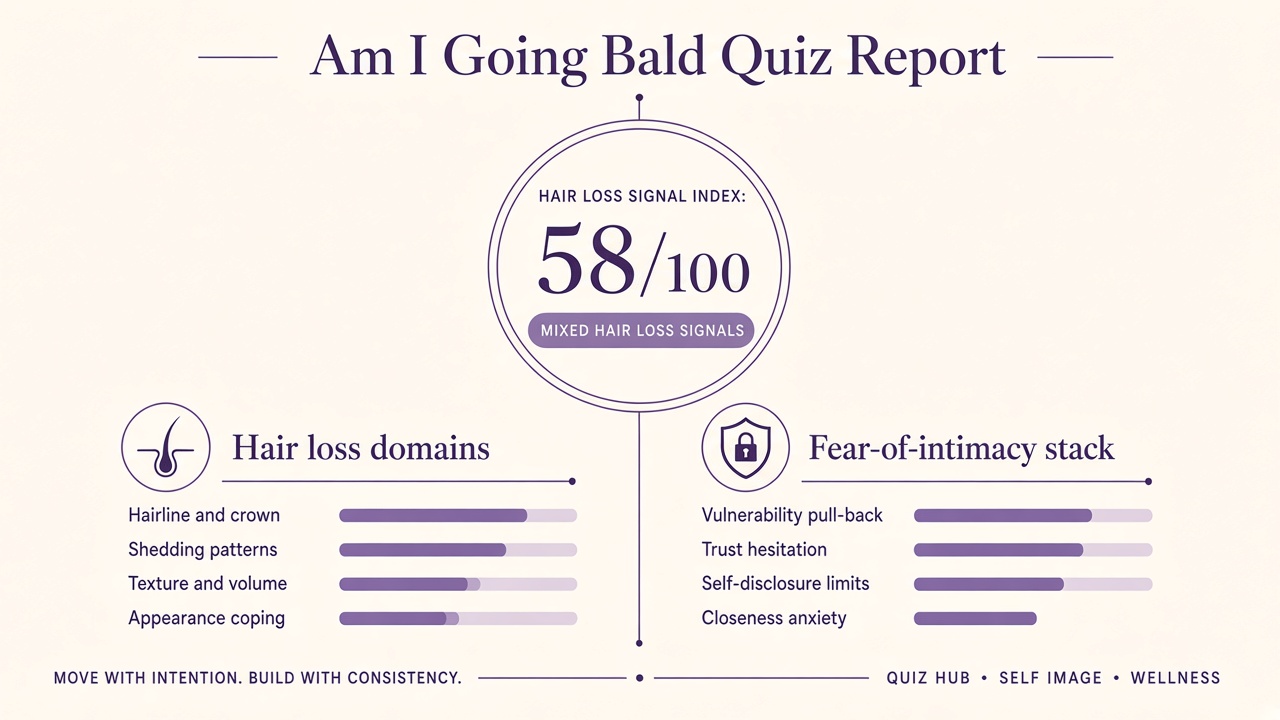
After all 20 items, you get a fat vs bloat signal index from 0 to 100, a band label, four body domain bars, and a fear-of-intimacy stack chart with vulnerability pull-back, trust hesitation, self-disclosure limits, and closeness anxiety layers. Percentages reflect how you report body change lately, not a clinical body fat grade.
What this quiz can and cannot tell you
Can tell you
- How often fat signal, bloat signal, appearance impact, and body checking patterns showed up in your self-report
- A fat vs bloat signal index and fear-of-intimacy stack index with domain bars
- Which body domain or intimacy stack layer feels strongest in your current worry
- A starting point for primary care or therapy conversation about body change and self-image
Cannot tell you
- Whether you have obesity, edema, IBS, SIBO, or any digestive disorder
- Your body fat percentage, visceral fat grade, or DEXA scan findings
- What treatment you need without a clinical exam and medical history
- Whether sodium, hormones, or stress alone explains change without professional evaluation
Fat change signs, bloat cycles, and the fear-of-intimacy stack
The National Institutes of Health notes that gradual adipose gain often shows up through tighter clothes and slow scale trends, while the American College of Gastroenterology describes bloating as abdominal distension that may rise and fall with meals, gas, bowel habits, or menstrual timing. Many people first notice change through morning versus evening jean comfort, mirror pinching, or old photo comparisons long before they book an exam. Shame can look like delaying social plans, searching symptoms alone, or assuming others stare at your stomach instead of tracking patterns for a few weeks.
The Quiz Hub built this am I fat or bloated quiz as an original self-report screener inspired by those clinical education themes plus FOIS-style intimacy avoidance layers from Descutner and Thelen (1991), not a reproduction of any single published body composition scale. Readers often compare it to sibling tools on this site. Our am I fit quiz measures workout consistency and recovery habits rather than midsection change signs. The am I ugly quiz covers mirror self-talk and appearance withdrawal rather than fat versus bloat signal patterns. The am I attractive quiz screens looks-confidence domains rather than meal-linked puffiness checks.
| The Quiz Hub test | What it adds |
|---|---|
| Am I fit quiz | Workout and recovery habits with intimacy stack, not gradual shape change or bloat cycles |
| Am I ugly quiz | Mirror self-talk and appearance withdrawal, not morning versus evening puffiness |
| Am I attractive quiz | Looks-confidence domains, not waistband tightness or gas relief patterns |
| Fear of intimacy quiz | General intimacy avoidance across vulnerability and trust, not body change signs |
| Am I going bald quiz | Hair loss signal index with intimacy stack, not midsection fat versus bloat patterns |
| This fat or bloated quiz | Fat vs bloat signal index plus fear-of-intimacy stack for shape change, puffiness, appearance, and checking |
Sample item types include frequency ratings such as whether you button jeans comfortably in the morning but need to loosen them by evening, or whether you pinch stomach skin in the mirror to decide if change is fat or puffiness. High bloat scores with low fat signal scores often land in Mixed bands when meal-linked distension may explain puffiness without gradual adipose change yet. Strong body checking with moderate appearance impact can split domain scores when daily weigh-ins drive worry more than actual shape shift. Read how we review quizzes in our editorial policy or browse more tools on our self-image and appearance hub.
Am I fat or bloated quiz FAQ
What does the am I fat or bloated quiz measure?
Twenty original frequency items ask how often fat-change signs, bloat cycles, appearance impact habits, and body-checking patterns show up in how you report your body lately. Each item also maps to a fear-of-intimacy stack layer: vulnerability pull-back, trust hesitation, self-disclosure limits, and closeness anxiety. You receive a fat vs bloat signal index from 0 to 100 where higher scores mean more reported change signs on this screener, plus a parallel stack index.
Does a higher fat vs bloat signal index mean I am gaining weight?
Not as a diagnosis. On this screener, a higher index means you endorsed more gradual shape change, post-meal puffiness, outfit avoidance, and mirror checking items. That pattern can reflect real adipose change, fluid retention cycles, or high body focus without proving obesity. Only a clinician can confirm weight-related or digestive causes.
How can I tell fat gain from bloating on this quiz?
Compare your domain bars after finishing. Fat signal patterns cover slow scale creep, stable pinchable softness, and photo contours that stay similar morning to evening. Bloat signal patterns cover morning flatness versus evening puffiness, gas or bowel relief, and meal or cycle triggers. When one domain reads much higher, your answers lean that direction on these items, though clinical evaluation still matters.
What is the fear-of-intimacy stack on this quiz?
The fear-of-intimacy stack is a second results chart inspired by FOIS-style intimacy avoidance themes from Descutner and Thelen (1991), adapted to body and appearance framing. Each of the 20 items maps to one of four stack layers showing how closeness guarding may pair with hiding puffier days, daily weigh-ins, or skipping pool photos. Higher stack scores mean more avoidance patterns on these items.
How is this different from the am I fit quiz?
The am I fit quiz uses frequency items about workout consistency, daily movement, nutrition recovery, and active confidence with a parallel fear-of-intimacy stack. This fat or bloated quiz focuses on distinguishing gradual shape change from meal-linked puffiness, outfit coping, and body-checking habits tied to midsection worry.
How is this different from the am I ugly quiz?
The am I ugly quiz screens mirror self-talk, influencer comparison, and appearance withdrawal across body image reflection domains. This fat or bloated quiz focuses on fat versus bloat signal patterns, appearance impact from midsection worry, and checking habits rather than global self-criticism labels.
Can this quiz diagnose IBS or obesity?
No. The fat vs bloat signal index describes self-reported signs on this abbreviated screener. Digestive or weight-related diagnoses need a clinical exam, history, and sometimes lab work or imaging, not an online reflection quiz.
Who reviewed this content?
Dr. James Whitfield, PhD, reviewed the test framing and result explanations. See our editorial policy for review standards.
Reviewed by