What this hair loss signal quiz measures
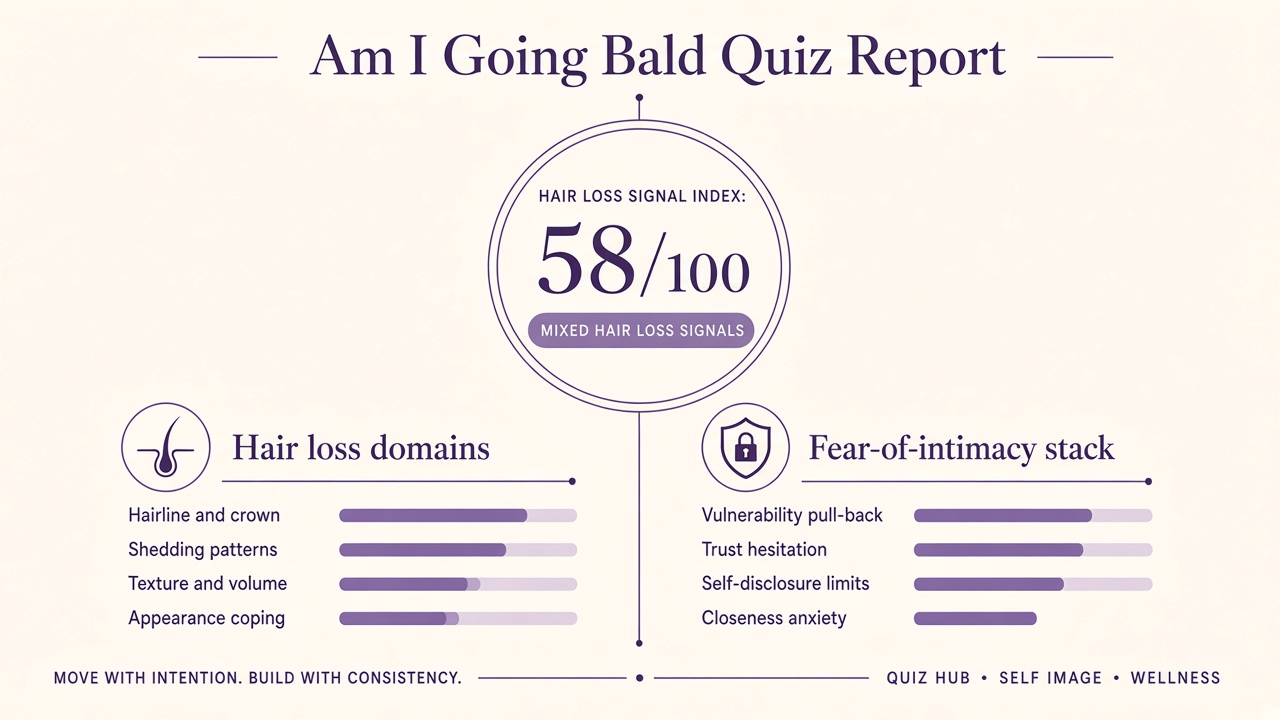
This am I going bald quiz estimates how often hairline crown signs, shedding patterns, texture volume change, and appearance coping habits show up in how you report your hair lately. Twenty original frequency items group into four domains inspired by Norwood-Hamilton male pattern themes and American Academy of Dermatology patient education on telogen effluvium and androgenetic alopecia: hairline and crown, shedding patterns, texture and volume, and appearance coping. Each item also maps to a fear-of-intimacy stack layer so you can see whether vulnerability pull-back, trust hesitation, self-disclosure limits, or closeness anxiety pairs with hat habits or photo avoidance. Your hair loss signal index averages these patterns into a 0 to 100 score where higher numbers mean more reported change signs on this screener.
Hairline and crown
Receding hairline checks, crown scalp visibility, widening part lines, and temple comparisons.
Shedding patterns
Shower drain clumps, pillow hair, brush pull, and shedding spikes that outlast stress weeks.
Texture and volume
Finer strands, thinner ponytails, styling volume loss, and finger-comb density checks.
Appearance coping
Photo angle avoidance, hat habits, haircut delays, and openness about hair change.
How it works
Three steps from first question to your hair loss signal report with fear-of-intimacy stack. Click Start Quiz to open the interactive quiz in a full-screen modal.
Answer 20 frequency items
Rate how often each pattern shows up in your hair habits and worry, from Never to Almost always. You click Next after each answer; nothing auto-advances.
Items map to hair domains and intimacy stack
Your answers accumulate percentages for hairline crown, shedding patterns, texture volume, and appearance coping, plus four fear-of-intimacy stack layers.
View band and dual charts
Results show Lower, Mixed, or Higher Hair Loss Signals with domain bars and a fear-of-intimacy stack chart. Higher index means more reported change signs on this screener.
Take the am I going bald quiz
Rate 20 statements about your hairline, shedding, texture, and appearance habits lately. Your answers produce a hair loss signal index from 0 to 100, a fear-of-intimacy stack index, four domain scores, and a band label for reflection or dermatologist conversation.
Opens in a focused modal. No account required. Results stay on screen.
What your hair loss signal result means
Your hair loss signal index is the normalized total across all 20 items on a 0 to 100 scale, with reverse scoring on stable-hair items so higher scores mean more change signs overall. The fear-of-intimacy stack index uses the same answers mapped to vulnerability, trust, disclosure, and closeness anxiety layers where higher stack scores mean more hair guarding patterns. Domain bars show endorsement rates so you can see whether hairline crown, shedding patterns, texture volume, or appearance coping drives your result most.
| Band | Index range | Typical reading |
|---|---|---|
| Lower Hair Loss Signals | 0 to 35 | Fewer hairline checks, shedding spikes, and photo worry items on this screener; stable stretches or less mirror focus may explain the pattern |
| Mixed Hair Loss Signals | 36 to 65 | Blend of stable weeks and worry spikes; domain and stack charts show where hat habits or stylist delays may block honest tracking |
| Higher Hair Loss Signals | 66 to 100 | Frequent crown checks, drain clumps, finer ponytails, and photo avoidance on this screener; clinical exam still required for diagnosis |
What your hair loss signal report looks like
After all 20 items, you get a hair loss signal index from 0 to 100, a band label, four hair domain bars, and a fear-of-intimacy stack chart with vulnerability pull-back, trust hesitation, self-disclosure limits, and closeness anxiety layers. Percentages reflect how you report hair change lately, not a clinical baldness grade.
What this quiz can and cannot tell you
Can tell you
- How often hairline crown, shedding, texture volume, and appearance coping patterns showed up in your self-report
- A hair loss signal index and fear-of-intimacy stack index with domain bars
- Which hair domain or intimacy stack layer feels strongest in your current worry
- A starting point for dermatologist or therapy conversation about hair change and self-image
Cannot tell you
- Whether you have androgenetic alopecia, telogen effluvium, or alopecia areata
- Your Norwood stage, follicle miniaturization grade, or trichoscopy findings
- What treatment you need without a clinical exam and medical history
- Whether hat use or stress alone explains change without professional evaluation
Hair change signs, mirror worry, and the fear-of-intimacy stack
The American Academy of Dermatology notes that androgenetic alopecia affects millions of adults and that telogen effluvium can follow illness, stress, or medication shifts. Norwood and Hamilton scales describe pattern recession for clinicians, yet many people first notice change through drain clumps, wider parts, or old photo comparisons long before they book an exam. Shame can look like delaying stylists, hiding under hats, or scrolling comparison photos instead of tracking shedding for a few weeks.
The Quiz Hub built this am I going bald quiz as an original self-report screener inspired by those clinical education themes plus FOIS-style intimacy avoidance layers from Descutner and Thelen (1991), not a reproduction of any single published trichology scale. Readers often compare it to sibling tools on this site. Our am I handsome quiz measures looks confidence and grooming ease rather than scalp change signs. The appearance confidence screener covers mirror comfort across seven domains rather than shedding patterns. The am I attractive quiz screens looks-confidence domains rather than crown visibility checks.
| The Quiz Hub test | What it adds |
|---|---|
| Am I handsome quiz | Looks confidence and grooming ease, not hairline recession or shedding spikes |
| Appearance confidence screener | Mirror comfort across seven domains, not drain clumps or ponytail thinning |
| Am I attractive quiz | Looks-confidence domains, not crown checks or hat coping habits |
| Fear of intimacy quiz | General intimacy avoidance across vulnerability and trust, not hair change signs |
| Am I fit quiz | Workout and recovery habits with intimacy stack, not scalp thinning patterns |
| This going bald quiz | Hair loss signal index plus fear-of-intimacy stack for hairline, shedding, texture, and appearance coping |
Sample item types include frequency ratings such as whether you find clumps in the shower drain, or whether you avoid photos from certain angles because of hair worry. High shedding scores with low hairline scores often land in Mixed bands when telogen effluvium may explain drain spikes without crown recession yet. Strong appearance coping with moderate texture change can split domain scores when hats hide worry more than strands actually thin. Read how we review quizzes in our editorial policy or browse more tools on our self-image and appearance hub.
Am I going bald quiz FAQ
What does the am I going bald quiz measure?
Twenty original frequency items ask how often hairline crown signs, shedding patterns, texture volume change, and appearance coping habits show up in how you report your hair lately. Each item also maps to a fear-of-intimacy stack layer: vulnerability pull-back, trust hesitation, self-disclosure limits, and closeness anxiety. You receive a hair loss signal index from 0 to 100 where higher scores mean more reported change signs on this screener, plus a parallel stack index.
Does a higher hair loss signal index mean I am going bald?
Not as a diagnosis. On this screener, a higher index means you endorsed more hairline checks, drain clumps, finer ponytails, hat habits, and photo avoidance items. That pattern can reflect real change, stress shedding, or high mirror focus without proving androgenetic alopecia. Only a dermatologist or trichologist can confirm clinical hair loss.
What is the fear-of-intimacy stack on this quiz?
The fear-of-intimacy stack is a second results chart inspired by FOIS-style intimacy avoidance themes from Descutner and Thelen (1991), adapted to hair and appearance framing. Each of the 20 items maps to one of four stack layers showing how closeness guarding may pair with hiding thinning, delaying stylists, or avoiding group photos. Higher stack scores mean more avoidance patterns on these items.
How is this different from the am I handsome quiz?
The am I handsome quiz uses frequency items about looks confidence, grooming ease, and social presentation from appearance self-perception themes. This going bald quiz focuses on hairline recession checks, shedding spikes, texture volume, and hair-worry coping with a parallel fear-of-intimacy stack chart in one report.
How is this different from the appearance confidence screener?
The appearance confidence screener measures mirror comfort, grooming ease, and looks-related self-criticism across seven domains. This bald quiz focuses on scalp visibility, shedding patterns, ponytail thinning, and photo angle habits tied to hair change worry.
Can this quiz tell me if I need minoxidil or finasteride?
No. The hair loss signal index describes self-reported signs on this abbreviated screener. Treatment decisions need a clinical exam, history, and sometimes lab work or trichoscopy, not an online reflection quiz.
Who reviewed this content?
Dr. James Whitfield, PhD, reviewed the test framing and result explanations. See our editorial policy for review standards.
Reviewed by