What this am I cynical quiz measures
This am I cynical quiz estimates how often cynical assumptions show up in your self-report about people, trust, and outcomes. Twenty original frequency items group into four domains drawn from cynical hostility research and everyday language about jadedness: motive skepticism, trust erosion, pessimistic expectations, and ideal disillusionment. Each item also maps to a fear-of-intimacy stack layer so you can see whether vulnerability pull-back, trust hesitation, self-disclosure limits, or closeness anxiety rides alongside skeptical worldview habits. Your cynicism trait index averages these patterns into a 0 to 100 score where higher numbers mean more frequent endorsement.
Motive skepticism
Assuming friendly gestures carry hidden asks, doubting help without obvious reason, and expecting warmth to fade once needs are met.
Trust erosion
Keeping score, holding back honest opinions, expecting secrets used in fights, and feeling exposed when needing support.
Pessimistic expectations
Expecting plans to slip, bracing after good news, reading delays as rejection, and avoiding invested hopes.
Ideal disillusionment
Cynicism about integrity talk, assuming virtue is performed, jaded fairness views, and pulling back from causes.
How it works
Three steps from first question to your cynicism trait report with fear-of-intimacy stack. Click Start Quiz to open the interactive quiz in a full-screen modal.
Answer 20 frequency items
Rate how often each cynical assumption shows up, from Never to Almost always. You click Next after each answer; nothing auto-advances.
Items map to cynicism domains and intimacy stack
Your answers accumulate percentages for motive skepticism, trust erosion, pessimistic expectations, and ideal disillusionment, plus four fear-of-intimacy stack layers.
View band, domain bars, and stack chart
Results show Lower, Mixed, or Higher Cynicism Signals with domain bars, stack layers, and reflection prompts.
Take the am I cynical quiz
Rate 20 statements about motives, trust, expectations, and disillusionment. Your answers produce a cynicism trait index from 0 to 100, four domain scores, a fear-of-intimacy stack chart, and a band label for reflection.
Opens in a focused modal. No account required. Results stay on screen.
What your cynicism trait result means
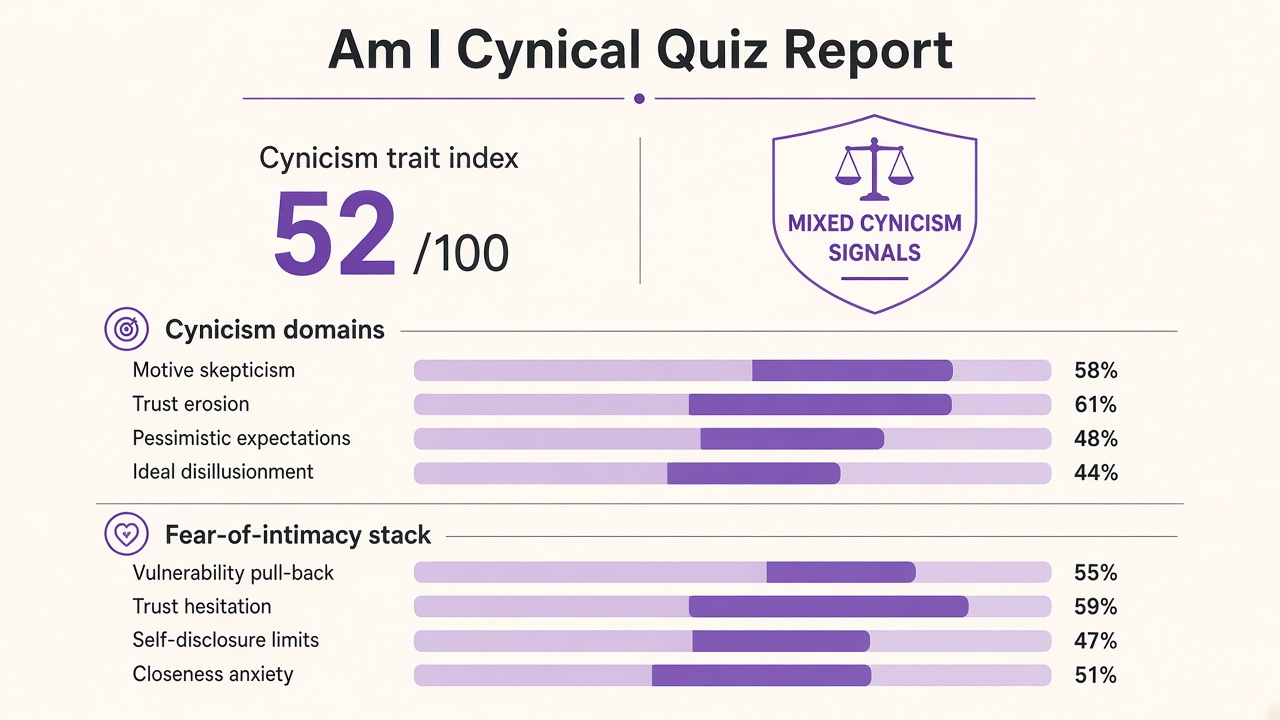
Your cynicism trait index is the normalized total across all 20 items on a 0 to 100 scale. Higher scores mean more frequent endorsement of motive skepticism, trust erosion, pessimistic expectations, and ideal disillusionment items on this screener. Domain bars show endorsement rates so you can see whether hidden-agenda assumptions, eroded trust, braced expectations, or jaded ideals drive your result most. The fear-of-intimacy stack chart shows parallel layers for vulnerability pull-back, trust hesitation, self-disclosure limits, and closeness anxiety when cynical habits include guarded closeness.
| Band | Index range | Typical reading |
|---|---|---|
| Lower Cynicism Signals | 0 to 35 | Fewer cynical assumption signals; healthy caution after hurt can still score here |
| Mixed Cynicism Signals | 36 to 65 | Blend of realism and guarded mistrust; domain and stack charts show where you struggle most |
| Higher Cynicism Signals | 66 to 100 | Frequent motive skepticism, trust erosion, or disillusionment; check stack if closeness feels guarded too |
What your cynical trait report looks like
After all 20 items, you get a cynicism trait index from 0 to 100, a band label, four domain bars for motive skepticism, trust erosion, pessimistic expectations, and ideal disillusionment, plus a fear-of-intimacy stack chart with vulnerability, trust, disclosure, and closeness anxiety layers.
What this quiz can and cannot tell you
Can tell you
- How often cynical assumption patterns showed up in this self-report screener
- A cynicism trait index and four domain bars for motives, trust, expectations, and ideals
- A fear-of-intimacy stack showing which closeness-guarding layer feels strongest
- A starting point for therapy, coaching, or comparing with sibling tests
Cannot tell you
- Whether you are permanently negative, unlovable, or incapable of trust
- Whether cynicism is rooted in trauma, depression, or personality without professional context
- Whether friends or partners agree with your self-view
- What treatment you need without licensed professional guidance
Cynical traits, hostile attribution, and guarded closeness
People search am I cynical when they catch themselves assuming hidden motives, bracing for disappointment, or rolling their eyes at talk about integrity. Psychologist Timothy Smith and colleagues study cynical hostility as a pattern of mistrustful attributions and guarded expectations that correlates with stress and health outcomes in longitudinal research. Richard Christie and Florence Geis built the Mach IV scale with a cynical-views facet that screens skepticism about human motives, though Machiavellianism also includes tactical style beyond general jadedness.
The Quiz Hub built this am I cynical quiz as an original self-report screener inspired by those themes plus FOIS-style intimacy avoidance layers, not a reproduction of any single published instrument. Readers often compare it to sibling tools on this site. Our Mach IV test screens Machiavellian cynical views, tactical style, and moral flexibility rather than everyday jadedness with an intimacy stack. The am I cold hearted quiz focuses on empathic coldness and warmth deficit rather than motive skepticism. The fear of intimacy quiz measures general vulnerability pull-back across closeness, not cynical worldview habits.
| The Quiz Hub test | What it adds |
|---|---|
| Mach IV test | Machiavellian cynical views, tactical style, and moral flexibility facets without fear-of-intimacy stack layers |
| Am I cold hearted quiz | Empathic coldness, warmth deficit, detached judgment, and care withholding without motive skepticism framing |
| Fear of intimacy quiz | General intimacy avoidance across vulnerability and trust, not cynical worldview or ideal disillusionment domains |
| Do I have trust issues quiz | Trust wound and betrayal scan items in relationships, not broad cynical hostility across life domains |
| Big Five personality test | OCEAN trait percentiles including agreeableness and neuroticism without cynicism domain bars |
| This am I cynical quiz | Cynicism trait index plus fear-of-intimacy stack for motive skepticism, trust erosion, pessimistic expectations, and ideal disillusionment |
Sample item types include frequency ratings such as whether you assume people keep score and will use past kindness against you later, or whether you still see real examples of people acting on principle without payout. High motive skepticism with high trust hesitation on the stack often lands in Mixed or Higher Cynicism Signals bands. Realistic caution after betrayal can score in Lower Cynicism Signals even when you still feel guarded in new relationships. Read how we review quizzes in our editorial policy or browse more tools on our personality psychology hub.
Am I cynical quiz FAQ
What does cynical mean on this quiz?
Cynical here means your self-reported answers lean toward motive skepticism, trust erosion, pessimistic expectations, or ideal disillusionment more than toward open trust and hopeful assumptions. It does not mean you are a bad person, permanently negative, or incapable of connection. This am I cynical quiz maps those patterns to a cynicism trait index from 0 to 100 for reflection, not a worldview verdict.
What does this am I cynical quiz measure?
Twenty original frequency items ask how often cynical assumptions about motives, trust, outcomes, and ideals show up in everyday life. Each item also feeds a parallel fear-of-intimacy stack with vulnerability pull-back, trust hesitation, self-disclosure limits, and closeness anxiety layers. You receive a cynicism trait index from 0 to 100 and a band from Lower through Higher Cynicism Signals.
What is the fear-of-intimacy stack on this quiz?
The fear-of-intimacy stack is a second results chart inspired by FOIS-style intimacy avoidance themes, adapted to cynical trait framing. Each of the 20 items also maps to one of four stack layers: vulnerability pull-back, trust hesitation, self-disclosure limits, and closeness anxiety. The stack index summarizes how often guarded closeness rides alongside skeptical or jaded assumptions.
How is this different from the Mach IV test?
The Mach IV test screens Machiavellianism with cynical views, tactical style, and moral flexibility items from Christie and Geis research. This am I cynical quiz uses a broader everyday-life frame focused on whether you assume hidden agendas, expect disappointment, or feel jaded about ideals, plus the fear-of-intimacy stack chart rather than Machiavellian tactic facets.
Can this quiz tell me if I am depressed or paranoid?
No. The cynicism trait index describes self-reported pattern signals on this abbreviated screener. It cannot diagnose depression, paranoid personality traits, or any clinical condition. Burnout, repeated betrayal, and news overload can all raise scores without meaning you are stuck forever.
Who reviewed this content?
Dr. James Whitfield, PhD, reviewed the test framing and result explanations. See our editorial policy for review standards.
Reviewed by