What this ghosting quiz measures
This am I being ghosted quiz estimates how often contact fade patterns show up in your connection. Twenty original frequency items group into four domains drawn from ghosting and breadcrumbing research: communication drop-off, mixed signals, avoidance behavior, and one-sided effort. Your ghosting risk index averages these patterns into a 0 to 100 score with plain-language bands. It reflects what you notice about their contact habits, not a verdict about their intentions or your worth.
Communication drop-off
Long silences, shorter replies, and disappearing after plans or direct questions.
Mixed signals
Hot-and-cold contact, breadcrumb replies, and availability that does not match behavior.
Avoidance behavior
Deflecting labels, canceling without rescheduling, and keeping talks surface-level.
One-sided effort
You initiate most contact, plan more dates, and carry outreach they treat as guaranteed.
How it works
Three steps from first question to your ghosting risk report. Click Start Quiz to open the interactive quiz in a full-screen modal.
Answer 20 frequency items
Rate how often each contact pattern shows up, from Never to Almost always. You click Next after each answer; nothing auto-advances.
Items map to four contact domains
Your answers accumulate percentages for communication drop-off, mixed signals, avoidance behavior, and one-sided effort, plus an overall ghosting risk index.
View band and domain bars
Results show Lower, Mixed, or Higher Ghosting Risk with domain bars and reflection prompts. Higher bands include crisis resources.
Take the ghosting quiz
Rate 20 statements about how this person has been communicating lately. Your answers produce a ghosting risk index from 0 to 100, four domain scores, and a band label for reflection or therapy conversation.
Opens in a focused modal. No account required. Results stay on screen.
What your result means
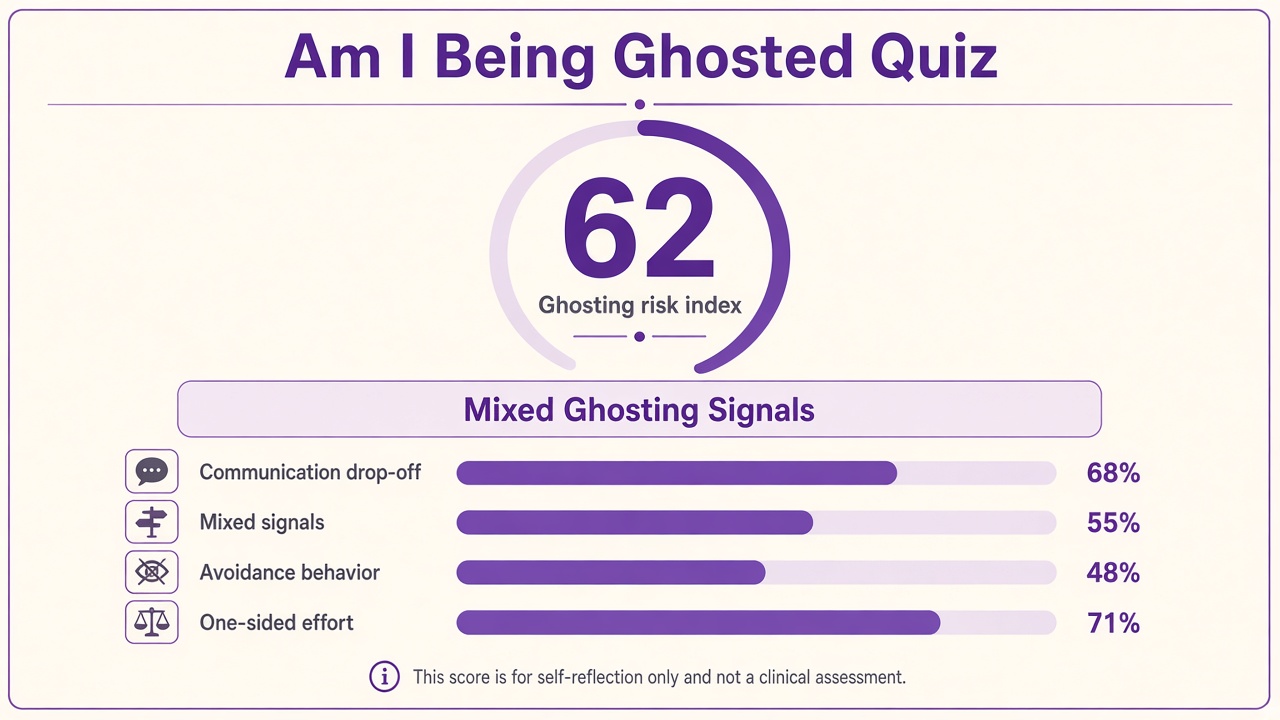
Your ghosting risk index is the normalized total across all 20 items on a 0 to 100 scale. Higher scores mean more frequent endorsement of silence, mixed signals, avoidance, and one-sided effort items on this screener. Domain bars show endorsement rates so you can see whether reply gaps, breadcrumbs, deflection, or uneven outreach drives your result most.
| Band | Index range | Typical reading |
|---|---|---|
| Lower Ghosting Risk | 0 to 35 | Fewer fade pattern signals; slow texters and busy seasons can still create gaps without ghosting intent |
| Mixed Ghosting Signals | 36 to 65 | Blend of steady moments and uneven contact; worth tracking and naming before assuming intent |
| Higher Ghosting Risk | 66 to 100 | Frequent silence, breadcrumbs, avoidance, or one-sided effort; professional support may help |
What your ghosting report looks like
After all 20 items, you get a ghosting risk index from 0 to 100, a band label, and four domain bars for communication drop-off, mixed signals, avoidance behavior, and one-sided effort. Percentages reflect contact patterns you notice, not proof that someone is ghosting you.
What this quiz can and cannot tell you
Can tell you
- How often ghosting pattern signals showed up for you in this connection
- A ghosting risk index and four domain bars for silence, mixed signals, avoidance, and effort
- Which domain pattern feels strongest in your current contact experience
- A starting point for clarity conversations or retaking after a schedule change
Cannot tell you
- Whether someone is ghosting you on purpose without your own judgment and conversation
- Whether slow replies mean disinterest, stress, or a different texting style
- Whether you should stay or leave without honest dialogue and self-respect
- What treatment you need without a licensed clinician's evaluation
Ghosting, breadcrumbs, and fading contact
Communication researchers Gili Freedman and colleagues published work on ghosting in the Journal of Social and Personal Relationships, describing it as ending contact without explanation. Leahy and others (2021) in Computers in Human Behavior studied digital withdrawal patterns that leave partners guessing about intent. Breadcrumbing, a related term, refers to sporadic warm replies that keep someone engaged without building consistent contact. Together these patterns map to silence, mixed signals, avoidance of clarity, and uneven effort.
The Quiz Hub built this am I being ghosted quiz as an original self-report screener inspired by those themes, not a reproduction of any single published instrument. Readers often compare it to sibling tools on this site. Our situationship quiz screens label vagueness and undefined commitment. The relationship anxiety quiz measures reassurance seeking and jealousy scan worry rather than partner reply gaps. The trust issues quiz maps hypervigilance and repair doubt, not breadcrumb contact.
| The Quiz Hub test | What it adds |
|---|---|
| Situationship quiz | Label vagueness and undefined commitment, not reply gap frequency alone |
| Relationship anxiety quiz | Reassurance seeking and jealousy scan worry, not silence patterns |
| Trust issues quiz | Hypervigilance and repair doubt, not breadcrumb contact |
| Anxiety or intuition quiz | Body alarm versus gut clarity, not ghosting domain scores |
| Orange peel test | Small-favor responsiveness, not mixed signals or one-sided outreach |
| This ghosting quiz | Four-domain contact fade index for silence, breadcrumbs, avoidance, and effort |
Sample item types include frequency ratings such as whether they leave messages on read for a full day without explanation, or whether they show interest only when you pull back. High communication drop-off with high one-sided effort often lands in Mixed or Higher Ghosting Risk. Work travel, family stress, and different texting norms can also raise scores without intent to disappear. Read how we review quizzes in our editorial policy or browse more tools on our relationships and dating hub.
Ghosting quiz FAQ
What is ghosting in dating?
Ghosting means someone stops replying, cancels without follow-up, or fades from contact without explaining why. Communication researchers such as Leahy and colleagues (2021) in Computers in Human Behavior describe it as a sudden withdrawal of digital and in-person contact that leaves the other person guessing. This am I being ghosted quiz measures how often silence, mixed signals, avoidance, and one-sided effort patterns show up in your connection. It is not proof someone is ghosting you on purpose.
What does this ghosting quiz measure?
Twenty original frequency items ask how often you notice reply gaps, hot-and-cold contact, avoidance of serious talk, and uneven outreach when you think about how this person has been communicating lately. Scores map to four domains drawn from ghosting and breadcrumbing research. You receive a ghosting risk index from 0 to 100 and a band from Lower through Higher Ghosting Risk.
How is this different from the situationship quiz?
The situationship quiz screens label vagueness, future talk avoidance, and undefined commitment across a connection. This ghosting quiz focuses on contact fade patterns: long silences, breadcrumb replies, dodging clarity, and relying on you to carry outreach. It uses a frequency frame about recent communication rather than relationship status labels alone.
Can this quiz prove someone is ghosting me?
No. The ghosting risk index describes self-reported contact pattern signals on this abbreviated screener. Busy seasons, slow texters, attachment differences, and stress can raise scores without intent to disappear. Only you plus honest conversation can assess what is happening. Online quizzes cannot confirm or deny ghosting.
What should I do if I get a higher ghosting risk band?
Consider one direct clarity request about contact and expectations before investing more emotional labor. A licensed therapist can help if repeated fading leaves you anxious or stuck. If you feel unsafe or in crisis, call or text 988 (US) or your local crisis line.
Who reviewed this content?
Dr. Elena Vasquez, PhD, reviewed the test framing and result explanations. See our editorial policy for review standards.
Reviewed by