What this empath vs narcissist quiz measures
Search interest spikes around "am I an empath or a narcissist" because both labels feel personal and polarizing. Psychologists study overlapping but distinct constructs: empathic concern and sensory sensitivity on one side, and narcissistic admiration, rivalry, and entitlement on the other (Back et al., 2013; Davis, 1983). This quiz is not a validated instrument. It is a shortened self-report across four domains: emotional absorption, status sensitivity, interpersonal boundaries, and self-image protection.
-
Empath Pattern
You pick up moods quickly, feel other people pain as if it were nearby, and need recovery time after heavy conversations.
-
Narcissistic Trait Pattern
You track admiration, rank, and fairness to you closely, and setbacks to your image can sting longer than expected.
How scoring works
-
Rate 24 statements
Each item uses a five-point agree-disagree scale. Twelve statements map to empath absorption; twelve map to narcissistic trait patterns. Reverse-scored items catch social-desirability fluff.
-
We sum per pattern
Raw totals convert to match percentages (0 to 100). Your highest score becomes the primary profile; the runner-up is your secondary influence.
-
Read blend warnings
Neutral-heavy or straight-line responding triggers quality warnings. If top two patterns tie within one raw point, both profiles deserve a read.
Take the empath or narcissist quiz
Answer every item honestly. Progress autosaves in your browser and opens in a focused modal.
What your empath vs narcissist report looks like
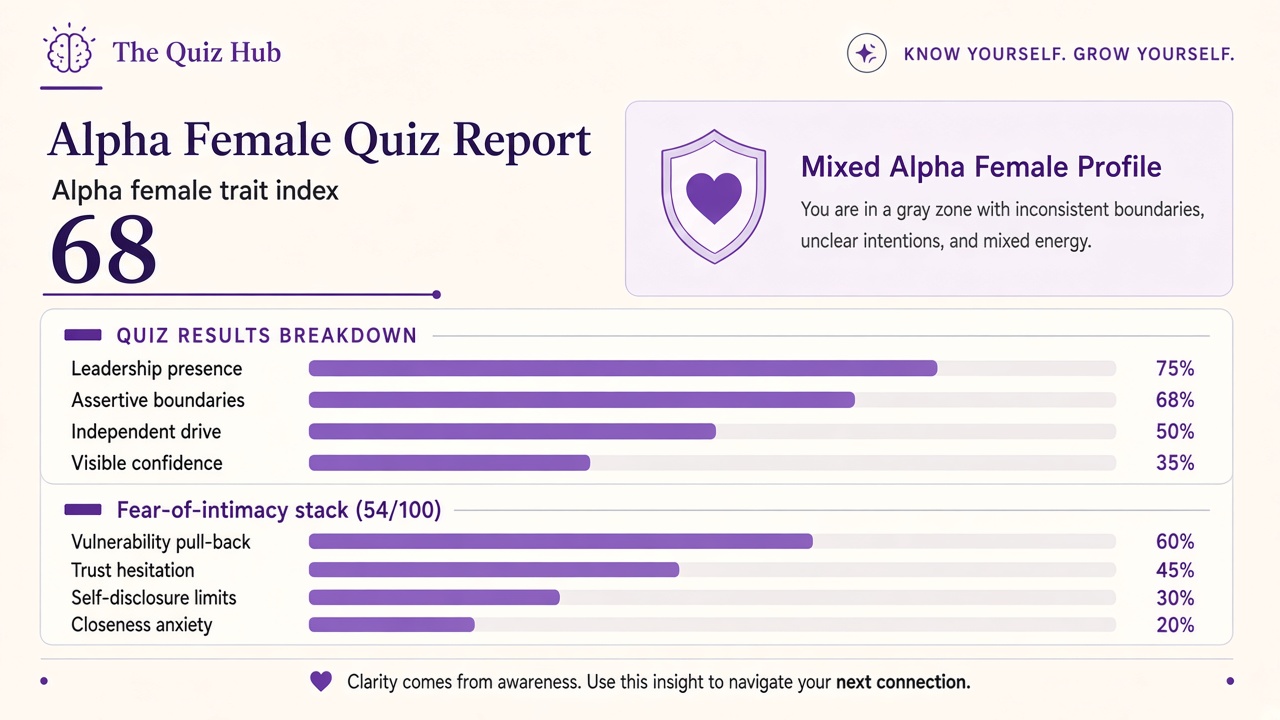
After all 24 items, you see a primary pattern (Empath Pattern or Narcissistic Trait Pattern), secondary influence, match percentage, and two horizontal bars. Percentages reflect agreement with items in each domain, not clinical severity.
What this quiz can and cannot tell you
Can
- Highlight which empath-versus-narcissistic-trait pattern you endorsed most on these items
- Show when both patterns blend closely on your answers
- Flag cautious answering that may flatten pattern differences
Cannot
- Diagnose narcissistic personality disorder or any other clinical condition
- Prove you are a certified empath or label someone else a narcissist
- Replace therapy, couples counseling, or structured personality assessment
Empath vs narcissist vs dark empath, NPI, and partner screeners
Social media often treats empath and narcissist as opposite moral teams. Research paints a messier picture. Empathic concern can coexist with self-focus. Some people score high on cognitive empathy while using charm strategically, a pattern Napier and Lloyd (2021) called the dark empath. Narcissism inventories such as the Narcissistic Personality Inventory (Raskin and Hall, 1979) measure trait endorsement, not courtroom-ready proof of abuse.
If you want a four-domain dark-empath index with band labels, try our dark empath quiz on the personality psychology hub. For grandiosity, entitlement, and exploitation facets from NPI-inspired items, see our am I narcissistic quiz. When the question is about a partner or parent rather than yourself, our am I dealing with a narcissist quiz scores relationship pattern exposure instead of self-labeling.
Sample items include empath absorption ("I pick up on tension in a room even when nobody has spoken yet"), boundary strain ("I feel drained after long conversations where everyone vents but no one asks about me"), narcissistic status focus ("I feel irritated when someone else's success steals attention I deserved"), and image protection ("I have told stories about my achievements that made them sound more impressive than they were"). Your highest domain becomes the headline result; read the secondary profile when scores sit close.
| Quiz | Best for |
|---|---|
| This empath vs narcissist quiz | Two-type match % for absorptive vs status-focused patterns |
| Dark empath quiz | Cognitive empathy plus dark-trait index across four domains |
| Covert narcissist test | Victim framing and passive superiority facets |
| Big Five test | Continuous agreeableness and neuroticism trait scores |
For narcissism trait research framing, see summaries via the American Psychological Association personality topic page. Treat any online quiz as a reflection prompt, not a permanent label or weapon in an argument.
Empath vs narcissist quiz FAQ
What does this empath vs narcissist quiz measure?
It scores two self-report patterns from 24 agree-disagree items: empath absorption (sensitivity, emotional attunement, recovery needs) and narcissistic trait patterns (status focus, entitlement, image protection). Twelve items map to each side. Your highest match becomes the primary profile.
Is this the same as diagnosing narcissistic personality disorder?
No. NPD is a clinical diagnosis made by a licensed professional using structured interviews and history. This quiz estimates trait endorsement on shortened items inspired by narcissism inventories. High narcissistic-trait scores are not proof of a disorder.
Can I be both an empath and narcissistic on this quiz?
Yes. Many people blend both patterns. Your result shows a primary type, secondary influence, and percentage bars for each side. Close scores trigger a blend warning on the results screen.
How is this different from the dark empath quiz?
Our dark empath quiz scores cognitive empathy paired with dark-triad-adjacent traits across four domains with an index band. This quiz is a simpler two-type split between absorptive empath patterns and narcissistic trait patterns with match percentages.
How long does the empath or narcissist quiz take?
Most people finish in about 5 minutes. There are 24 five-point agree-disagree statements. You must answer every item before results appear.
Who reviewed this empath vs narcissist quiz?
Dr. James Whitfield, PhD in Personality Psychology, reviewed framing and disclaimers. See our editorial policy for review standards.
Reviewed by