How to Break a Soul Tie: Boundaries, Grief, and Letting Go
Last updated:
Educational only: This article blends respectful spiritual language with psychologist-informed steps. It is not pastoral counseling, medical advice, or a substitute for care from a licensed mental health professional. If a partner threatens you, stalks you, or you fear physical harm, call or text 988 (U.S.), contact Samaritans at 116 123 (UK), or use local emergency services. For ongoing abuse, the National Domestic Violence Hotline is 1-800-799-7233.
To break a soul tie, most people need both inner work and outer boundaries: stop contact loops that reactivate attachment panic, grieve the loss honestly, and rebuild identity outside the relationship. Many readers also use prayer, fasting, or community rituals; those practices can matter deeply and we do not dismiss them here. Psychology adds measurable steps when intrusive thoughts, shame, or fear keep you glued to someone who is unsafe or unavailable. If coercion or violence was part of the story, safety planning comes before any cleansing language.
Key takeaways
- Soul tie language describes felt bonds; clinicians talk about attachment, grief, and sometimes trauma bonding.
- Breaking the tie usually means fewer contact triggers, not pretending you never cared.
- Rituals may help your spirit; they do not replace therapy for OCD, PTSD, or depression after loss.
- Abuse, stalking, or coparent harassment requires advocates and documentation, not generic no-contact games.
- Screeners such as our fear of intimacy quiz show patterns, not fate or reunion signs.
Tips at a glance
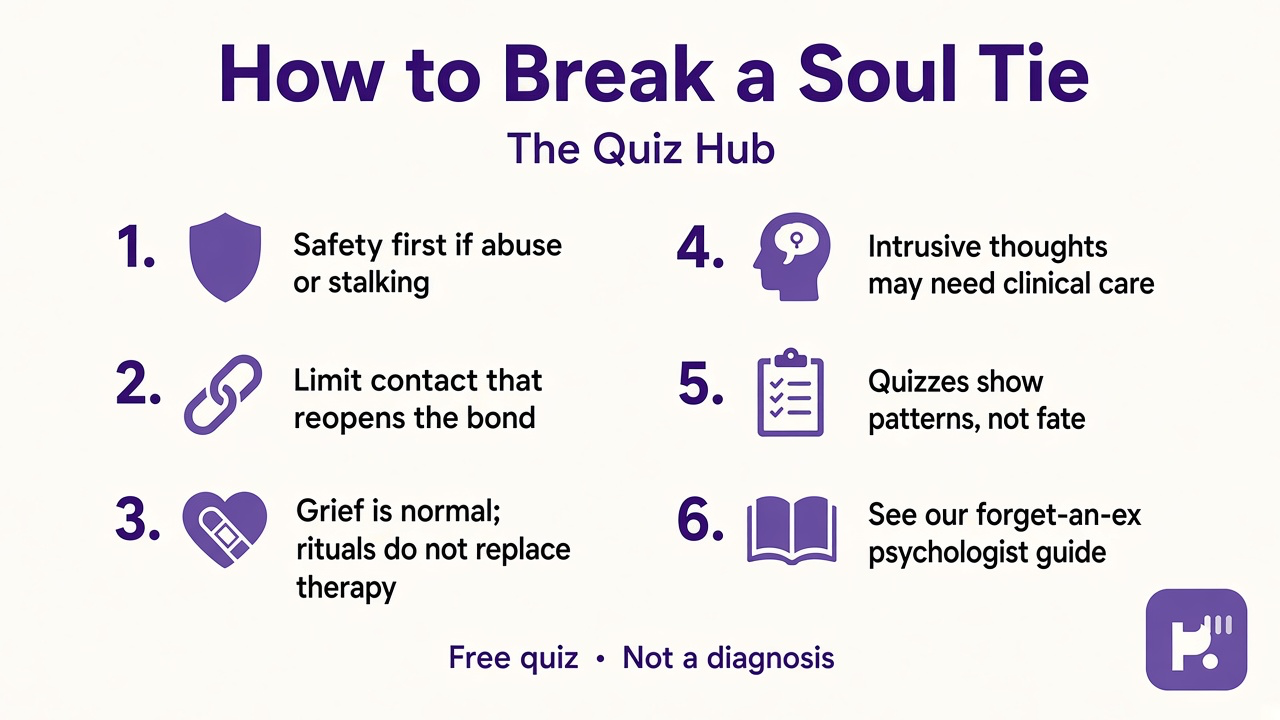
When spiritual language and psychology describe the same pain
Online threads mix Bible verses, energy clearing, and pop attachment theory in one breath. That can leave you feeling broken in two directions: not faithful enough if you still miss them, not rational enough if you believe the bond was real. A practical split helps. Spiritual communities name meaning, morality, and hope. Psychology names learning history, nervous system arousal, and behavior change. You can hold both without letting either shame you for normal grief.
Clinicians will not confirm or deny a soul tie as supernatural fact. They can help with sleep, panic, obsessive checking, and shame spirals that keep you tethered. If your pastor or imam supports therapy, that teamwork often works better than choosing sides.
Safety first: abuse changes every step below
If the relationship included monitoring, threats, isolation, sexual coercion, or physical violence, breaking a bond is a safety project, not a willpower contest. An abusive ex may escalate when you go silent. Document messages, talk with a domestic violence advocate about protective orders, and avoid sharing location details on social media. Generic soul tie advice that says "just block them" can backfire when court-ordered coparenting or immigration control is involved.
The National Domestic Violence Hotline (1-800-799-7233) and local shelters help you plan exits without tipping off a dangerous person. Therapy can support recovery after basic safety exists; it cannot replace an advocate when you fear harm.
Psychology steps to loosen the bond
Use these steps when you are physically safe and not required to coordinate logistics daily. Adapt order to your culture and support system.
- Name what you are ending. Write what you miss (comfort, identity, sex, shared goals) separate from what harmed you (lies, jealousy, spiritual guilt trips). Clarity reduces magical thinking that one more conversation will fix years of patterns.
- Set a contact boundary you can keep. Full no contact helps when every text reopens fights or hope. Coparents may need brief, written, logistics-only channels. Block or mute profiles if checking them spikes your heart rate for hours.
- Remove reunion triggers from your environment. Archive photos for now, change playlists, and tell mutual friends you do not want updates. This is not denial; it is reducing cues that fire pair-bonding circuits while your brain learns a new normal.
- Schedule grief instead of drowning in it. Set a daily 20-minute window to journal or pray about the loss, then shift to a planned activity. Open-ended rumination trains your mind to stay fused with their story.
- Rebuild body regulation. Walk, lift, dance, or breathe slowly when urge hits to drive by their place. Panic and craving live in the body before they become a text message.
- Invest in reciprocal relationships. Join a group class, volunteer shift, or faith small group where people know your name without referencing your ex. Isolation makes any bond feel like oxygen.
Spiritual practices many readers combine with those steps
Prayer, scripture meditation, fasting with medical clearance, anointing, or community accountability partners are common. Treat them as support for commitment, not as magic that skips boundaries. If a leader pressures you to reconcile with someone who harmed you, seek a second opinion from someone who prioritizes safety. Faith should not require you to absorb abuse to prove devotion.
When the bond feels like obsession
Intrusive images, counting rituals, or constant reassurance seeking may signal OCD or trauma responses, not only a stubborn soul tie. A licensed therapist can use exposure and response prevention or trauma-focused CBT without mocking your beliefs. Medication sometimes helps when depression or anxiety blocks every step above.
For psychologist-framed breakup routines that pair with this article, see forget an ex after breakup: psychologist advice. It explains rumination timelines, no contact windows, and when missing someone who hurt you is still normal attachment, not failure.
Understanding closeness fear without fortune-telling
Some soul tie narratives imply you and one person are eternally paired. Fear of intimacy research looks at how early caregiving shapes whether closeness feels safe. Our fear of intimacy quiz scores habits such as pulling away when partners want depth or chasing unavailable people. Results are descriptive, not prophetic: they suggest topics for therapy, not whether you must reunite. The quiz does not measure spiritual destiny, compatibility with one ex, or whether a ritual succeeded.
Pair quiz insights with the attachment style test if you want language for anxious or avoidant patterns after breakups. Neither tool replaces safety planning or couples therapy when reunion is on the table.
Trauma bonding versus destined connection
Cycles of cruelty followed by affection create powerful bonds. Spiritual language sometimes reframes that cycle as a test or demon attack, which can keep you chasing closure from the same person who caused harm. Psychology calls that intermittent reinforcement. Breaking it requires the same boundary discipline as quitting a habit, plus sometimes trauma therapy. Missing them does not prove you should return.
When professional help makes sense
Book a licensed clinician when grief stops you from working or parenting, when you have self-harm thoughts, when you cannot stop contact despite consequences, or when spiritual warfare language escalates paranoia. Couples therapy belongs only when both people are safe and voluntarily committed to change, not when one person uses counseling to recruit allies against you.
Related quizzes on The Quiz Hub
- Fear of intimacy quiz: closeness habits to discuss in therapy, not reunion odds.
- Attachment style test: anxious, avoidant, and secure patterns after breakups.
- Am I heartbroken quiz: normal grief signals versus when to seek clinical support.
- Browse Relationships & Dating tests for communication and boundary themes that support new connections.
Frequently asked questions
What is a soul tie in plain language?
In many faith communities, a soul tie describes a deep spiritual or emotional bond formed through intimacy, shared trauma, or long attachment. Psychologists do not use "soul tie" as a diagnosis. They might describe the same felt experience as attachment, pair-bonding, trauma bonding, or grief when contact ends. Both languages can be true for you; neither replaces safety planning when abuse is present.
Can you break a soul tie without a ritual?
Many people feel relief from structured prayer or ceremony, and that is valid in your tradition. Psychology adds contact boundaries, sleep and nutrition basics, grief processing, and therapy when intrusive thoughts or panic persist. Rituals alone do not remove legal risk from a stalking ex or heal trauma without skilled care.
How long does it take to break a soul tie?
There is no fixed calendar. Reward circuits tied to a person fade when you stop reopening contact loops, but anniversaries, songs, or shared friends can trigger waves for months or years. Progress looks like shorter rumination, less urgency to check their profiles, and more energy for daily life. Complicated bonds after abuse may need trauma-focused therapy, not only time.
Is a soul tie the same as trauma bonding?
They overlap in feeling stuck after harm. Trauma bonding names a pattern where intermittent kindness from a harmful partner keeps you hoping for change. Soul tie language sometimes minimizes coercion by framing pain as destiny. If fear, monitoring, or violence shaped the bond, use abuse resources before spiritual explanations.
When should I see a therapist instead of only praying or cleansing?
Seek licensed care when you cannot sleep, eat, or work; when you have self-harm thoughts; when you obsess for hours daily; or when flashbacks and body panic persist after you set boundaries. OCD, PTSD, and complicated grief can mimic "spiritual attack" language. A clinician can screen without dismissing your faith.
Can the fear of intimacy quiz tell me if my soul tie will return?
No. Our fear of intimacy quiz highlights patterns such as closeness anxiety or avoidant habits worth discussing with a therapist. It cannot predict whether an ex will contact you, whether a ritual worked, or whether you are "meant" to reunite. Readiness shows up in behavior: you can feel longing without sending messages or breaking safety plans.
Sources
- American Psychological Association. (2024). Healthy coping after relationship loss.
- National Domestic Violence Hotline. (2024). Safety planning resources.
- Substance Abuse and Mental Health Services Administration. (2024). 988 Suicide & Crisis Lifeline.
- Fisher, H. E., et al. (2010). Reward, addiction, and emotion regulation systems associated with rejection in love. Journal of Neurophysiology. PubMed abstract.
- World Health Organization. (2024). Mental health: strengthening our response.
Reviewed by